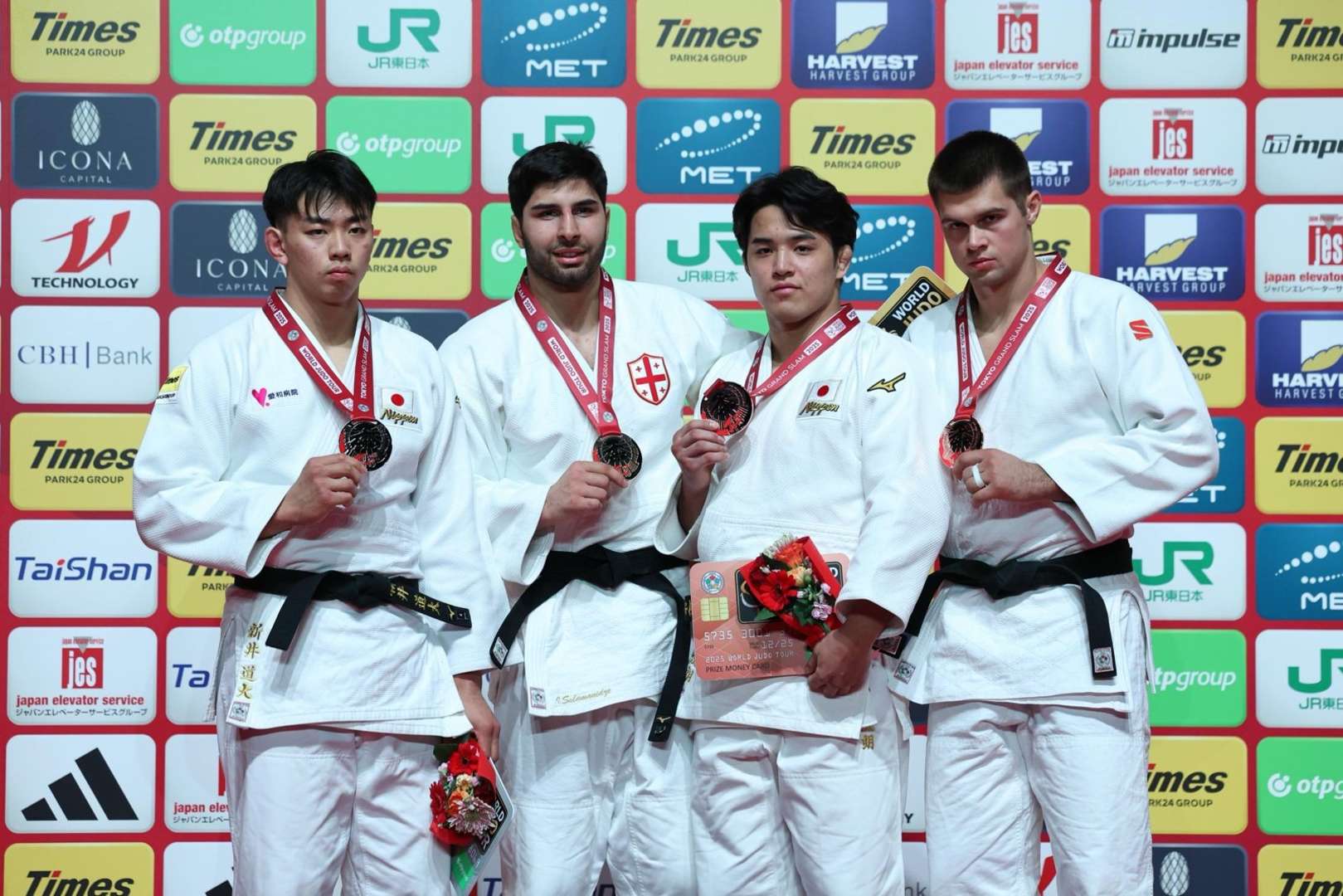

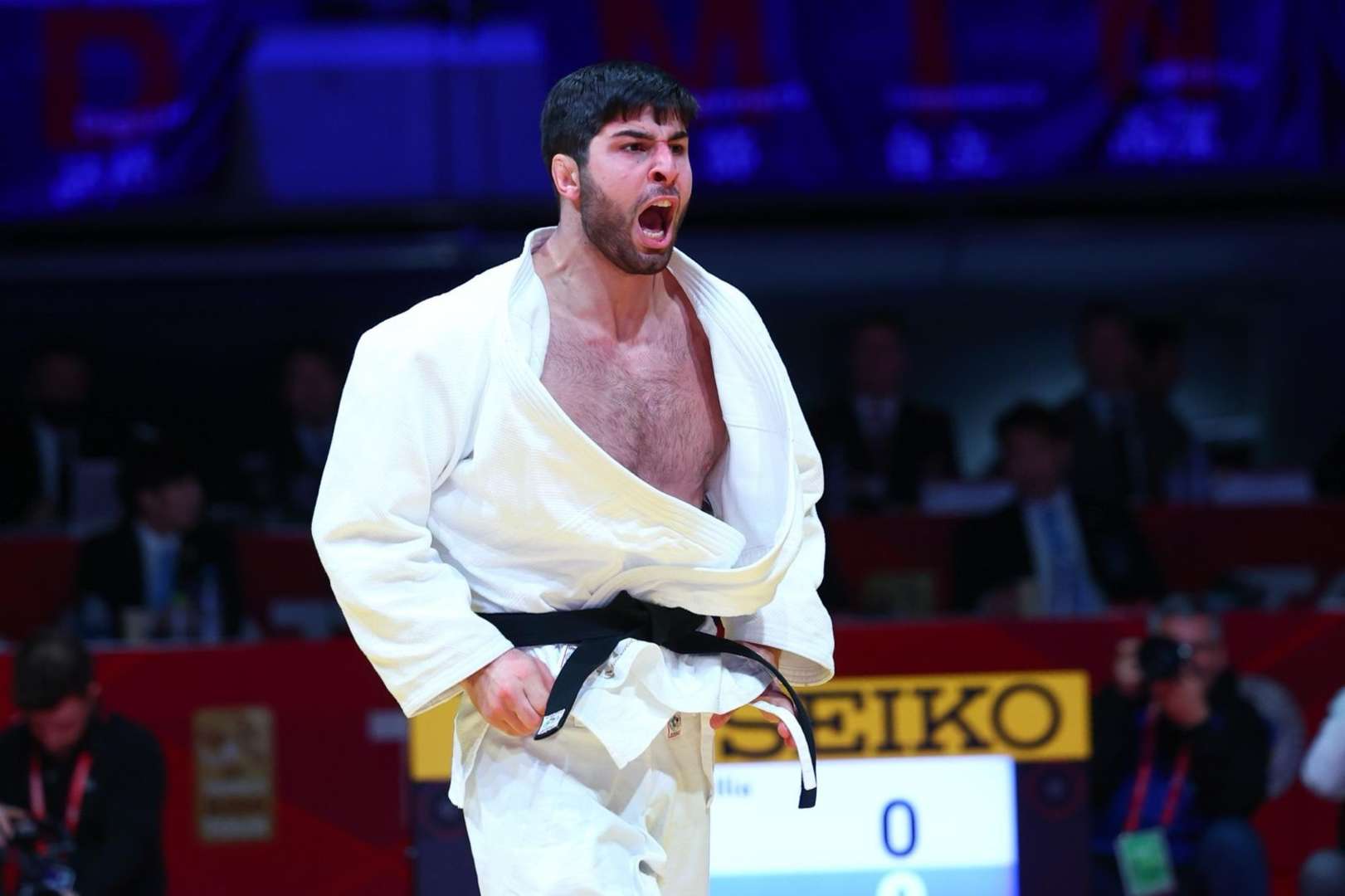
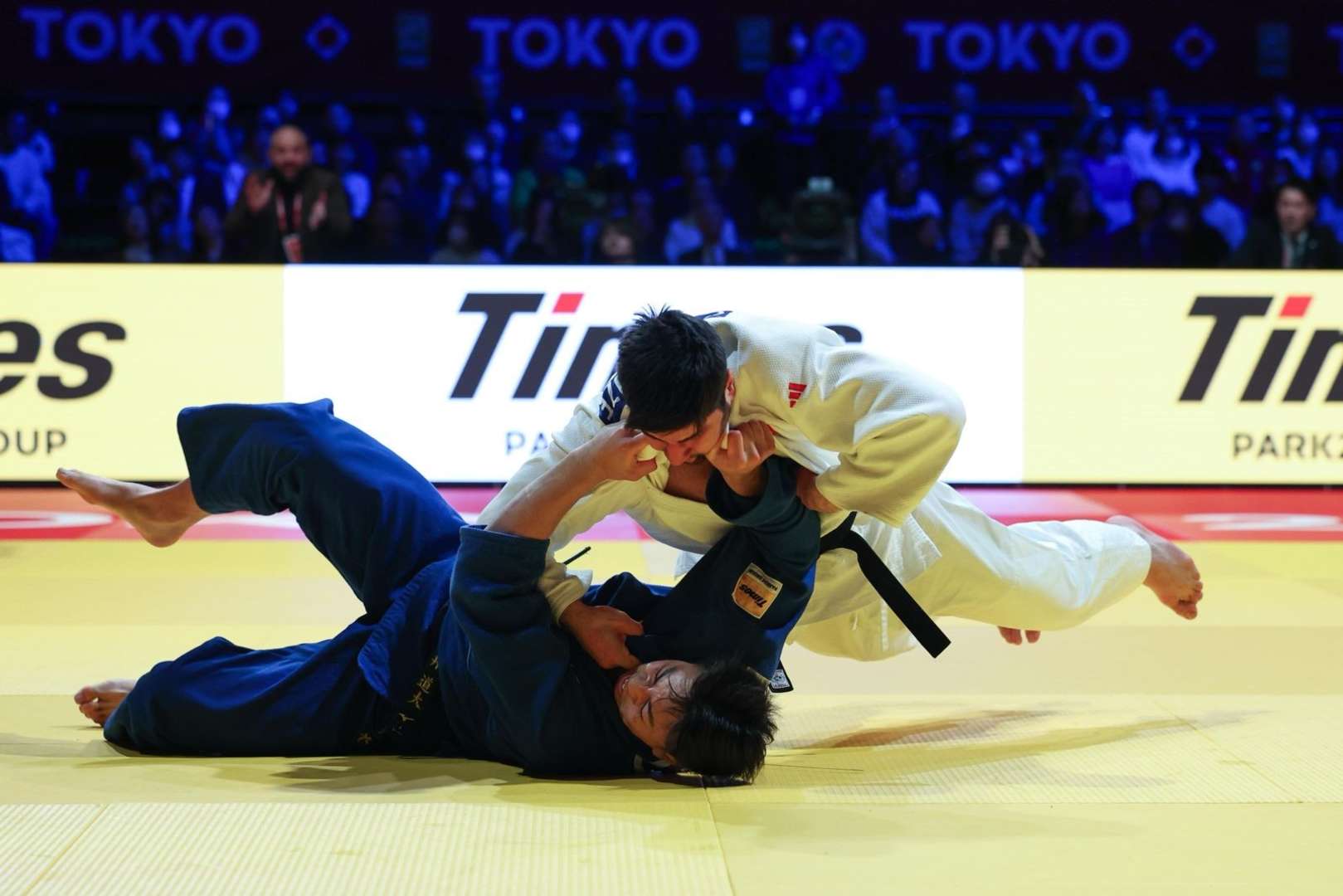
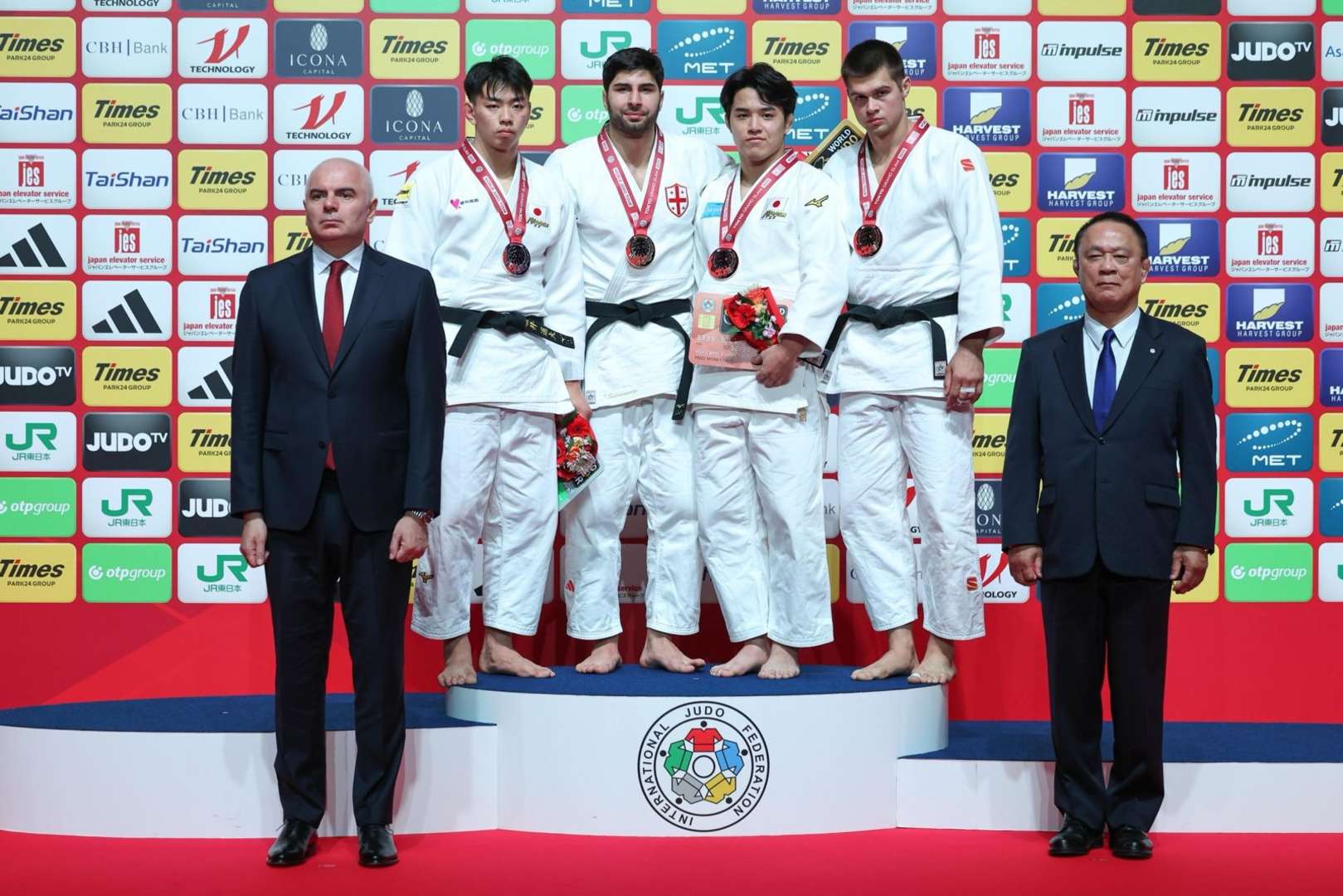
Arai was first to up the tempo, launching several massive o-uchi-gari and uchi-mata attacks, dangerous enough to force Sulamanidze into survival mode, a position he did not wish to b win. A great judoka, a description that fits the Georgian perfectly, never lets these moments affect them for long and he therefore recovered fast and in the next exchange he reasserted himself. He came for an o-soto-gari, which Arai avoided, but it was too late, Sulamanidze had already executed his plan, linking an immediate o-soto-otoshi to the previous movement. Arai spun right through his back; it was a clean and skilful ippon. The fourth gold medal of the day would not stay in Japan; this one was heading to Georgia.
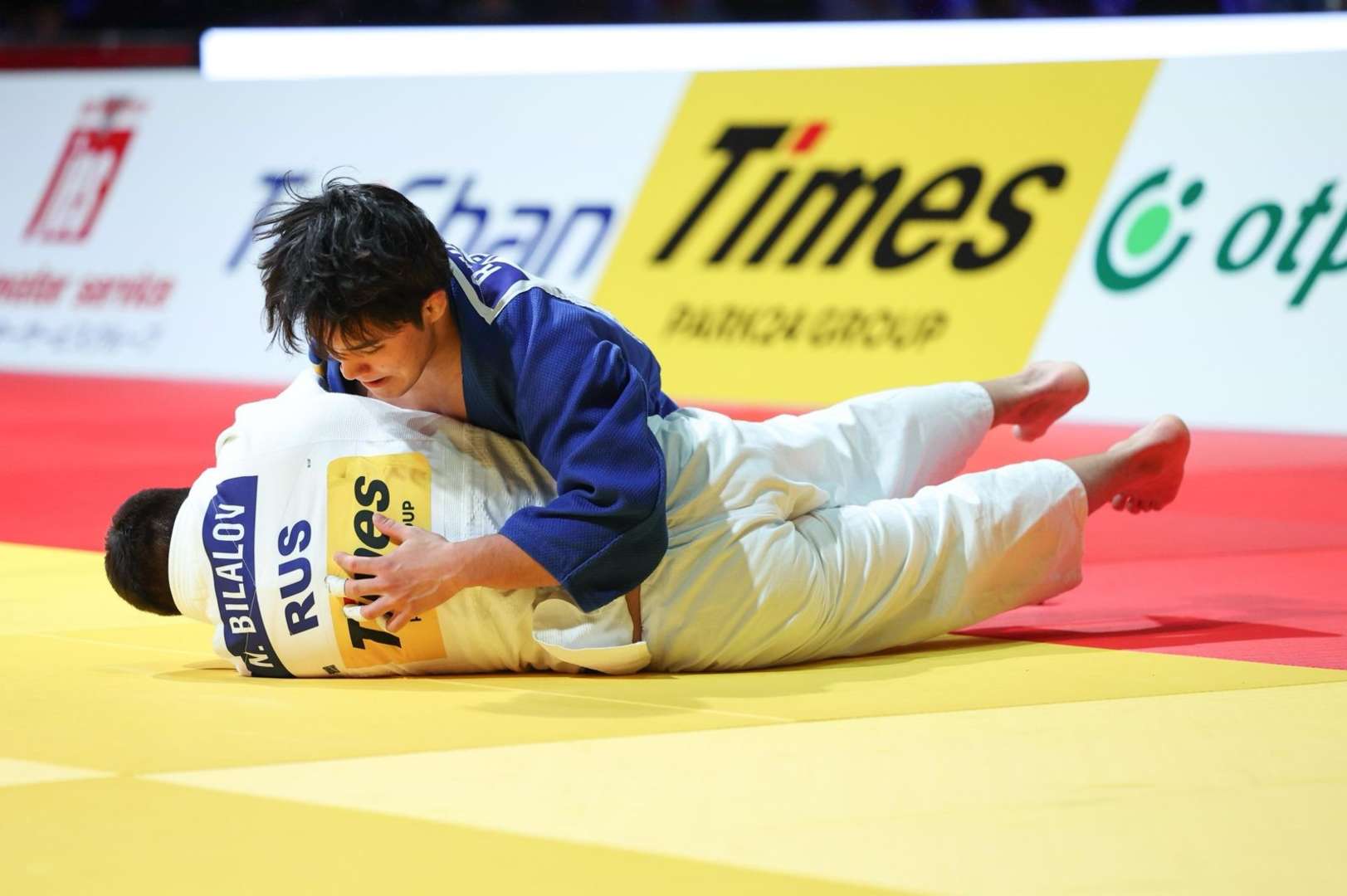
For a bronze medal and some serious world ranking points, Niiaz Bilalov (RUS) and Ryotaru Masuchi (JPN) stepped into the arena. The Japanese judoka was on point from the very first seconds and it took him just a minute to log a first score, a yuko from an extra-fast o-uchi-gari. This indicated a fast and furious contest ahead but that single yuko was never upgraded or equalised and so Masuchi won the bronze medal with that first o-uchi-gari.
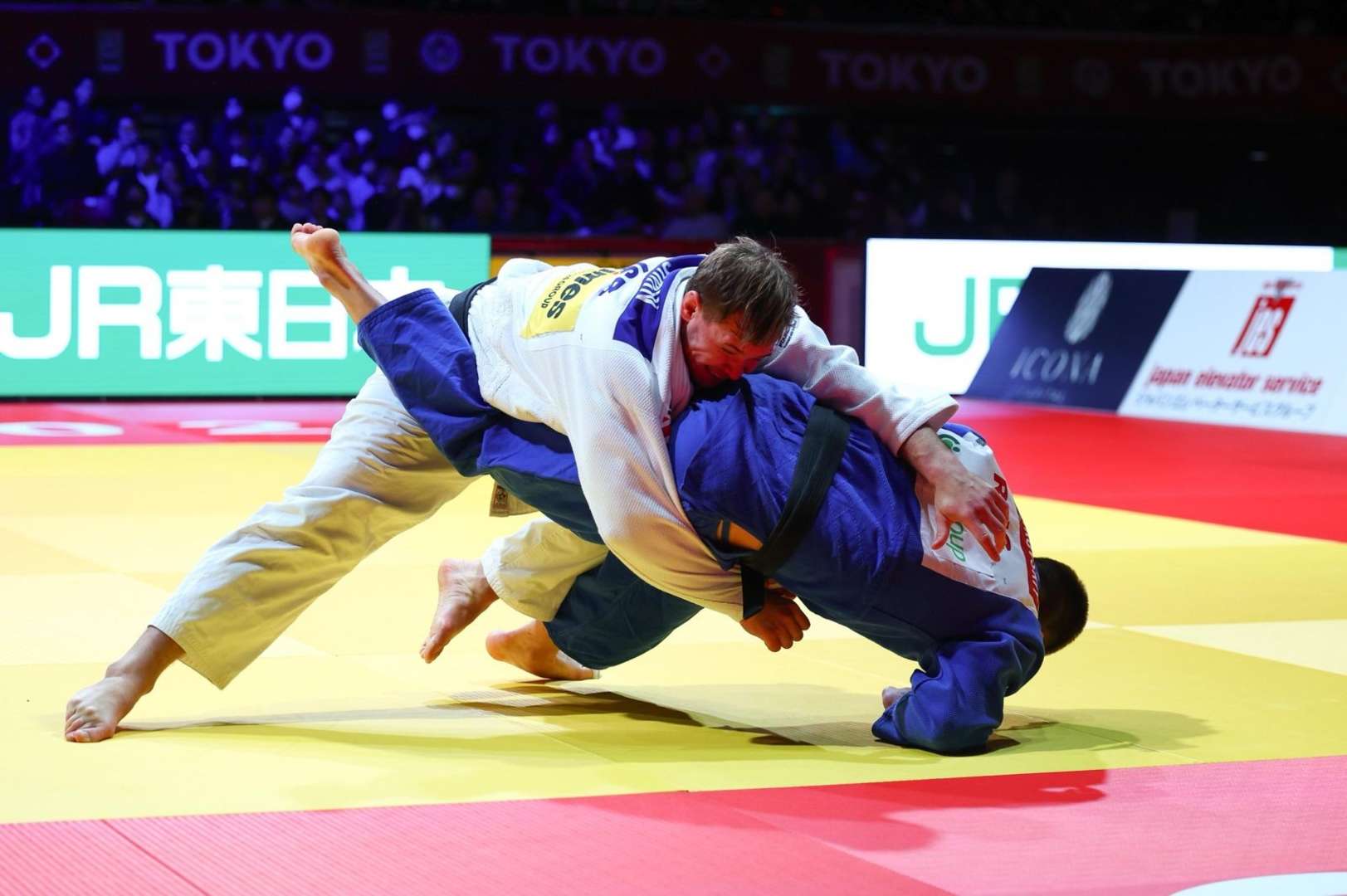
Iosif Simin (ISR) and current world champion Matvey Kanikovskiy (RUS) arrived to compete for the second bronze medal. The latter hasn’t fought for anything other than gold since the European Championships in November of 2023. He was clearly under pressure in Tokyoand in the bronze medal contest, Simin gained confidence with every second that passed. He gripped well and attacked at just the right moments to block Kanikovskiy’s flow. However, the Russian athlete does not give up easily and always has more ideas in his pocketbook. After just 18 seconds of extra time, Kanikovskiy attacked with a makikomi and scored a waza-ari. Simin gave it everything but the medal was Kanikovskiy’s.
Final (-100 kg)
Bronze Medal Fights (-100 kg)
Final Results (-100 kg)