
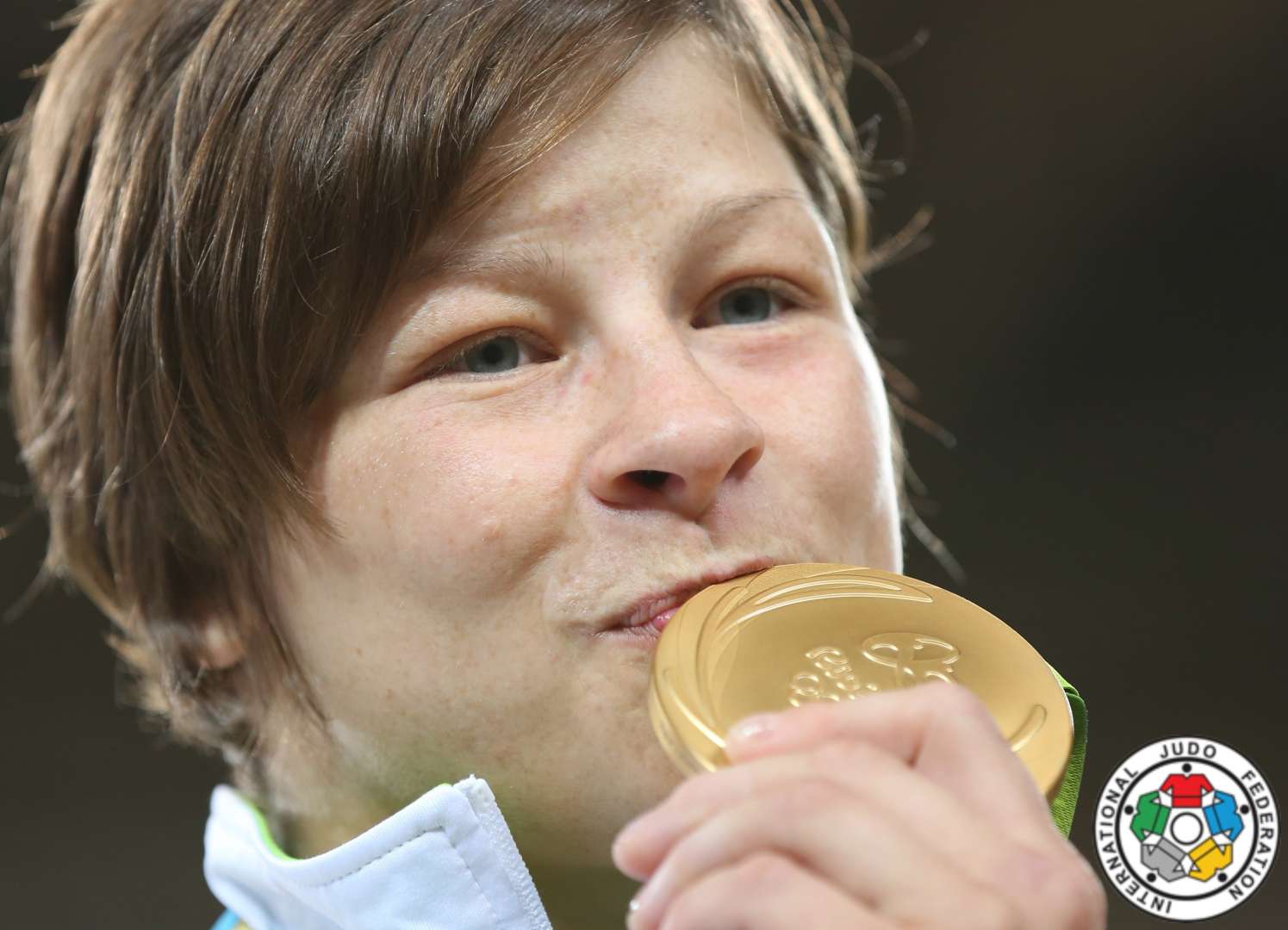
This is the shortest summary of the competitive career of Tina Trstenjak but, as we know, a judo career isn’t simply the sum of the competitive results earned. It continues way beyond the spotlit “hajime-mate” of the biggest arenas, leading people to improve themselves, contribute to society and never ever stop learning.
“My second judo career just started. With the same discipline and the same motivation, I’m beginning to understand why and how a judoka can become a champion. Through a project initiated by the IJF President, I have been able to access a range of education opportunities with the IJF Academy, all having a huge impact on me, particularly around my understanding of the 100 Kodokan-classified techniques. In parallel, my judo education adventure has taken me through a refereeing pathway, during which I have achieved the IJF continental refereeing licence and the IJF international refereeing licence.
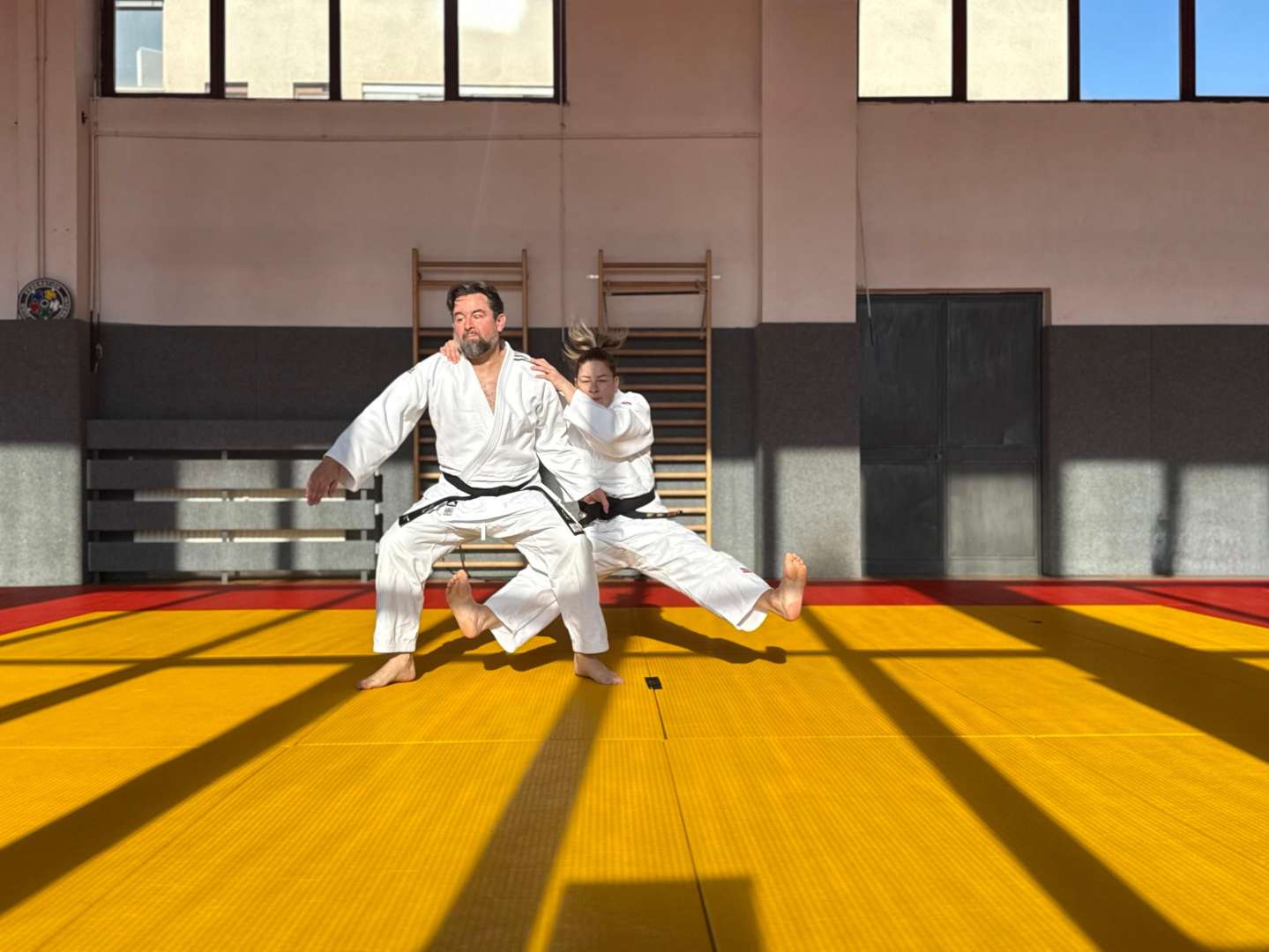
The IJF Academy also offers all students the chance to gain a deeper understanding of the importance of kata. Academy students have to deliver Nage-no-Kata to a level 1 standard, a kata which represents the fundamental principles of throwing techniques. They also work at level 2 for Katame-no-Kata, demonstrating the essential concepts of groundwork and control. Both are known as Randori-no-Kata and are important instruments for judo competition.
My next kata was Ju-no-Kata, which expresses the principle of flexibility and efficient use of energy, teaching judoka how to overcome strength through harmony rather than force. The different aspects of self-defence kata became important and so I began studying Kime-no-Kata which focuses on decisive action, posture and mental awareness in critical situations, and then Kodokan Goshin-Jutsu, which applies judo principles to modern self-defence scenarios while maintaining traditional values.
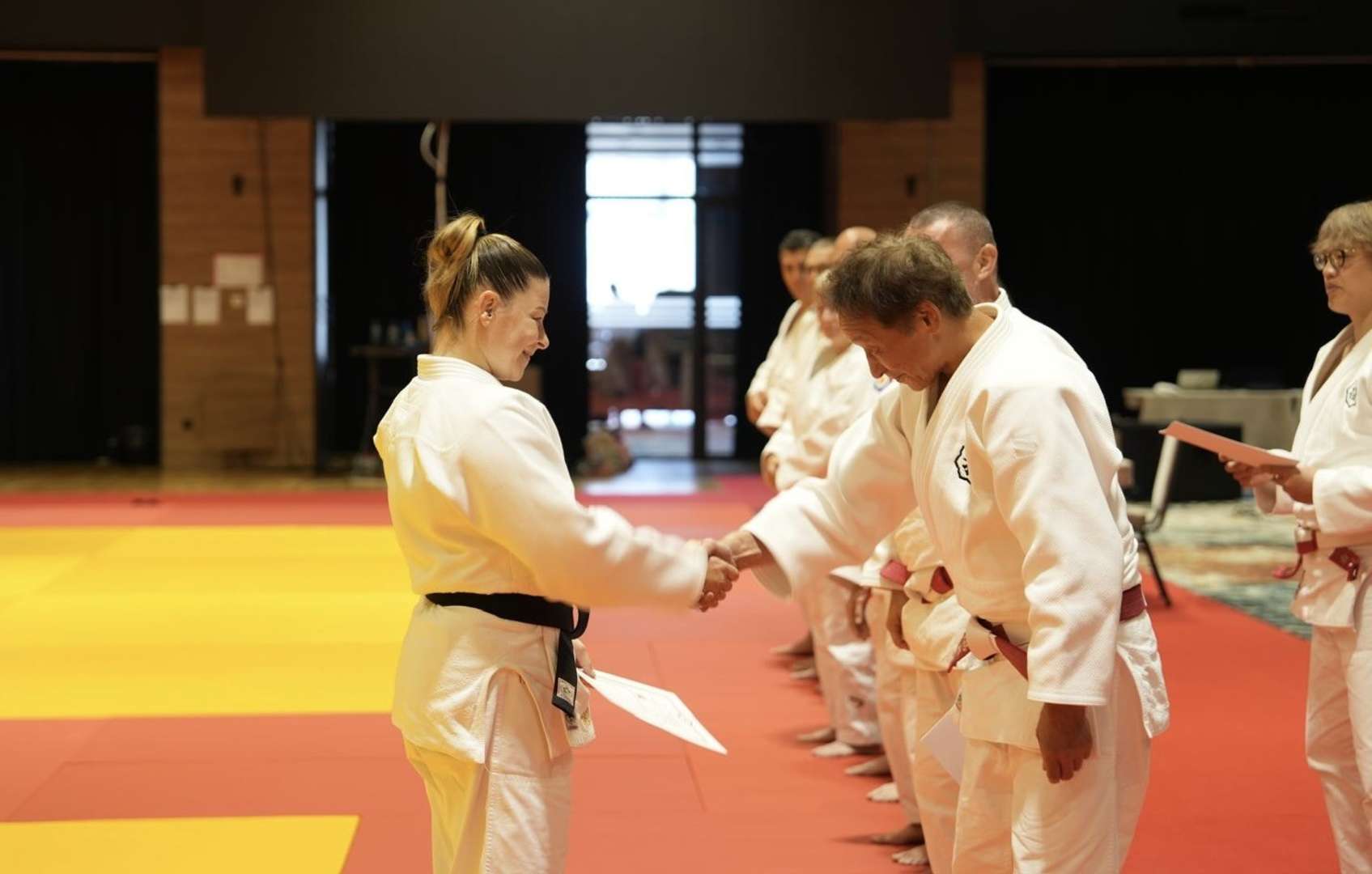
To further extend my kata education, my attention was directed to the learning of two final kata programmes: Itsutsu-no-Kata and Koshiki-no-Kata. Itsutsu-no-kata is a symbolic kata that represents fundamental principles of movement, balance and natural forces, whereas Koshiki-no-Kata preserves classical throwing techniques originally used by the samurai while wearing armour, reflecting the historical roots of judo.”
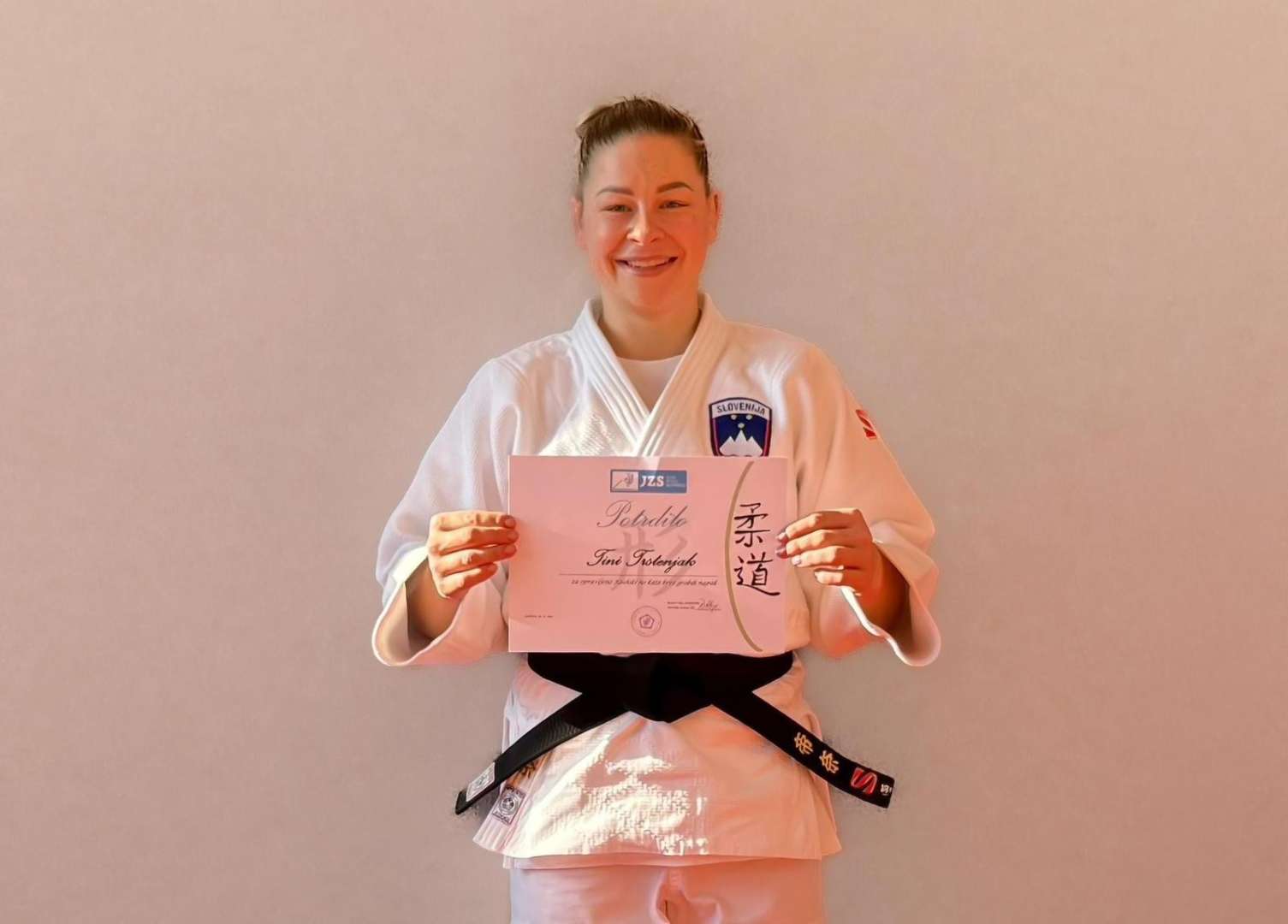
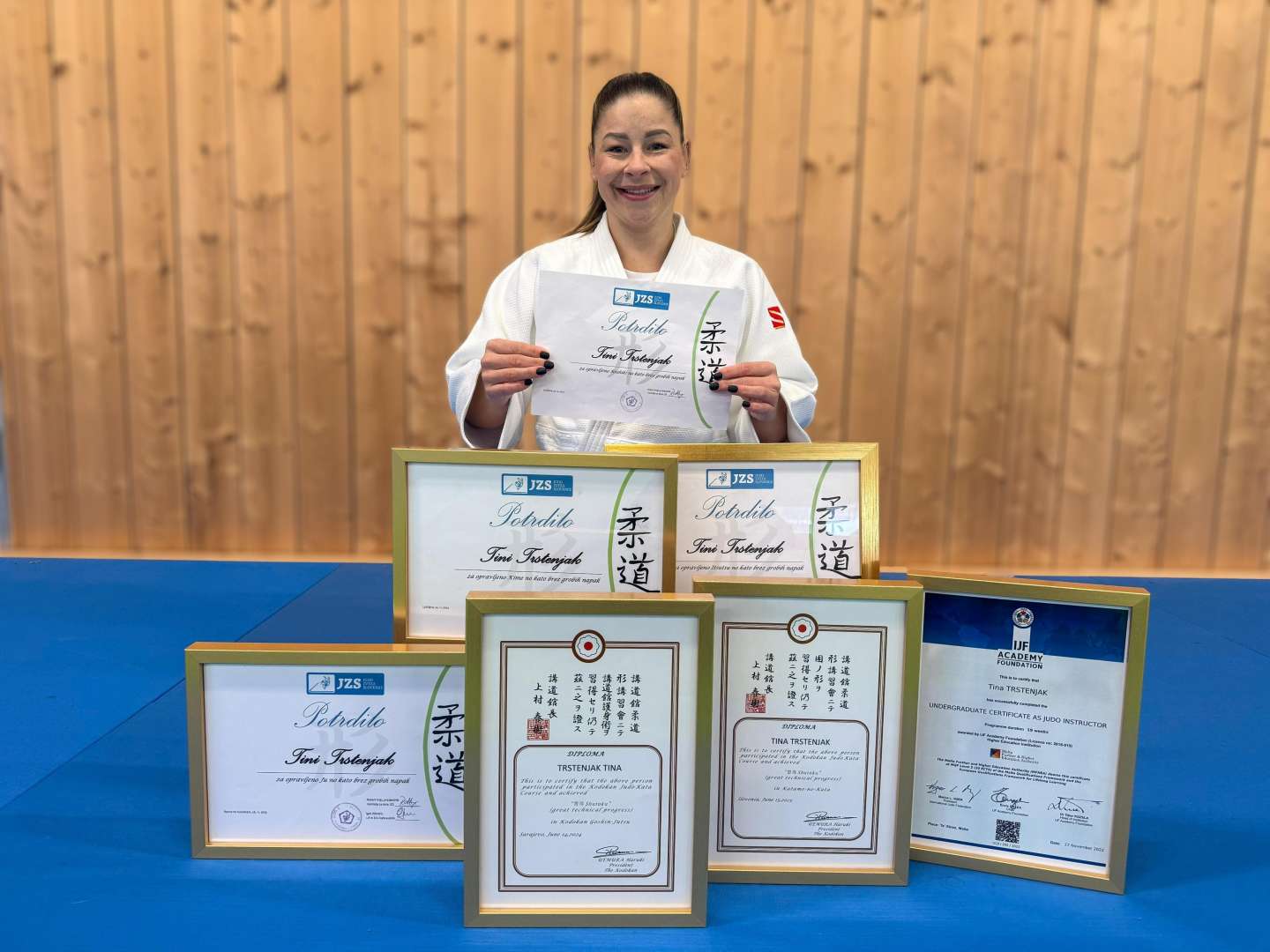
Tina has undertaken an intense period of study and examination to ensure her knowledge of the seven kata is thorough. She now holds certificates for each of them, some completed with examiners in her home country, Slovenia, and some completed at Kodokan seminars in Europe.
“On 31st December 2025, I woke up and reflected on my three years of study and examination of all seven Kodokan kata. It was a great feeling. I feel very fortunate to have enjoyed so many big moments in my sporting life. From winning Olympic and world gold to earning my IJF refereeing licence, I've been proud of the work I have done and now with the completion of these kata examinations, I can enjoy another new, great feeling.
After three years of studying, I went to my parents for the last lunch of 2025 and showed them the seventh kata certificate. I hugged them, another ‘thank you’ for everything they have been doing for me in this second judo career.
I hope that my experience through this three-year educational journey will inspire younger generations and champions alike, to continue their judo education, studying judo and understanding that learning in judo never truly ends.
I am deeply grateful for the judo vision and support of IJF President Marius Vizer, the board of the IJF Academy, my colleagues in the IJF Referee Commission and the Kodokan President and his experts. Without their guidance, encouragement and support, I would not have been able to achieve so much in such a short time. I also give a heartfelt thank you to the club where I trained my whole life, Judo Klub Z'Dezele Celje, for always standing by me, also to the Slovenian Judo Federation and the Slovenian Kata Commission for being part of all these kata examinations over the last three years. Last but not least, to my parents I would like to say, ‘You are simply the best,’ your Tina.”
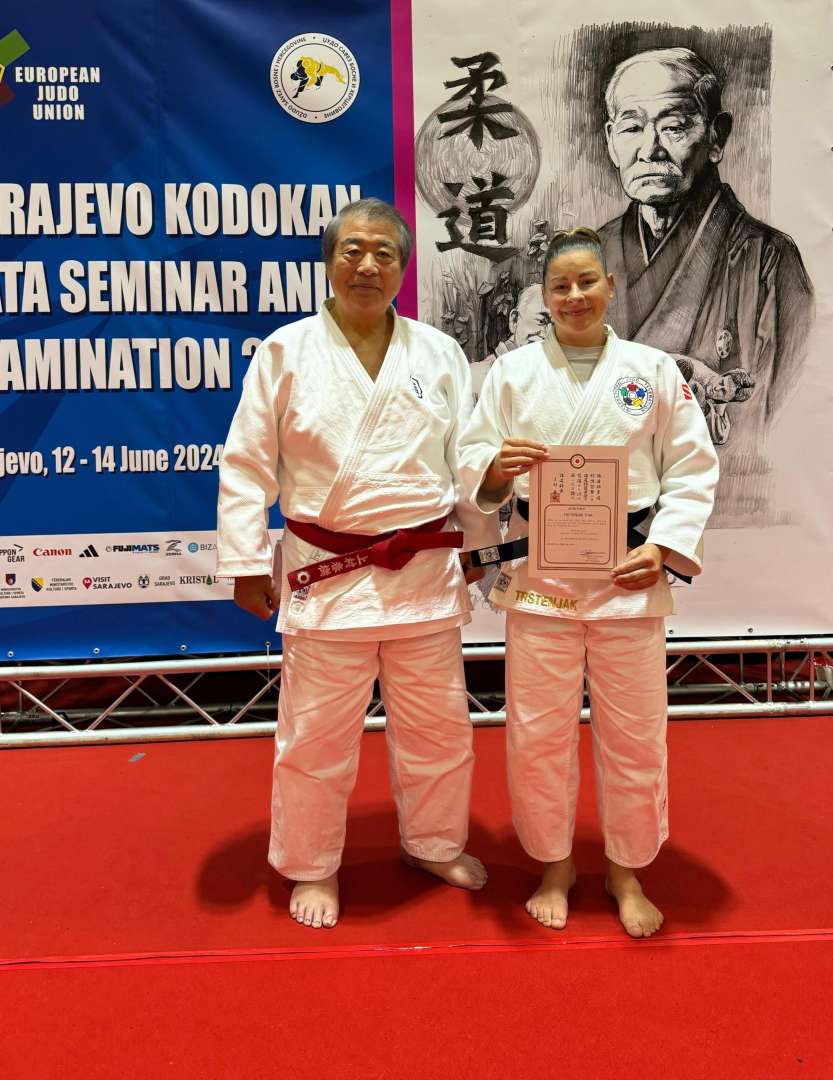
It is possible that Tina Trstenjak is the first Olympic, world and continental champion to hold certificates for all 7 kata as well as those incredible medals. No-one has ever said that judo is easy but it is accepted that it is empowering and educational, a lifelong journey of self-improvement. Every judoka can spend a lifetime learning, whether they achieve big results or enjoy the more recreational aspects of the sport. This is a global system of discovery, one which Tina Trstenjak continues to explore and enjoy.