
Before the world’s elite gather in Paris, two continental opens will set the tone for the new year. Casablanca, Morocco, will host the first event on 25th January, followed immediately by Sofia, Bulgaria. These tournaments will be the first occasions for athletes to earn ranking points in 2026 and to begin shaping their competitive momentum.
A New Season, a New Olympic Cycle
While Paris will mark the first grand slam of the year, 2026 carries even greater significance. It is the year in which the Olympic qualification process for the Los Angeles 2028 Games begins. That decisive phase will launch later in the season, during the Ulaanbaatar Grand Slam in June. From that moment on, every result will take on added weight as athletes pursue the ultimate goal of Olympic selection.
As the first points of the new year are about to be awarded, it is the right moment to revisit how the IJF World Ranking List operates and how athletes can maximise their competitive strategy.
How Ranking Points Are Earned
The World Ranking List is built on results from a wide range of IJF-sanctioned competitions. Points can be accumulated through performances at continental opens, grand prix, grand slams, masters, continental championships, world championships and the Olympic Games. Each result contributes to an athlete’s overall ranking but points are not permanent; their value changes over time according to a clearly defined system designed to reflect current performance levels.
For the 12 months following a tournament, points count at 100%. After 12 months, those points are reduced to 50%, and after 24 months they expire entirely and are no longer counted. The key reference is the week number in which the competition takes place. The reduction and expiration occur at the beginning of the corresponding week in subsequent years, with Monday defined as the start of the week. For example, if a tournament is held in week 17 of a given year, its points will be reduced to half at the beginning of week 18 the following year and will expire as week 18 begins the year after that.
Special Considerations and Exceptions
To ensure equal treatment across all continents, continental championships are considered as if they were all held in the same week, regardless of their actual dates. Their points reduction and expiration follow the rules published in the IJF Sport and Organisation Rules (https://sor.ijf.org).
When Points Are Equal
In the event that two or more athletes finish with the same total number of ranking points, a specific hierarchy is applied to determine their position. Priority is given to the highest sum of current points earned at world championships, followed by the highest sum from grand prix, grand slams and masters events.
If equality remains, the ranking is decided by comparing the highest single-event score, then the second-highest and so on. In cases affecting Olympic qualification where athletes remain tied, the final decision rests with the IJF Executive Committee.
The Leaders at the Beginning of 2026
As of 19th January 2026, the World Ranking List already reflects intense competition across all weight categories. Among the men, the leaders are Ayub Bliev in the -60 kg category (4,853 points), Takeshi Takeoka at -66 kg (4,880 points), Joan-Benjamin Gaba at -73 kg (4,401 points), Timur Arbuzov at -81 kg (6,105 points), Sanshiro Murao at -90 kg (6,125 points), Dota Arai at -100 kg (5,180 points) and Inal Tasoev in the +100 kg category (6,250 points).
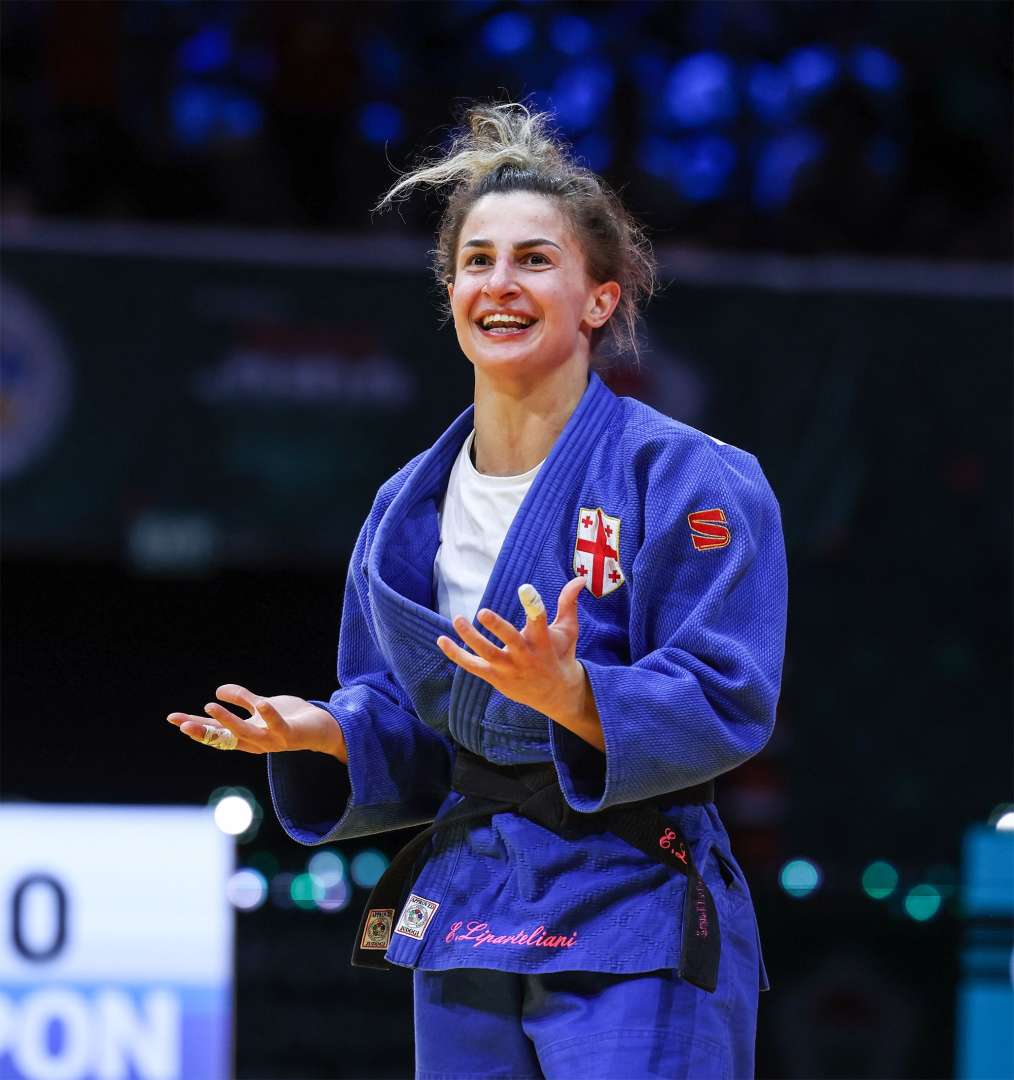
On the women’s side, Abiba Abuzhakynova leads the -48 kg category (5,096 points), Distria Krasniqi is first at -52 kg (6,260 points), Eteri Liparteliani tops the -57 kg category (5,751 points), Haruka Kaju leads at -63 kg (6,000 points), Lara Cvjetko is number one at -70 kg (6,250 points), Patricia Sampaio heads the -78 kg category (6,450 points) and Hyeonji Lee leads the +78 kg division (6,090 points).
A Season of Opportunity
With Paris fast approaching and the Olympic qualification about to begin, every contest matters. The 2026 season promises intensity, strategy and high-level judo from the very first contest. For athletes, coaches and fans alike, the journey has begun and the road to Los Angeles is being paved right now!