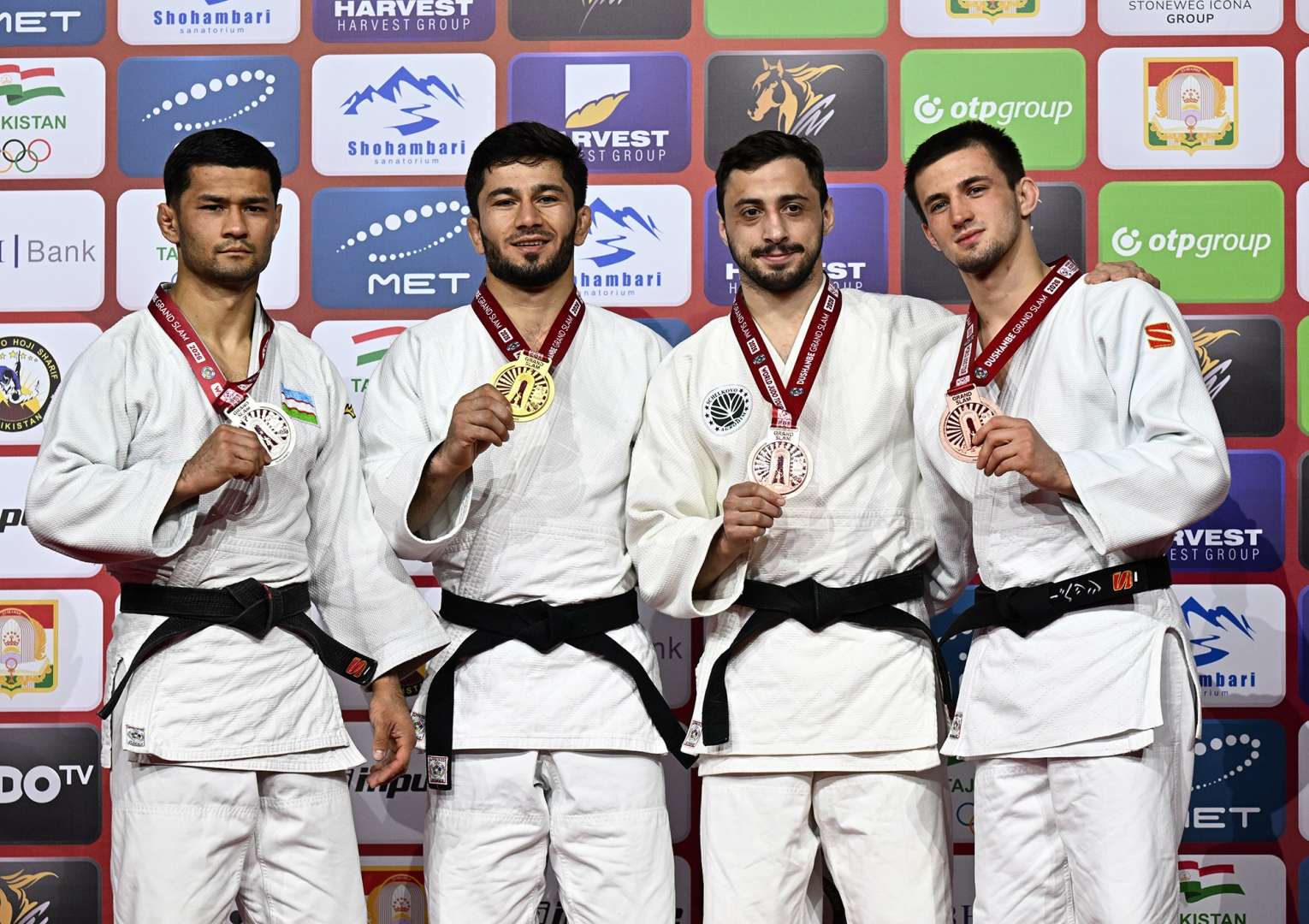

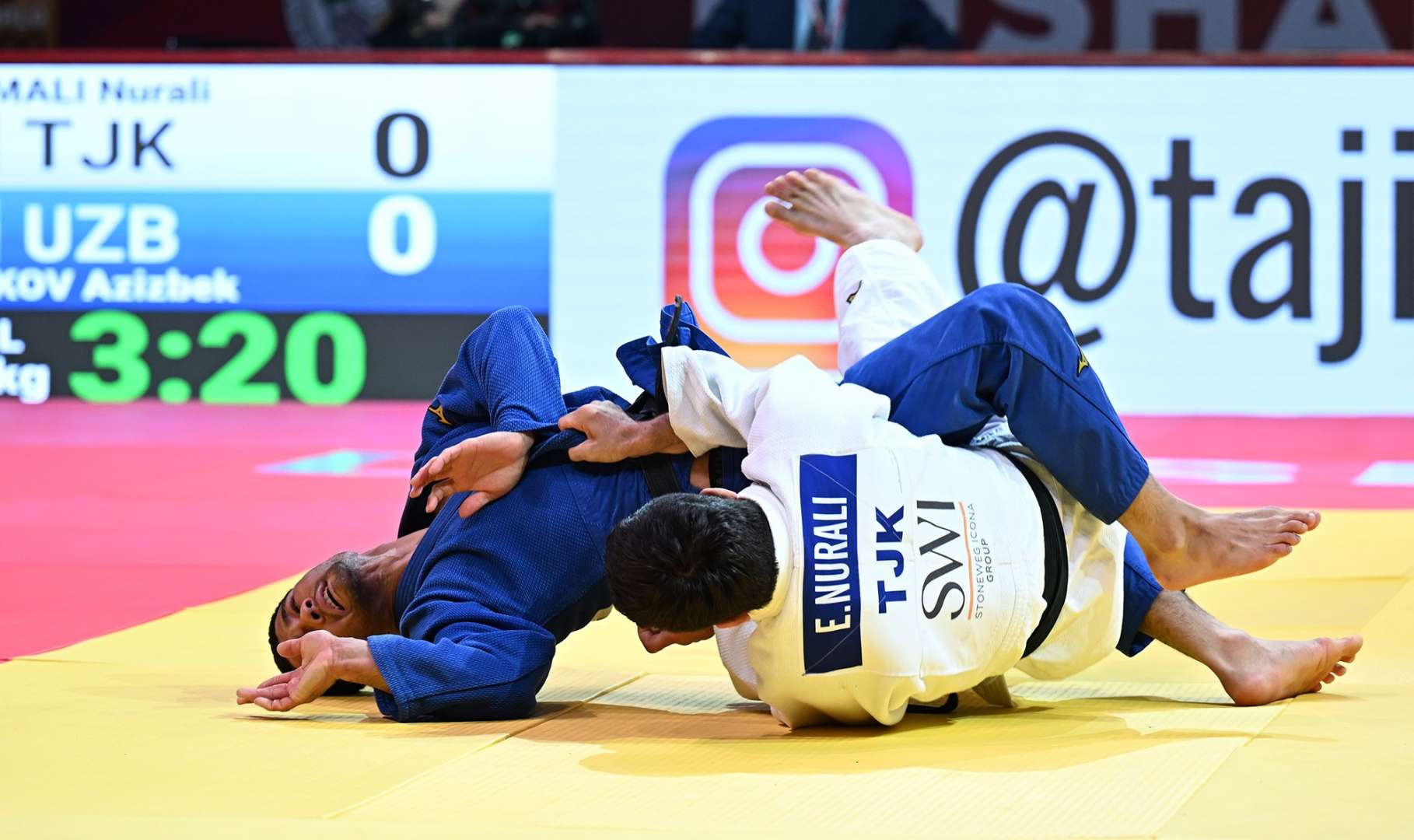
In the final he faced Azizbek Ortikov (UZB) who had delivered an excellent run of wins in the preliminary session. Ortikov wasn’t ready for Emomali and the energy of the crowd though and Tajikistan’s hero of the day countered for what was very nearly ippon in the first exchange. Ortikov had a second chance, just, but Emomali was not about to lose at home, not today.
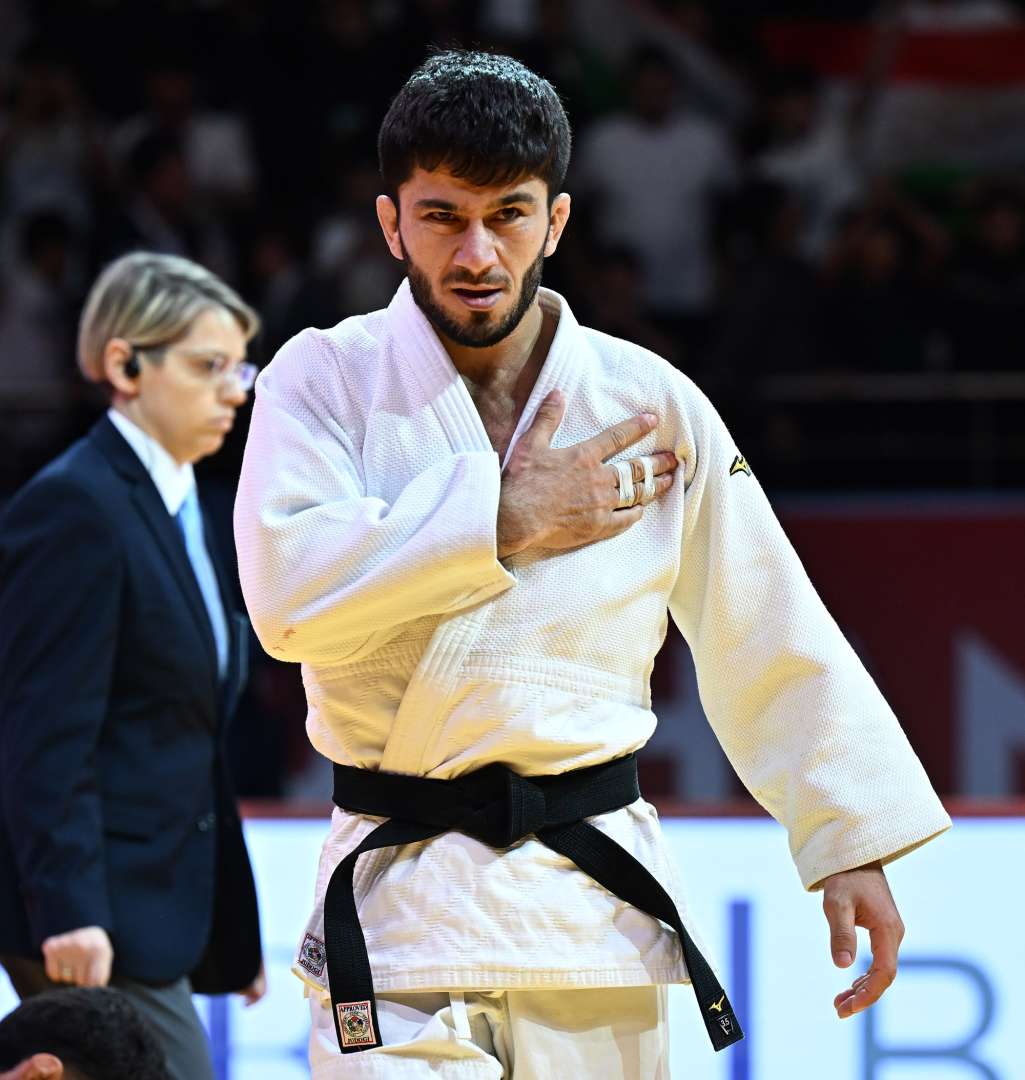
Although each judoka racked up two penalties, making defence more complicated, Emomali managed to hold is ground, conceding no scores and protecting his own. The Tajik national anthem would ring out in the arena on day one in Dushanbe.
Nurali Emomali, happy and relieved to have won the medal, said, “I cannot be thankful enough to the Tajikistan Judo Federation, to the Tajikistan Olympic Committee and to the people of Tajikistan who always support me. During the final, I believed in my judo continuously even after the first scored was changed and with the support of the fans, I knew I could not lose today. This glory tonight is for them.”
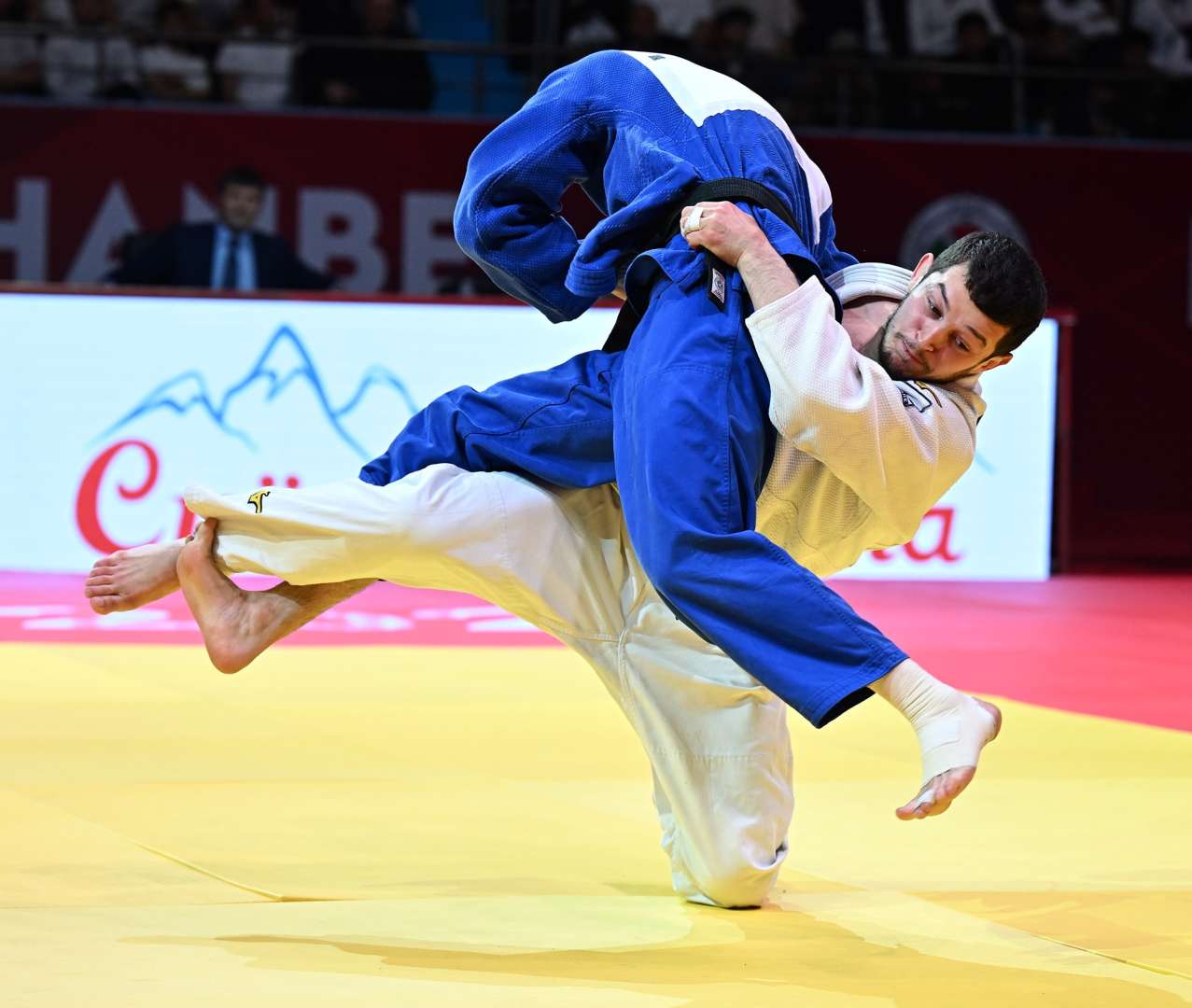
In the first bronze medal contest Vadym Chernov (UKR) faced Iago Abuladze (RUS) and it was a tense from the outset. Abuladze took control early, scoring a yuko and then later using a soto-makikomi to add a waza-ari to the scoreboard. Chernov was able to recoup a yuko of his own but with seconds left on the clock, that was all he could do. Charging at Abuladze for one last attempt, he was countered and thrown fore a second waza-ari, sealing his own fate.
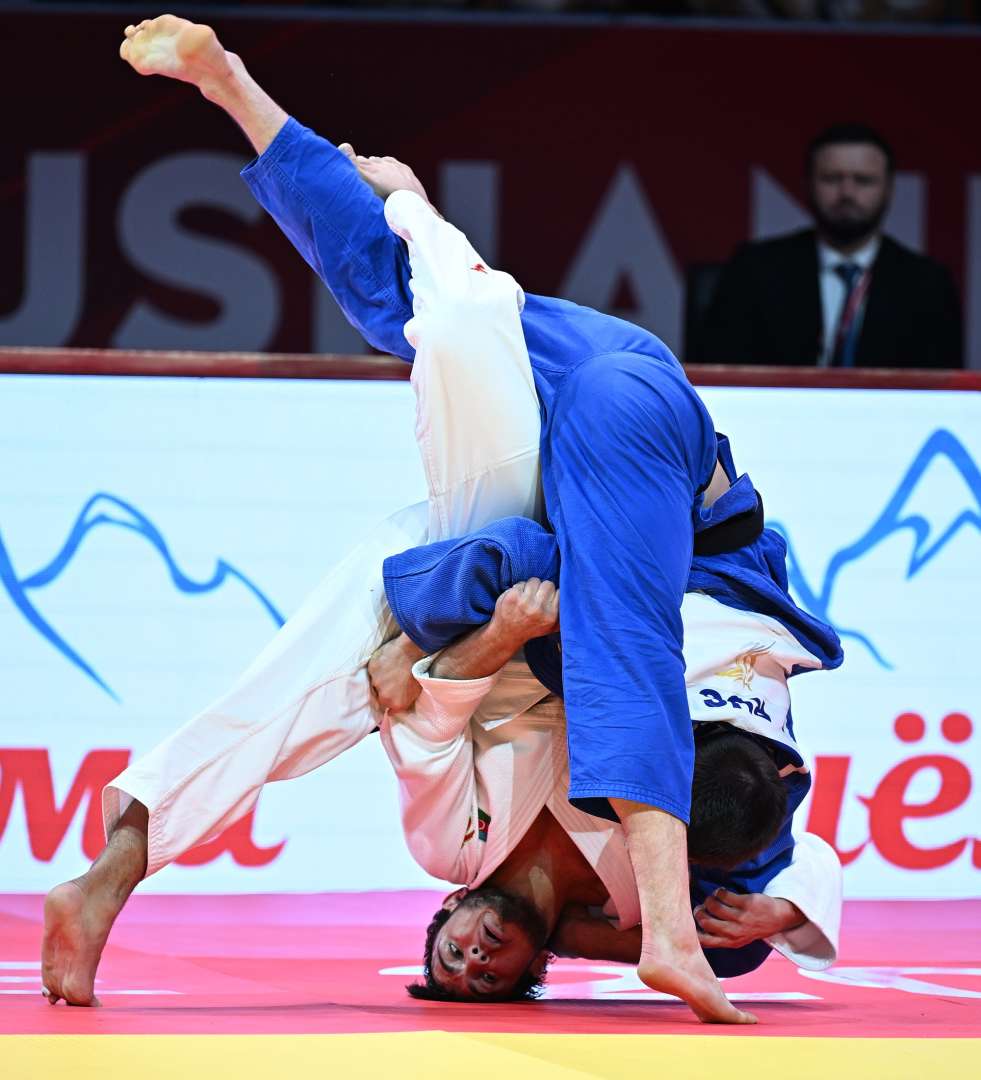
The second bronze medal could join Abuladze’s in Russia, at the hands of German Kobets, or it could be won by Nizami Imranov, competing for Azerbaijan’s first medal of the Dushanbe Grand Slam 2026. The answer took time to develop, a close contest ensued with both fighters bringing attacking judo to the tatami. In the end though, it was Kobets who scored with an uchi-mata well inside the lats minute of normal time and converted it into ippon on the ground. The Russian Federation had secured both bronze medals in this category.
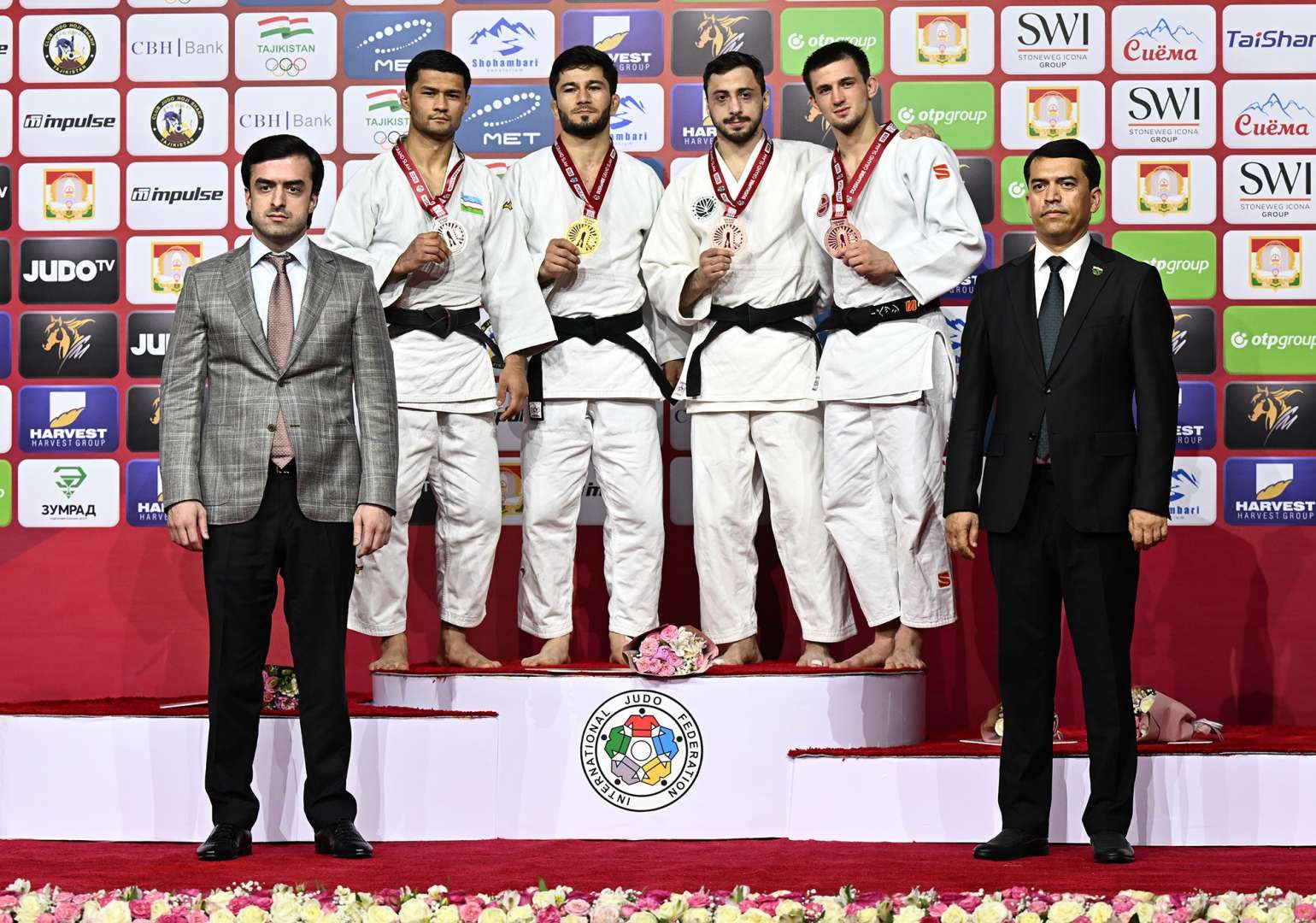
Final (-66 kg)
Bronze Medal Fights (-66 kg)