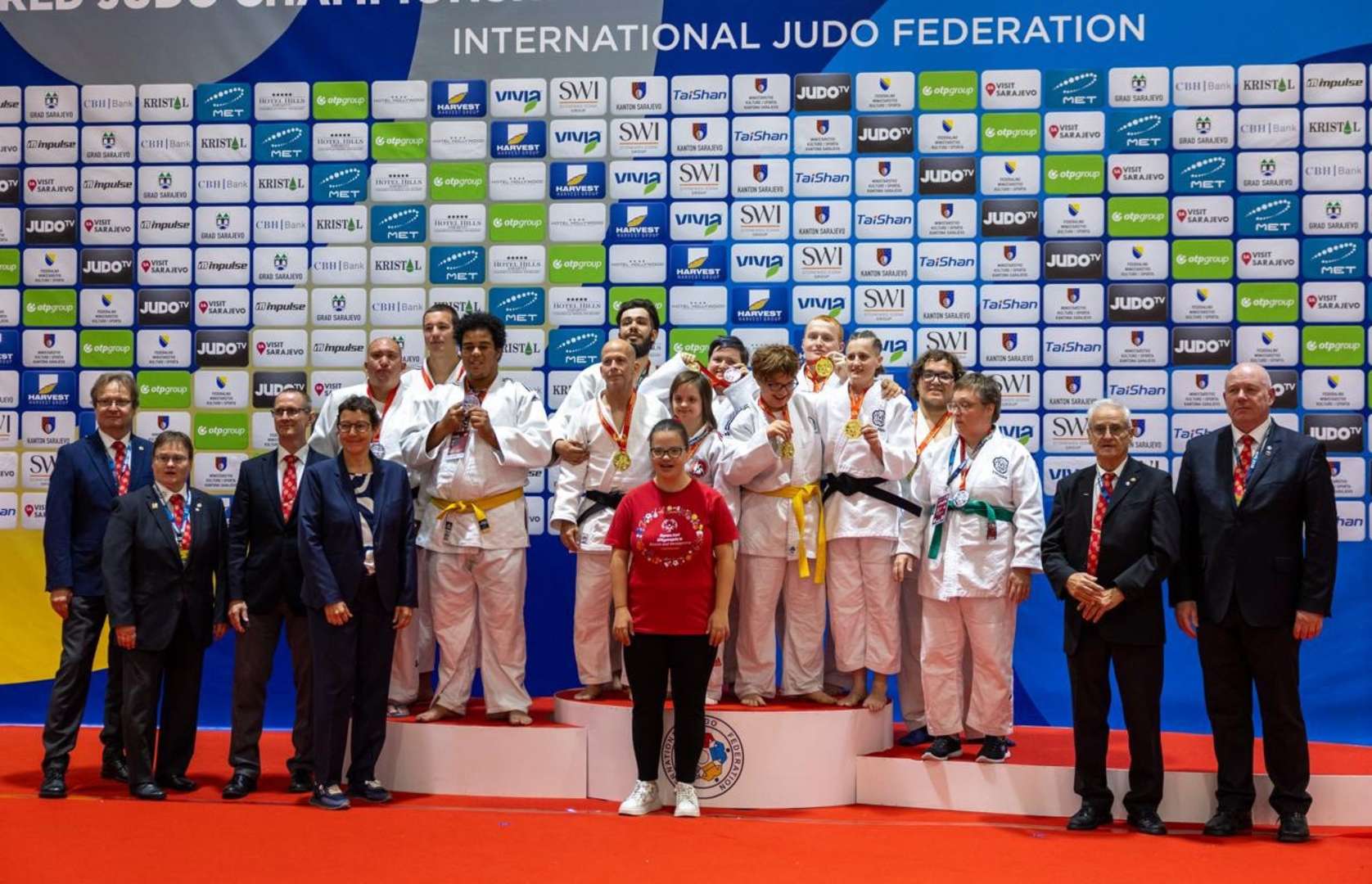

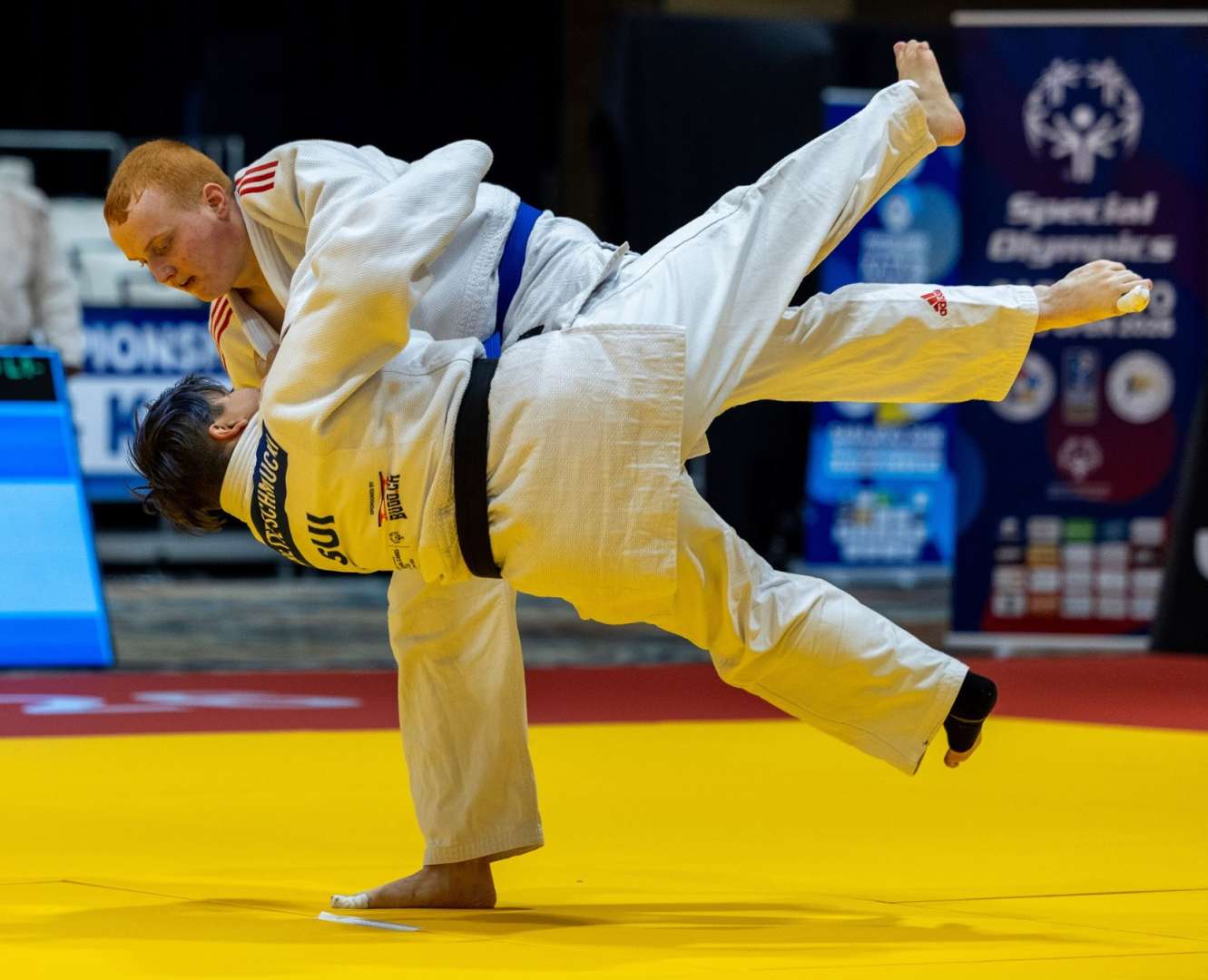
During the first day of the kata championships, eight pairs stepped onto the tatami to perform their kata. For the athletes, it was an unforgettable moment. For the organisers and for everyone watching, it was a powerful illustration of what inclusion looks like when it is given its rightful place.
“For our Special Olympics athletes, this is a wonderful opportunity to take part in an event that puts them at the heart of the arena,” Cecilia Evenblij explained. “It is a beautiful place to be.”
Four categories were represented in Sarajevo. Two were unified categories, in which tori is always a Special Olympics athlete and uke is a coach. The coach is permitted to offer a defined level of support during the performance, enabling judoka who may face greater challenges to present a kata and demonstrate what they have learned. In the other two categories, both tori and uke were Special Olympics athletes.
The format recognises that every athlete should be given conditions in which they can express their ability. It does not lower expectations. It adapts the environment so that the work, the learning and the achievement of each judoka can be seen.
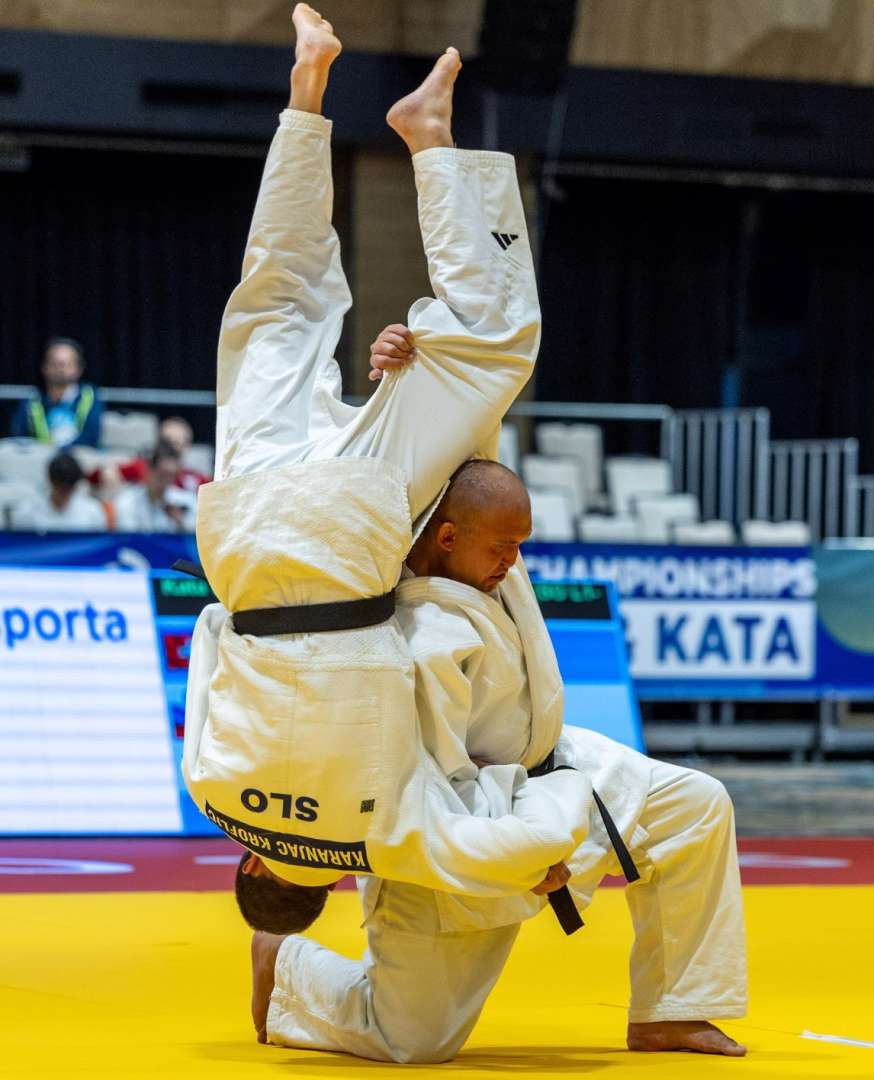
“I think it is a very good thing to integrate our competitions into a larger event,” said Evenblij. “It is a great place to be. Today, with kata, the atmosphere is calm. It is really very special.”
That calm matters. Kata is built on structure, repetition and attention to detail. For many Special Olympics judoka, those elements provide a framework in which they can flourish. Some athletes are on the autism spectrum, with varying needs and abilities. They are often highly attentive to detail and so kata can be particularly well suited to them. The same is true for judoka with Down syndrome and for many other athletes with intellectual disabilities; a clear framework can create the confidence needed to express themselves fully.
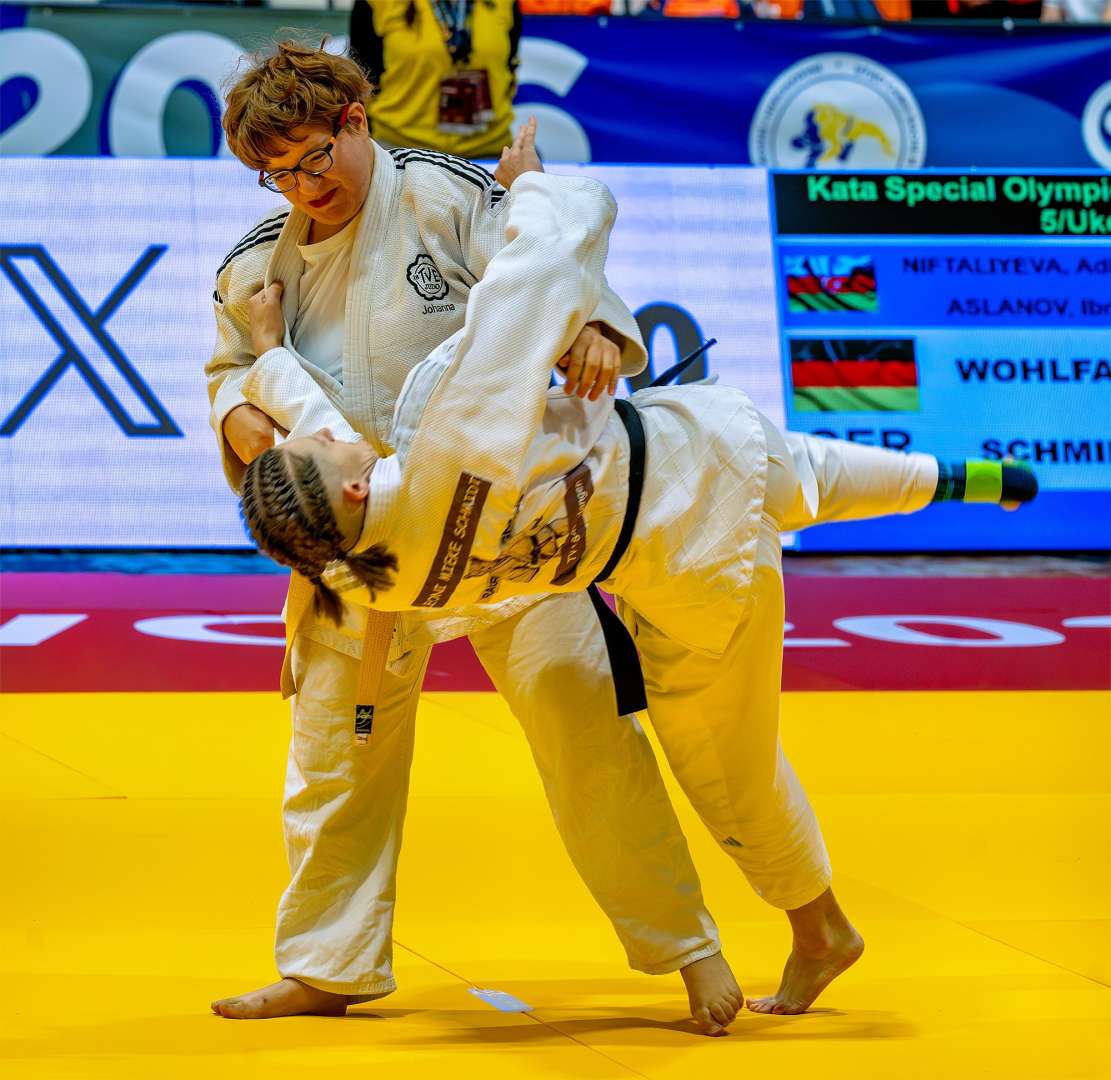
“Our judoka need structure and that is why kata works so well,” Cecilia Evenblij said. “They are happy to show what they have learned.”
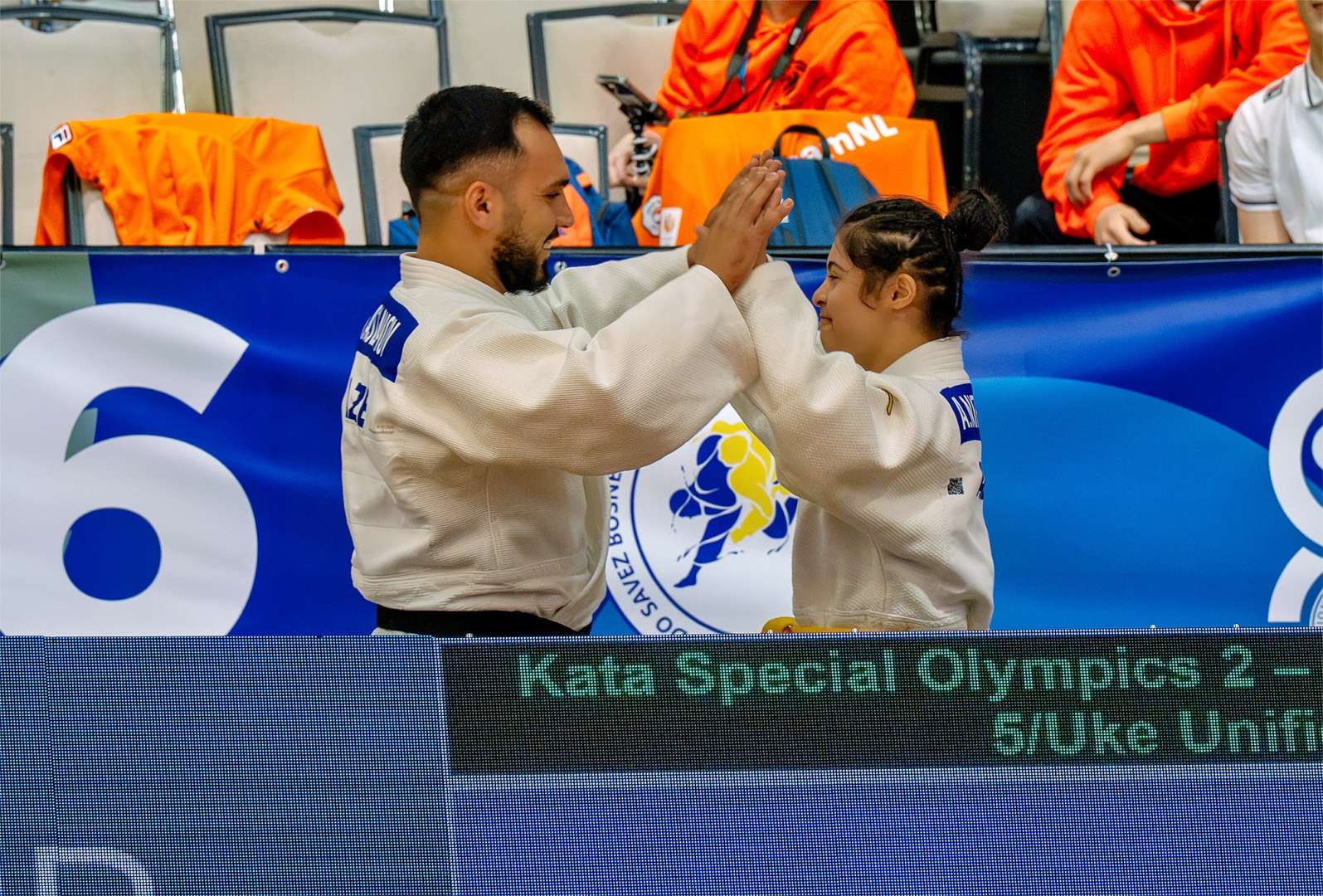
The pride was visible in Sarajevo. Each pair entered the tatami with concentration, respect and the shared responsibility that kata requires. There was no sense of a side activity or a separate stage. These demonstrations belonged to the event and to the international judo family gathered around them.
“I am truly very happy with what we have seen over these two days,” Cecilia Evenblij added. “It has been wonderful. I really believe this is a good mix. We are happy to be integrated, while at the same time keeping certain specific features that help our athletes, such as the opening ceremony and the balloon system we use to guide them.”
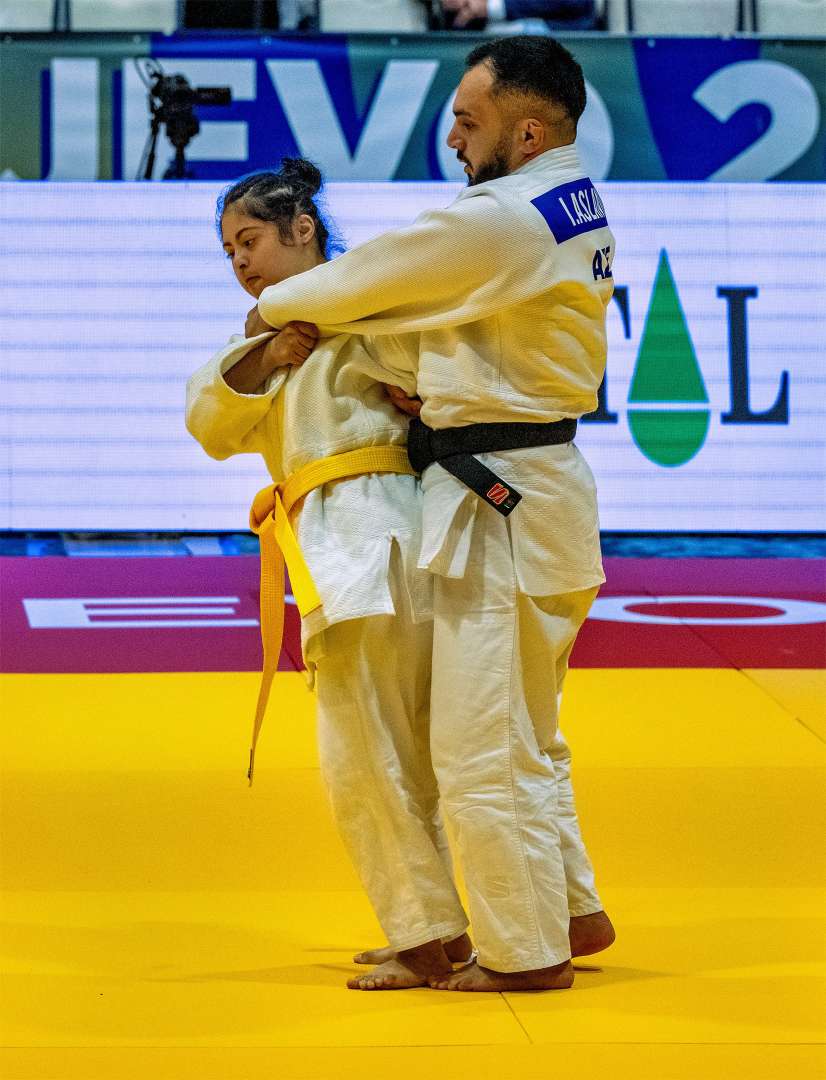
That balance is essential. Inclusion does not mean asking every athlete to fit a single model. It means creating a common space in which everyone can participate meaningfully, while respecting the support and adaptations that make participation possible.
Sarajevo has provided precisely that space. The Special Olympics judoka have performed at the heart of a world-level programme with their own pathways, their own achievements and the same right to be seen, applauded and celebrated. It is a significant step for inclusive judo and a reminder that the tatami is strongest when it welcomes every expression of the sport. The Sarajevo Special Olympics Judo Open is the first event of its kind to be integrated into an IJF world-level championship programme.
FULL RESULTS
Nage-no-kata — Special Olympics 1 - Group (SO L1-3)
- 1. ROGENMOSER, Riccy / ROTH, Nikola (SUI)
- 2. REINSPERGER, Franziska / BEATON, Justhin (GER)
Nage-no-kata — Special Olympics 2 - Tori L3-5 / Uke Unified
- 1. WOHLFAHRT, Johanna / SCHMIDT, Leoni Mieke (GER)
- 2. NIFTALIYEVA, Adila / ASLANOV, Ibrahim (AZE)
Nage-no-kata — Special Olympics 3-4 - 3 groups (SO L1-3 / Unified)
- 1. MOLINARI, Nina / ELL, Michel (SUI)
- 2. JERKOVIĆ, Nik / KARANJAC KROFLIČ, Tito (SLO)
- 3. WÜTHRICH, Jan / SCHMUCKI, Arlette (SUI)
- 3. IBRAHIMI, Amal / VAN HOYWEGHEN, Walter (BEL)