
In Astana, on day 2 of IBSA’s grand prix, a relative newcomer to the IBSA tour impressed in the morning session: Maysa Abouzeid (AUS). She won against a local athlete in the J1W -60 kg round of 16 to move into a quarter-final against the top seed Larissa Silva (BRA). There, Maysa won again, stunning the Brazilian and sending her to the repechage. Maysa then lost her semi-final to current IBSA world champion Uljon Amrieva (UZB) but would still have the chance to appear in her first ever IBSA Judo final block.

“I’m a J1 athlete but have a tiny, tiny amount of vision in a small spot in my left eye. My brain does clever things, using that spot to extrapolate.” Maysa speaks openly about her life, her sight and judo.
“Our attendance all depends on funding. I work full time as a social worker but I am lucky because most of my clients come to me; I don’t have to move about too much for work.” Many athletes have to work alongside their training, among both sighted and visually impaired athletes and across all sports. Maysa doesn’t feel bad about having to work; she knows it is a juggling exercise but she is happy to be able to pursue her sport regardless of limited financial support.

Why judo? “I wanted to do a martial art, one that wouldn’t exclude me. Other martial arts have not been welcoming. I was enjoying the Beijing Olympics in 2008, from home, and one of the commentators was talking about blind judo and saying that it had been a recognised discipline since 1988 for visually impaired athletes. I was at university at the time and went directly to the rec’ centre. There I found a phone number for judo and I haven’t stopped since!
Judo produces an adrenaline rush like nothing else. There’s also a history of diabetes in my family and so I thought it was a good idea to work against that. Judo is for health and fitness as much as for competition. Linked to that, I’m very independent but I find that these trips really challenge me. It’s a fantastic environment but to be in this space you can’t just sit on the couch, you have to get up and do something. You have to work and be mindful.”
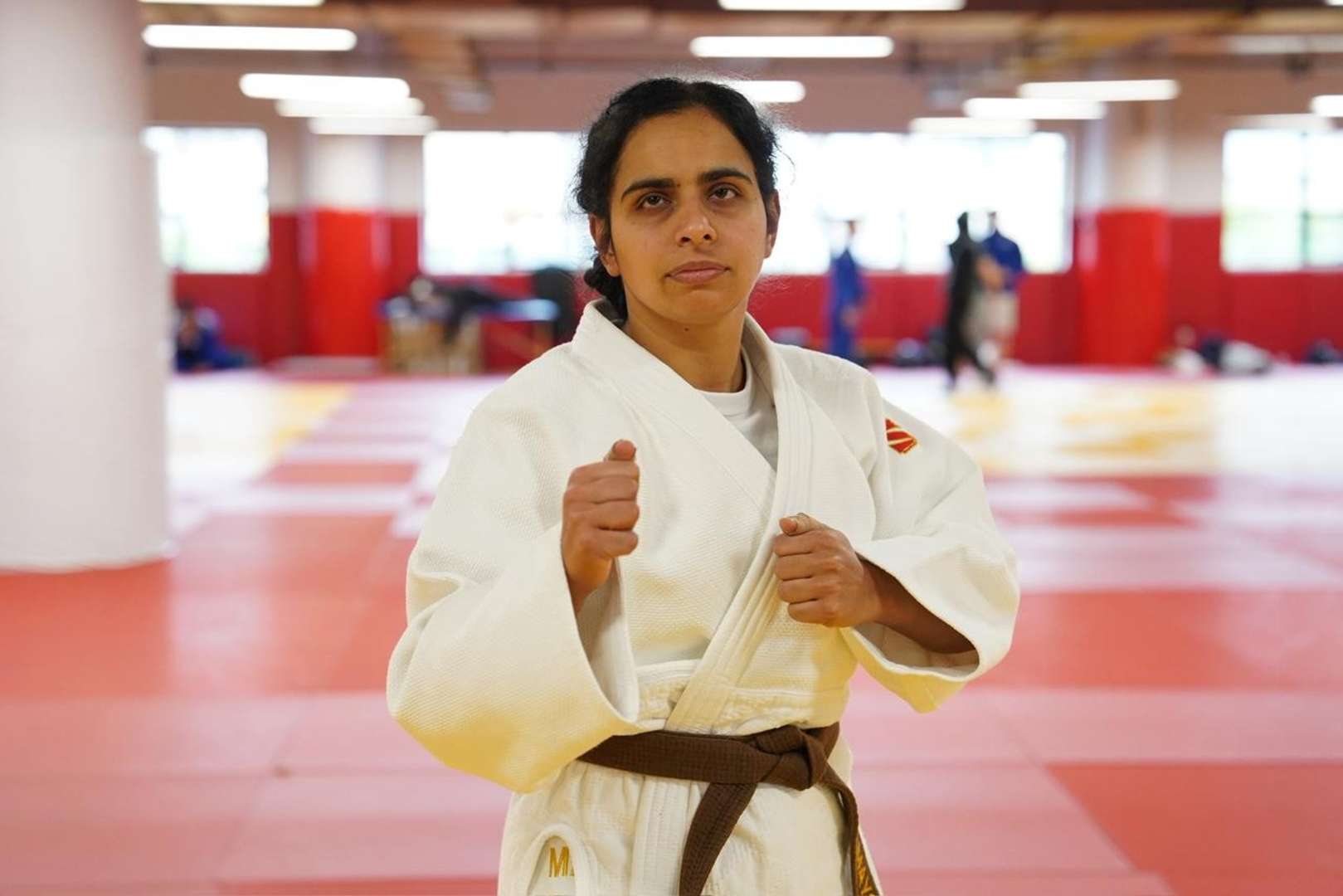
Maysa has many reasons for taking up and staying in the sport. She also sites a particular quote from Muhammad Ali as another clue to her character and her reasons for being here, “Champions aren't made in gyms. Champions are made from something they have deep inside them: a desire, a dream, a vision."
Maysa went on to say, “Talent is great but it takes more than that. It takes a toll on your social life, that’s for sure, but that’s the sacrifice to get to Los Angeles. All sports and all athletes go through that.”
She then went on to talk about how the Australian team is taking strides towards improvement. “The coaches give us the ability to improve. They help us technically.” Maysa particularly refers to new Judo Australia personnel. Teammate Taylor Gosens adds, “We have a new head coach for the Para team, Ivica Pavlovic. Between him and coach Fabian here is Astana with us, everything has become more organised. Ivica is hunting the funding too; he really loves judo.”

Gosens also reached the final block on day two in Astana, an incredible achievement as this was her first appearance since dropping down from over 70 kg to under 70 kg.
Judo Australia posted online about the performances of Maysa and Taylor, “The 2026 IBSA Judo Grand Prix Astana is already Australia's most successful Para Judo event on record, thanks to impressive performances by Maysa Abouzeid in the J1U60kg category and Taylor Gosens in the J2U70kg category.“
Promising performances, a clear team-wide desire to improve, the new coaching team; all points to a new era for Judo Australia’s Para-judo team.
All photos courtesy of Nurgali Zhumagazy / IBSA Judo.