
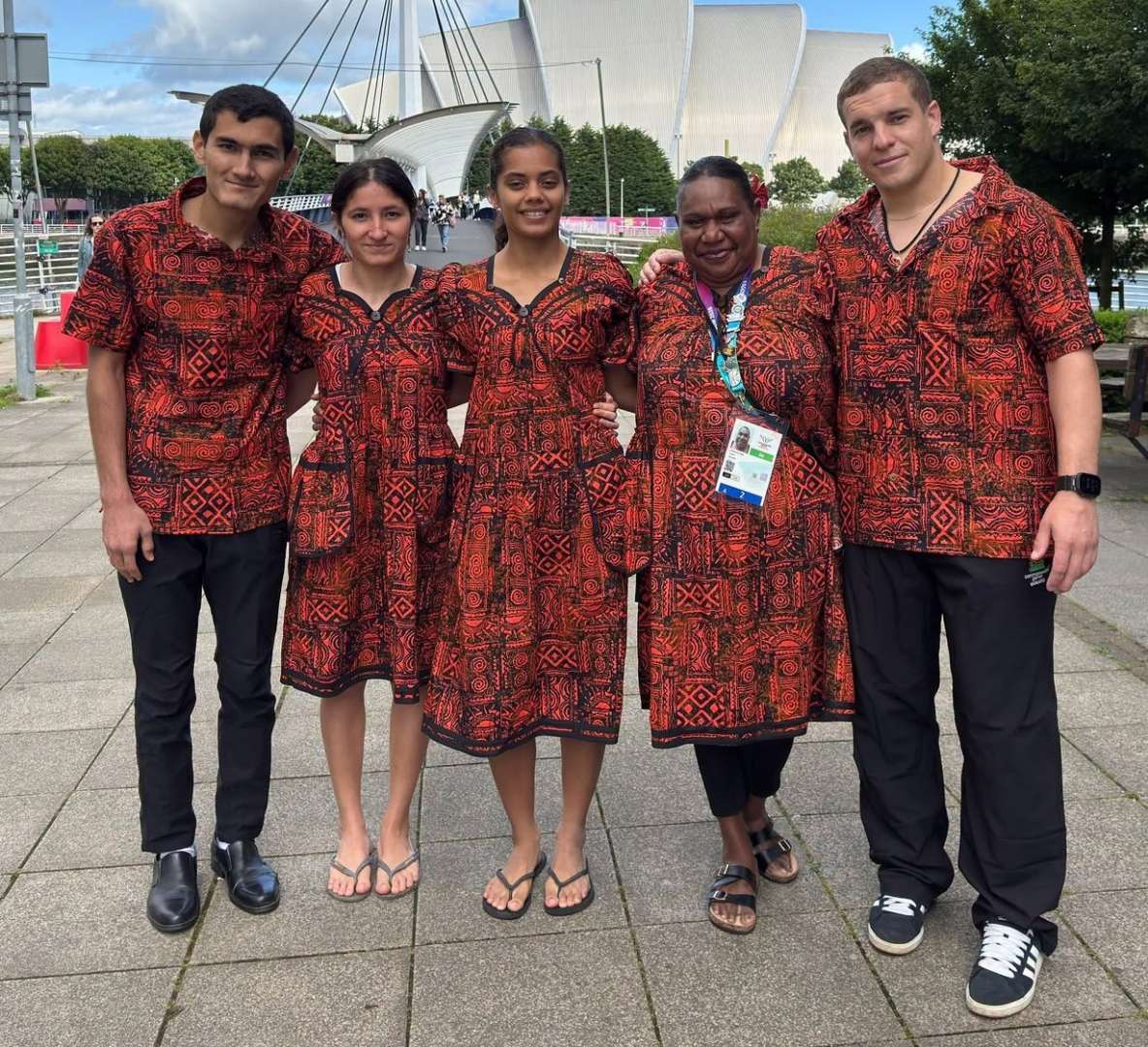
“Before crossing the Atlantic, the summer brought me two missions that were close to my heart. In Glasgow, two years on from Paris 2024, I was back in the coach’s chair with team Vanuatu, at the Commonwealth Games. Two of our three judoka reached the quarter-finals. Then, in Châteauroux, France, I joined Judo Camp Excellence, organised by my friends at AJA Paris XX. There were teenagers aged 12 to 19, early starts and at least seven hours of training each day. It was my first camp in France as part of the project and I’m already looking forward to next summer.
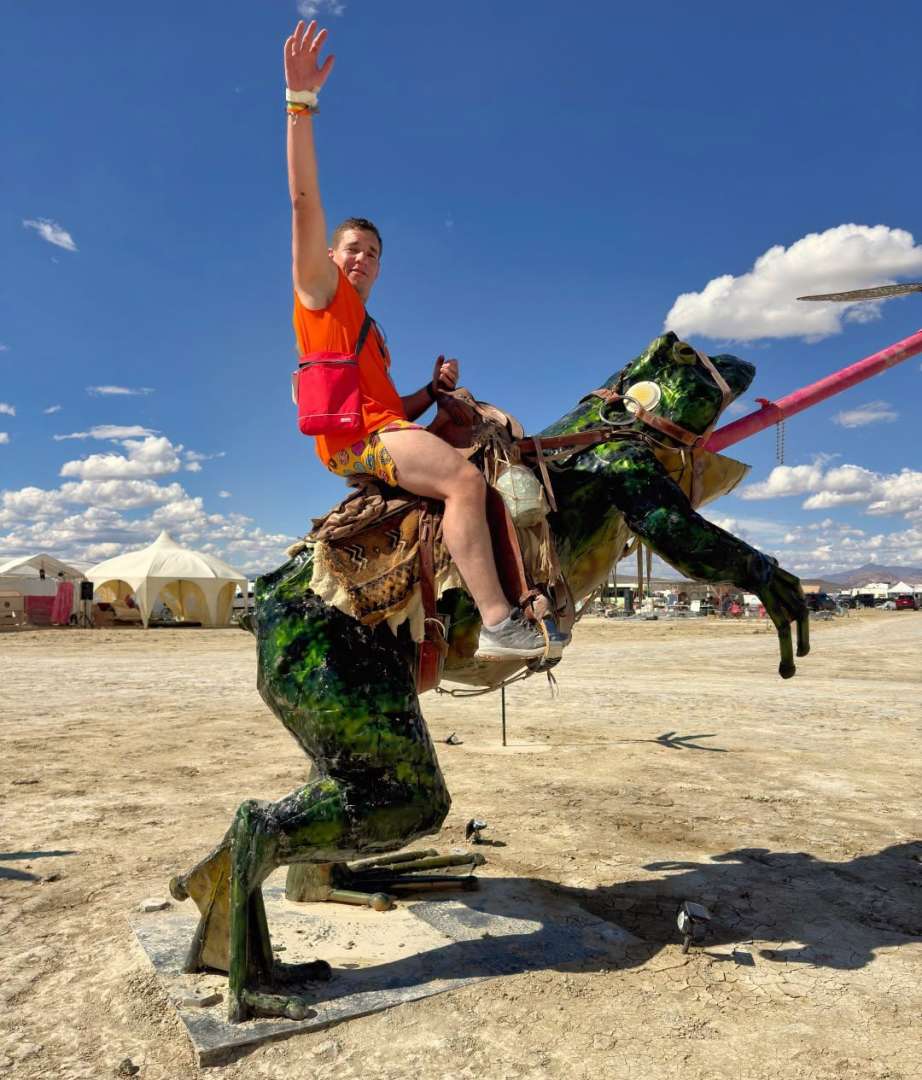
On 25th August I landed in Las Vegas for six weeks in the United States of America. The first week had nothing to do with judo though. I was in the Nevada desert at Burning Man with my sister and her husband, amid dust storms, rain, mud and art at every turn.
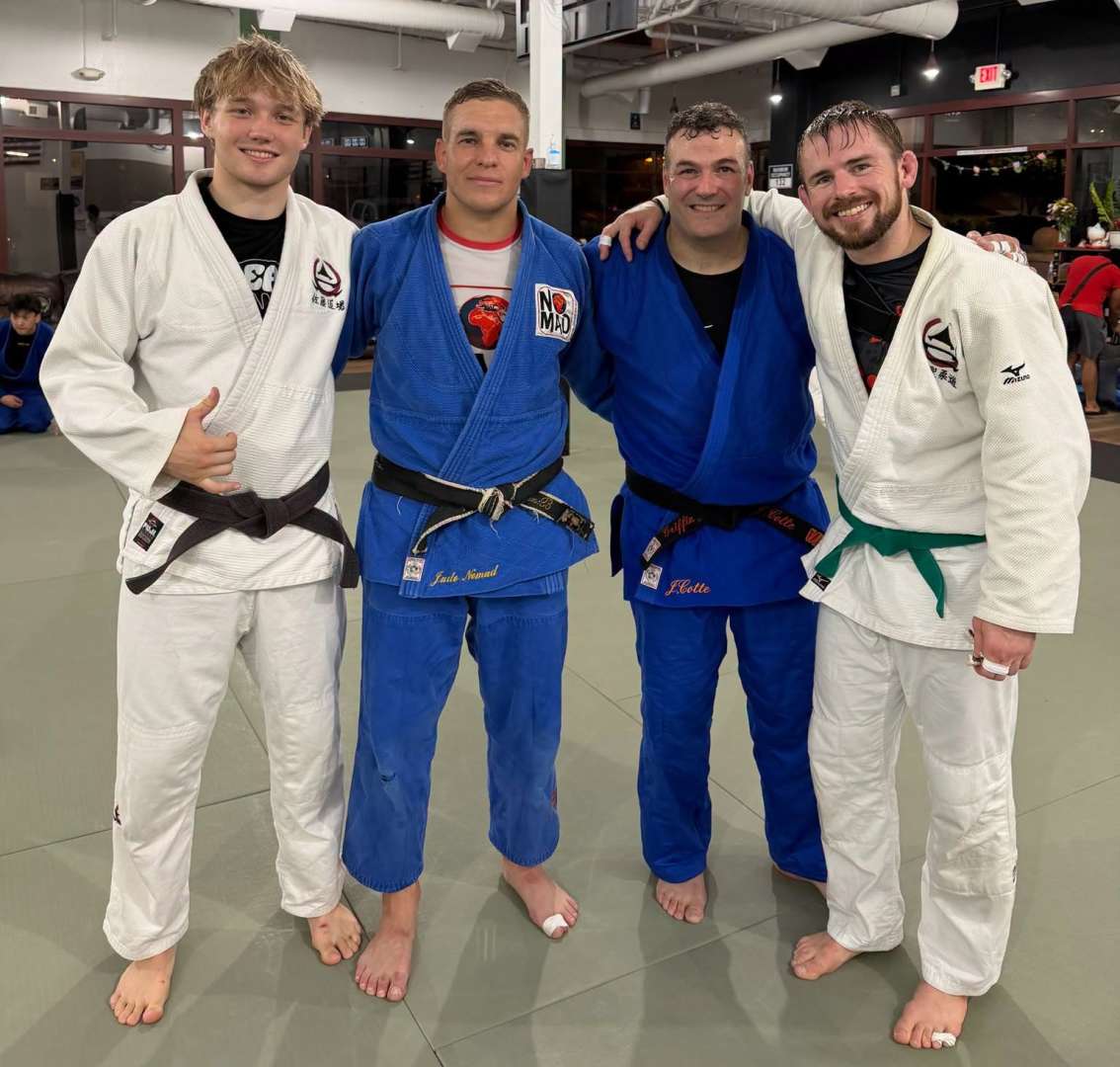
Then the judo began and it began because of one main person. A year earlier, I had met Jonathan Cotté in Tenri, Japan. We talked about judo, travel and this project. Twelve months later, he and his team at Griffin Judo in Berkeley had organised my entire American tour, booked every flight, including the one to Canada, and arranged for me to have a place to sleep at the dojo for two weeks.
My seminar at Griffin took place just before a competition, so the group was smaller than planned. Judoka still came from clubs across the Bay Area and the smaller group meant more time with each of them.
Jonathan then sent me south to San Jose. At CJ Judo, teenagers and adults from all backgrounds shared a sprung tatami that allowed us to practise big throws safely, and the club even gave me a rash guard. At Kensei Judo, head sensei Soren Ogden is remarkably young for someone leading a dojo of this level. His students worked on kata-guruma with real precision and the club has since become an official supporter of the project. I also stepped onto the mat at San José State University, a programme founded by Yosh Uchida and still shaped by generations of Japanese teachers.
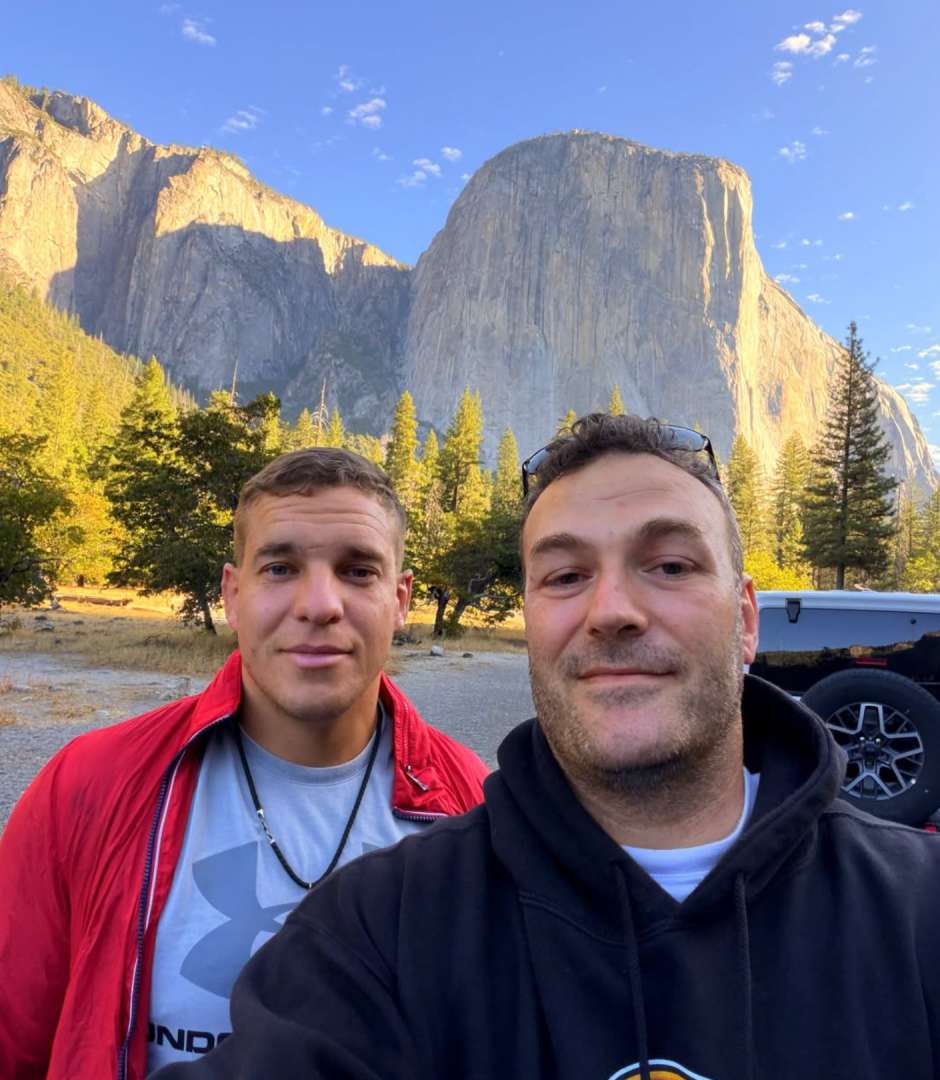
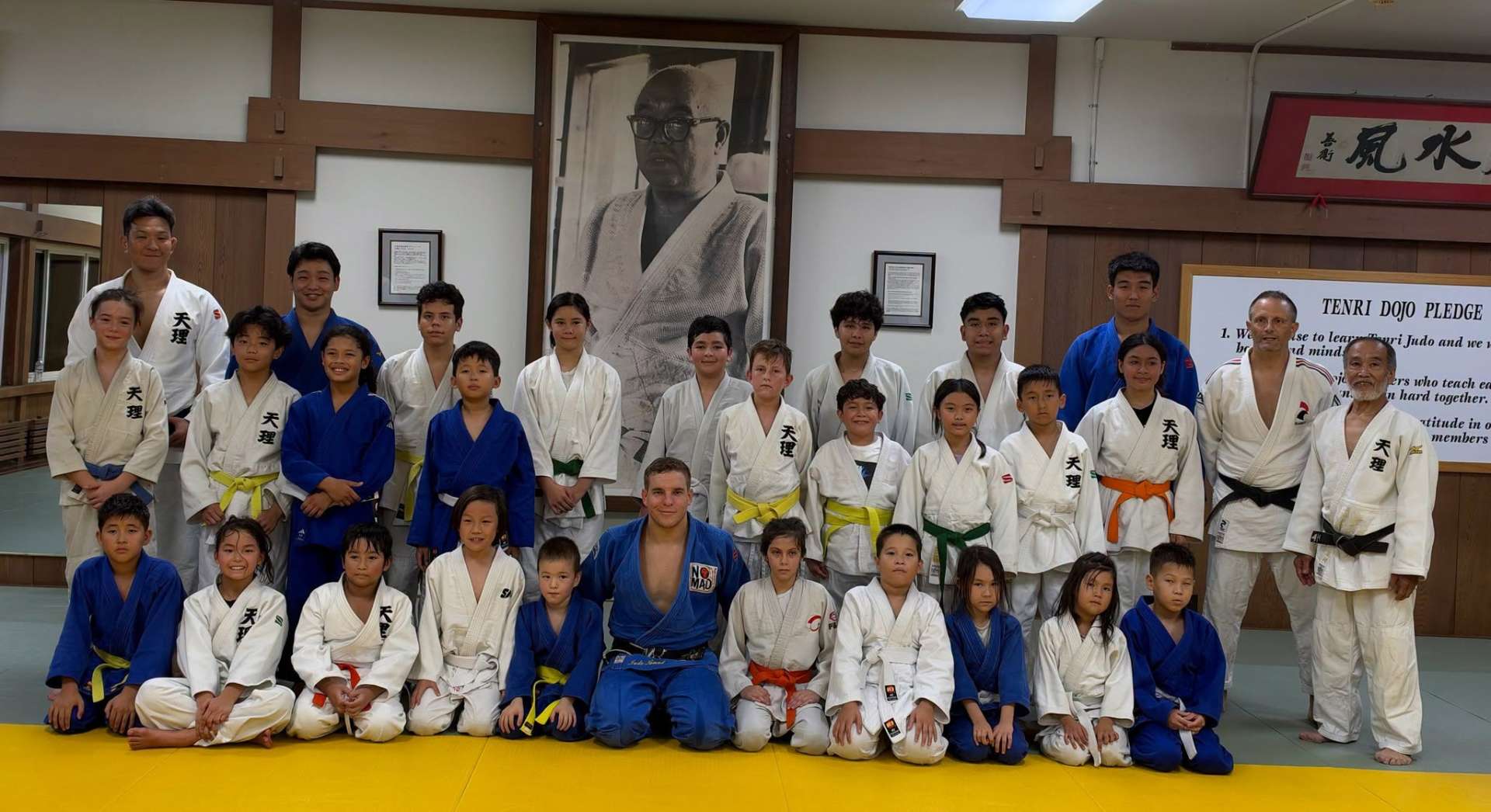
In Los Angeles, Japan found me again. LA Tenri Judo belongs to the Tenri judo family, named after the same city in Japan where this American chapter began. I taught the younger group, then joined the adults and took part in some light randori. There I met Sensei Tokuzo Takahashi, a 50-year-old veteran world champion. He took part in every randori that evening. He has said that his dream is to compete at the LA 2028 Olympics, in his own city. I stayed in Little Tokyo too and after three years living in Japan it felt like coming home.
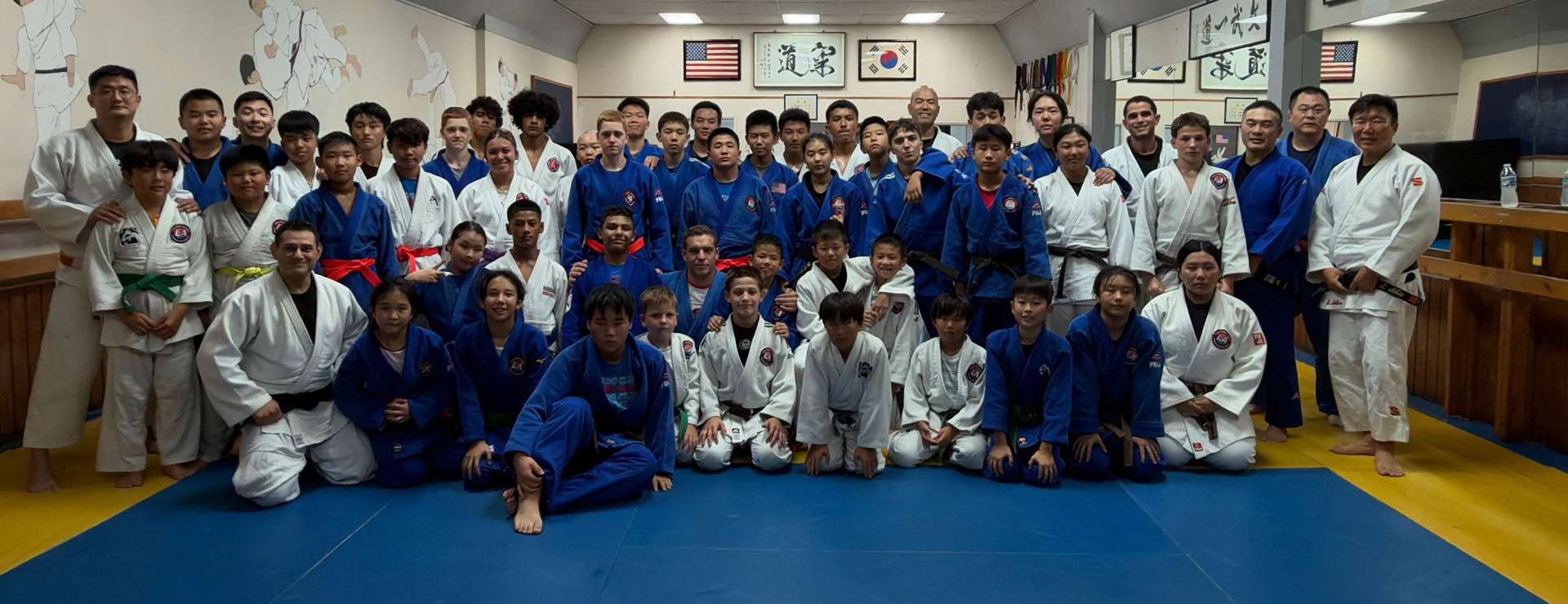
Some clubs train together. The L.A. Judo Club, in the heart of Koreatown, is a family. Much of its community has Korean roots and you feel it straight away from everyone on the mat; the respect, the closeness, the way they look out for one another. Over one weekend, I taught two classes on Friday and one on Saturday morning, as well as a conditioning session outdoors with the team, under the Californian sun.
After every session, parents brought food and drinks and nobody rushed home. Then they surprised me with a box to support the project, an LA cap with ‘Judo Nomad’ stitched on the side, and a dojo shirt. I hadn’t expected any of it! My host, Omar, whom I had watched compete only days before, became a friend through long talks late into the nights.
Two more clubs showed me other sides of American judo. Team 1 Judo in Orange County is a community club where people train for the joy of it. At Olymp Fight Club, a large club with several dojos across Los Angeles County, many people in the class spoke Armenian or Russian. A last-minute flight change made it a flying visit, but I still had the chance to practise my Russian.
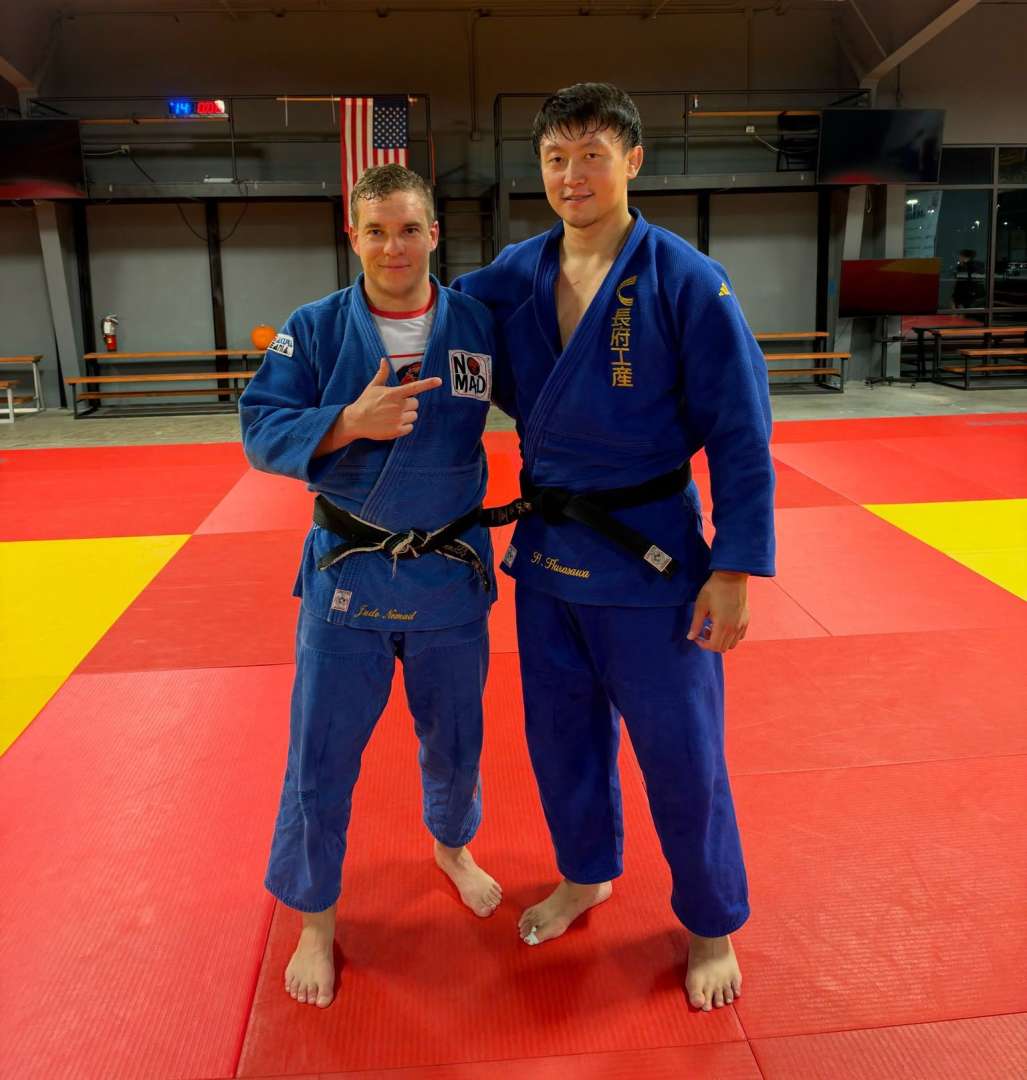
The last stop was Texas. At Eastside Dojo in Plano, I trained with Hisayoshi Harasawa, an Olympic silver medallist at Rio 2016 and a world silver medallist in 2019, who now coaches there. Watching him explain how his uchi-mata begins with the grip, long before the leg moves, was a lesson I’ll be passing on for years.
Looking back, Japan followed me across the whole country: a friendship from Tenri, a Tenri dojo in Los Angeles, the legacy of a Japanese sensei in San Jose and a Japanese Olympic medallist in Texas. Judo crossed the Pacific with the people who carried it. Today, it is still carried from club to club by coaches who give up their evenings for it.
Country 65 happened thanks to Jonathan and the whole Griffin family, and every club that opened their doors, sometimes at the last minute. Thank you to everyone who supports this adventure on Patreon and Tipeee too or simply shares a video. All of it keeps me moving.
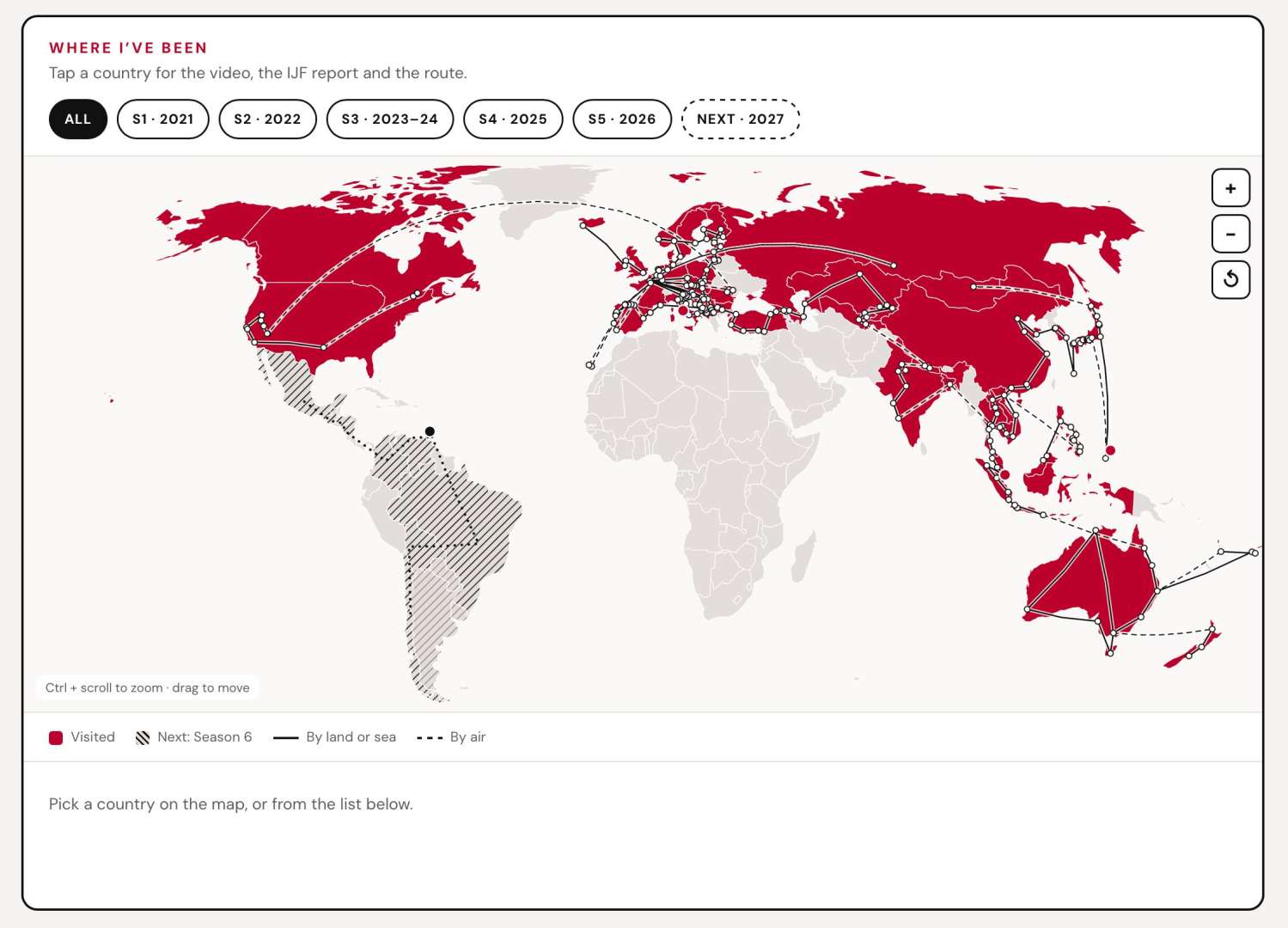
As I write, I’m already in Canada, country 66, where the welcome in Québec has been unforgettable. That story deserves its own chapter. After that, Europe calls again: Russia, Belarus, Greece, Cyprus and, I hope, Ukraine, when circumstances allow. The adventure goes on.”