

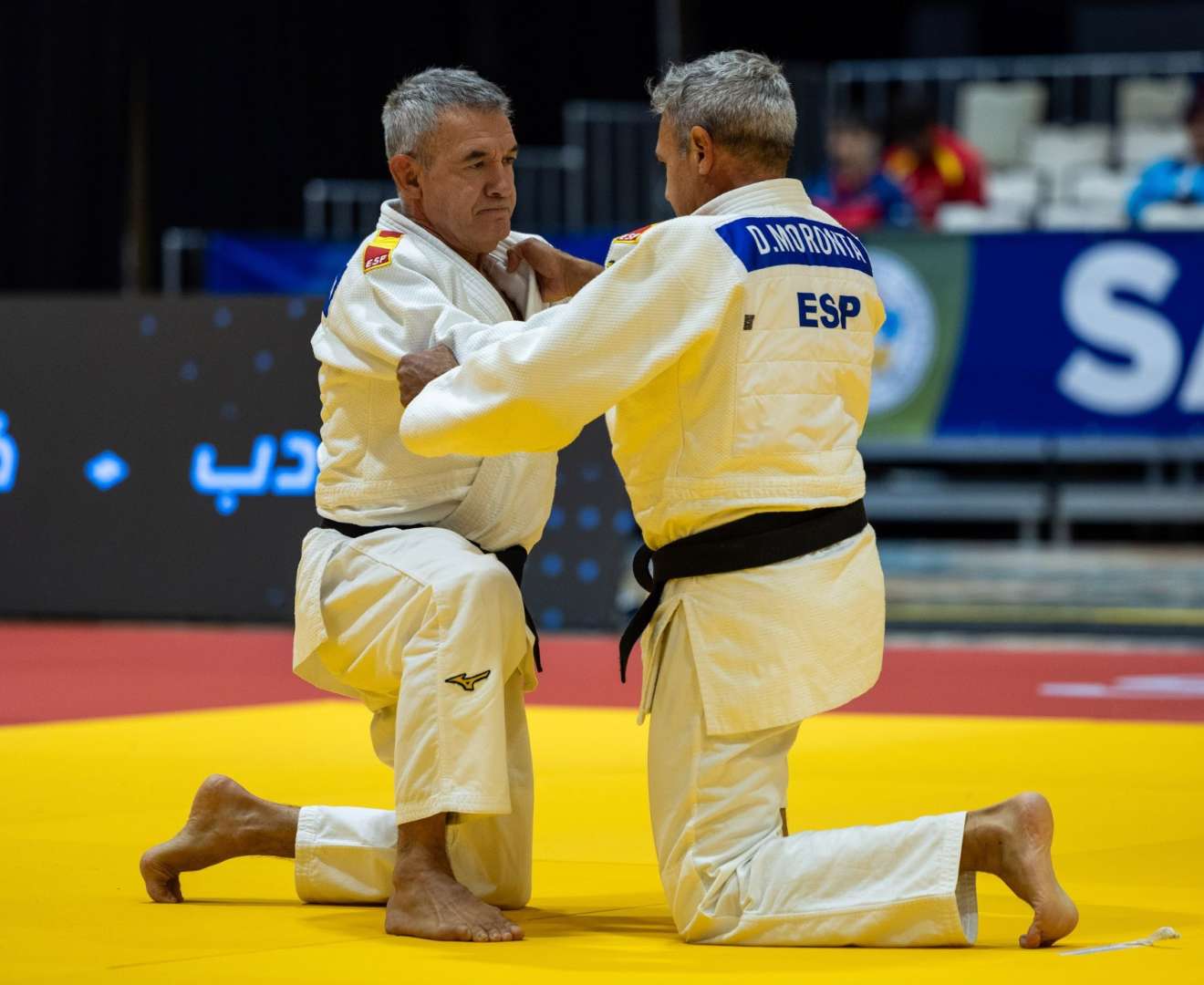
Beyond this very practical side of learning, Katame-no-kata (固の形) is the form of control. It takes place predominantly on the ground and studies the mechanisms through which one judoka controls another: holding, strangling or applying a joint technique.
Established at the Kodokan around 1885 and 1886, in the earliest years of judo, Katame-no-kata developed alongside Nage-no-kata. It now comprises fifteen techniques, arranged in three series of five. This was not always the case. Its first version contained ten techniques before the kata gradually evolved into the form practised today.
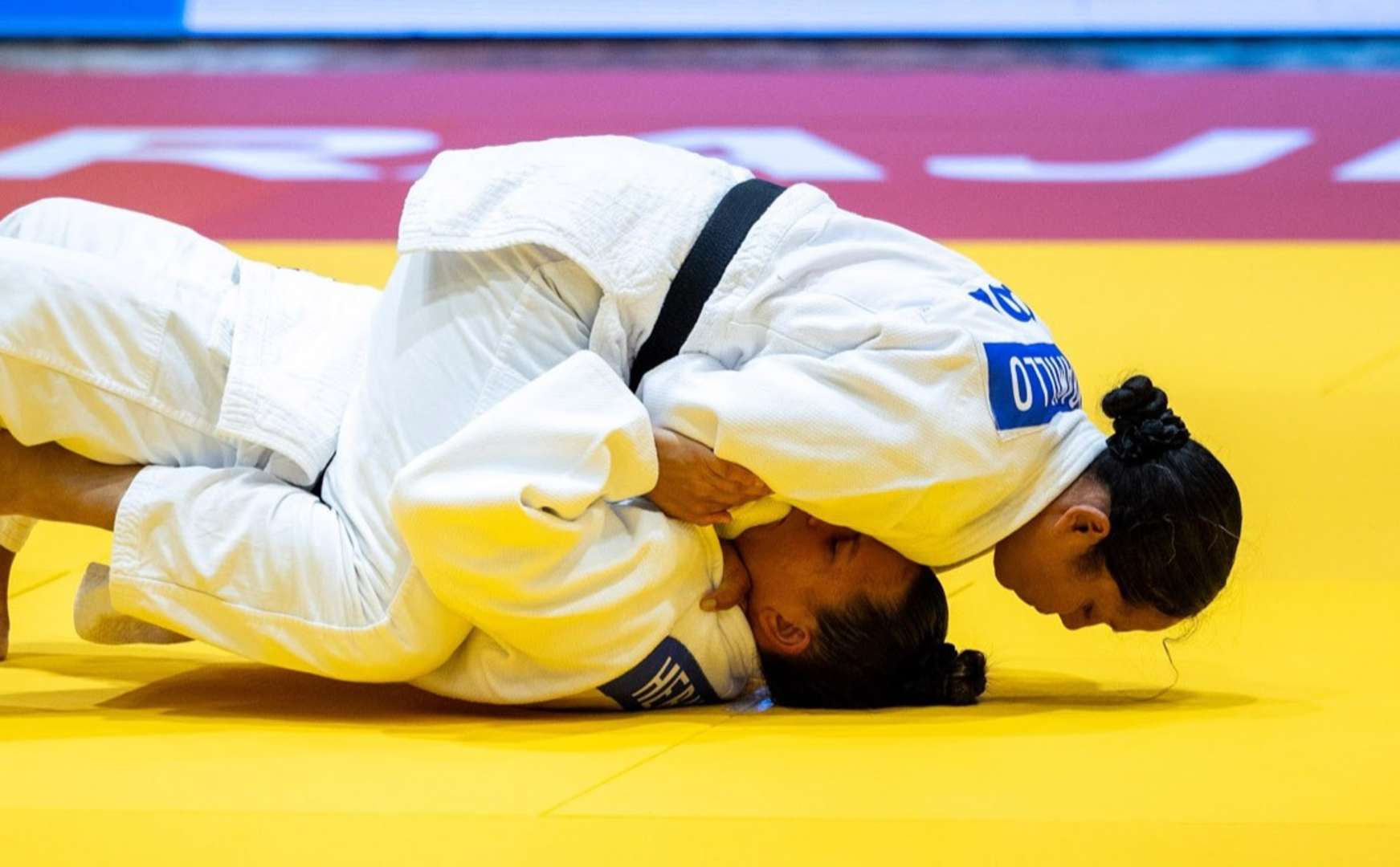
- Osaekomi-waza — holding techniques: Kesa-gatame, kata-gatame, kami-shiho-gatame, yoko-shiho-gatame, kuzure-kami-shiho-gatame
- Shime-waza — strangling techniques: Kata-juji-jime, hadaka-jime, okuri-eri-jime, kata-ha-jime, gyaku-juji-jime
- Kansetsu-waza — joint techniques: Ude-garami, ude-hishigi-juji-gatame, ude-hishigi-ude-gatame, ude-hishigi-hiza-gatame, ashi-garami
Like Nage-no-kata, Katame-no-kata is not intended as a catalogue of techniques. Its purpose is to study the principles that make groundwork effective. Each sequence presents a complete situation: uke’s attack or reaction, tori’s entry, the establishment of control, the possibility of escape and, throughout, the safety of the partner.
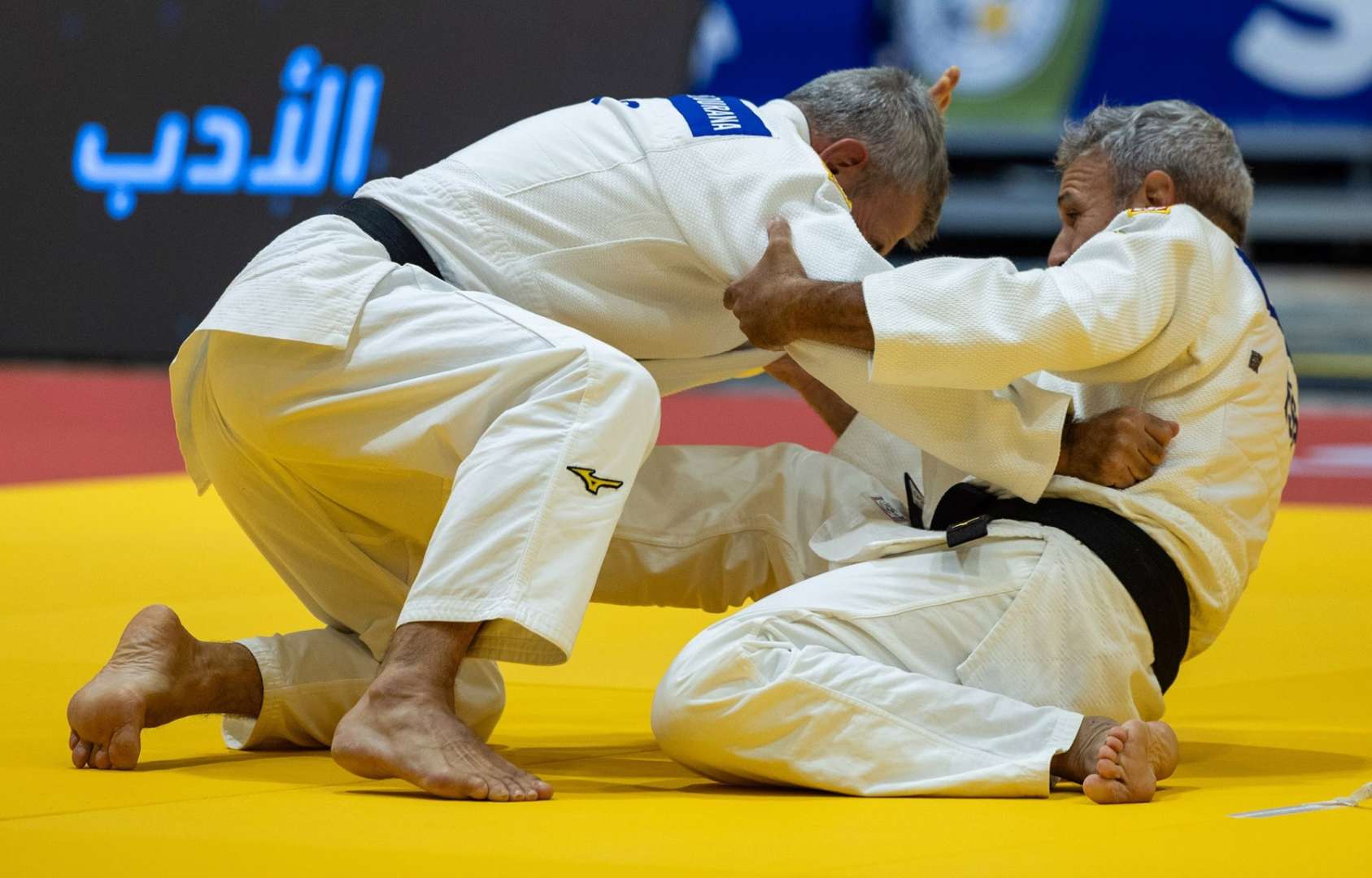
This is where the kata becomes more demanding than its apparently static nature might suggest. A hold is not simply a position to be imposed. It is built through contact, balance, direction and timing. A strangulation is not a demonstration of force. A joint technique is not completed by pressure alone. In each case, the practitioner must understand how to create control, maintain it without unnecessary effort and recognise the moment when uke can react or escape.
The study also reveals the active role of uke. Uke does not merely submit to a sequence. Uke attacks, responds, creates the conditions that make the movement meaningful and receives the technique with precision. The quality of Katame-no-kata therefore lies in the relationship between the two partners as much as in tori’s technical execution.
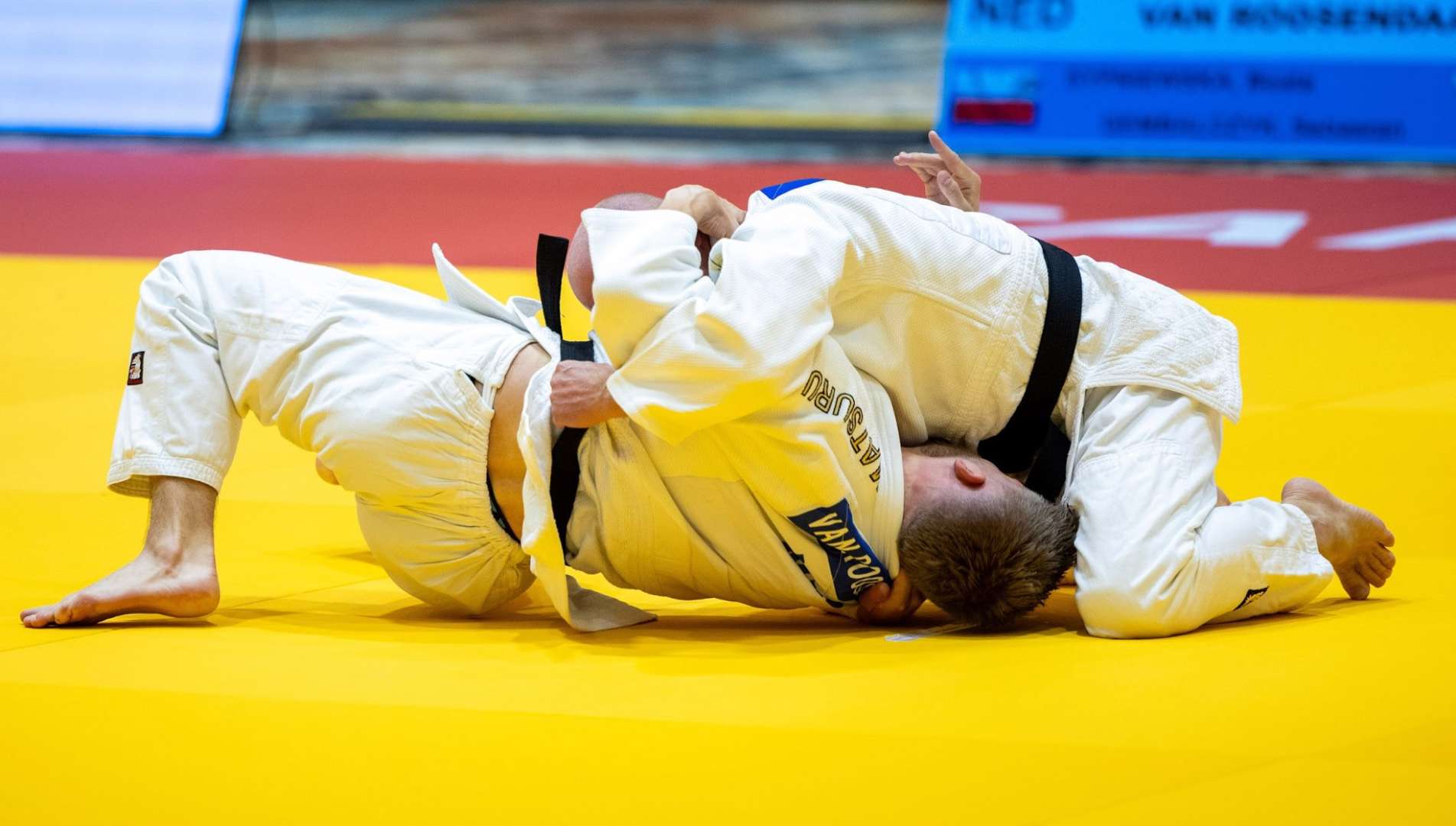
As with Nage-no-kata, the kata leads the judoka back to the essential stages of judo: kuzushi, the breaking of balance; tsukuri, the preparation and positioning; and kake, the execution. On the ground, these principles take another form. Balance is disrupted through pressure, direction and movement. Preparation is found in the way a space is closed, a limb isolated or a position secured. Execution becomes the moment at which the control is completed with accuracy.
Katame-no-kata is, in this sense, the laboratory of judo groundwork. It does not simply show how to hold, strangle or apply a joint technique. It explores the relationship between initiative, control, reaction and release. It teaches that effectiveness does not come from forcing a position, but from understanding how and when it can be established.