
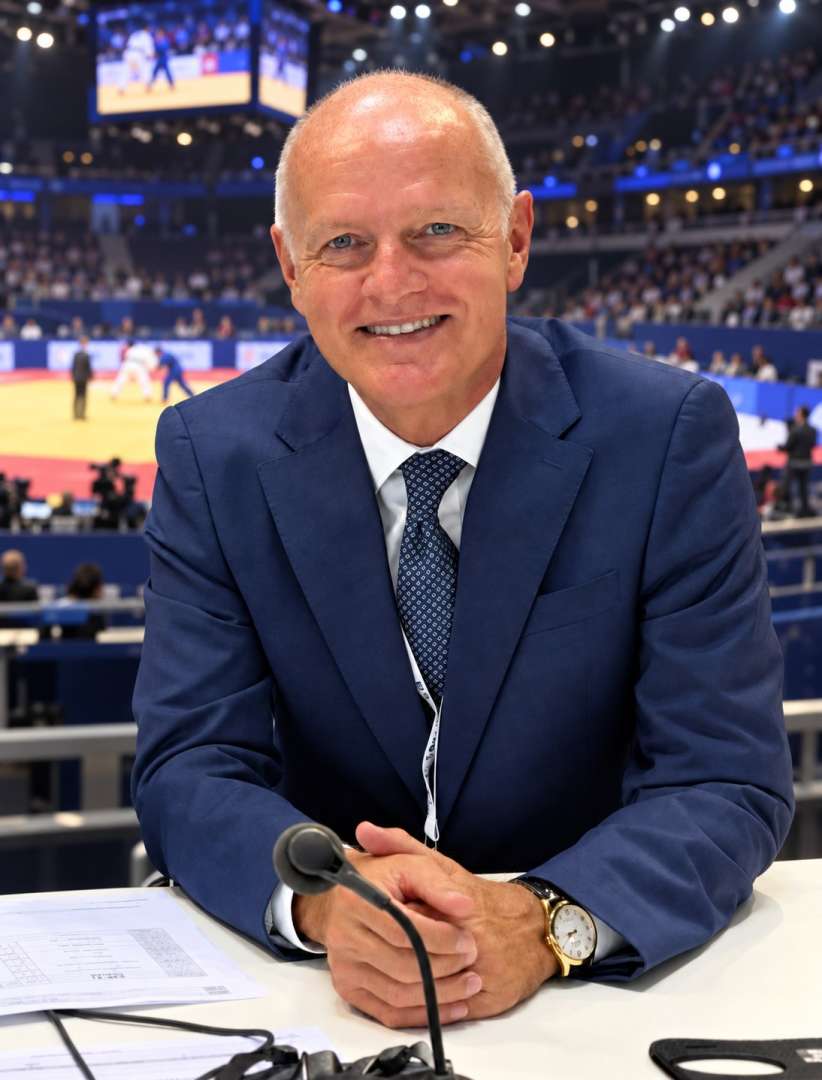
His path to becoming one of the best-known voices in international judo was never planned. It began with a little boy, a sports centre across the road from his home and a misunderstanding. “It wasn’t an accident,” he says, before smiling at the memory. “There were kung fu movies everywhere in the 1970s; Bruce Lee and all of that. At school, we all wanted to try martial arts but we were too young to see the films, they were restricted.” Across the road from where he lived stood a sports centre. Sheldon noticed people going in wearing white suits and belts. One Saturday morning, he decided to go inside. He believed he had found a kung fu club. It was, in fact, a judo club and it was full!
“They were not taking beginners,” he remembers. “So I told the lady that I had already done judo.” His first lesson began with the warm-up and breakfalls. Then came the throws. Little by little, he improved and, more importantly, a lasting fascination took hold. He began looking for another club and found the famous Budokwai, the London institution that has shaped so many generations of British judoka.
At the time, there was no internet. Knowledge came through magazines and visits to the library. Sheldon would read a magazine simply called JUDO and follow the results of junior competitions. One name stood out above all the others: Neil Adams. “One day, the coach told us that we were going to have a new guy joining us. From the time I was fifteen until today, I have known Neil. He was hugely inspirational.”
Their paths soon became intertwined, even if their competitive careers took very different directions. Neil rose rapidly through national and international judo, while Sheldon recognised early that high-performance competition was not his route. “I was nervous. I did not have the same kind of skills. I knew that competing at that level was not something in which I would be successful.”
When he left school, Sheldon joined British Telecom, the national telephone company of the time. He spoke German and was assigned to international calls. That job became an unexpected bridge to the British national team. “I could call the hotels where the team was staying. I could make calls out but also receive them. I connected my friends in the British team with their families and friends, for free.”
Because he was a judoka himself, doors opened. He was invited to training camps, welcomed by athletes and coaches, and found himself close to a world that might otherwise have remained out of reach. He met the people who would later become legends, including Charles Palmer, a major figure in British judo and a future IJF president. His friends went on to win world and Olympic medals. When their competitive careers ended, many became administrators within British judo and the European Judo Union or the IJF. Sheldon remained part of that extended family.
Another thread in his life would prove decisive. At school, he had studied music, later working for a music foundation where he presented artists before they came on stage. Densign White, who became an EJU Sport Director, who knew him well, saw a possibility. “Densign said to me, ‘I think you can do that for judo and make it more professional at European level.’ It was not paid but I was already inside the family.”
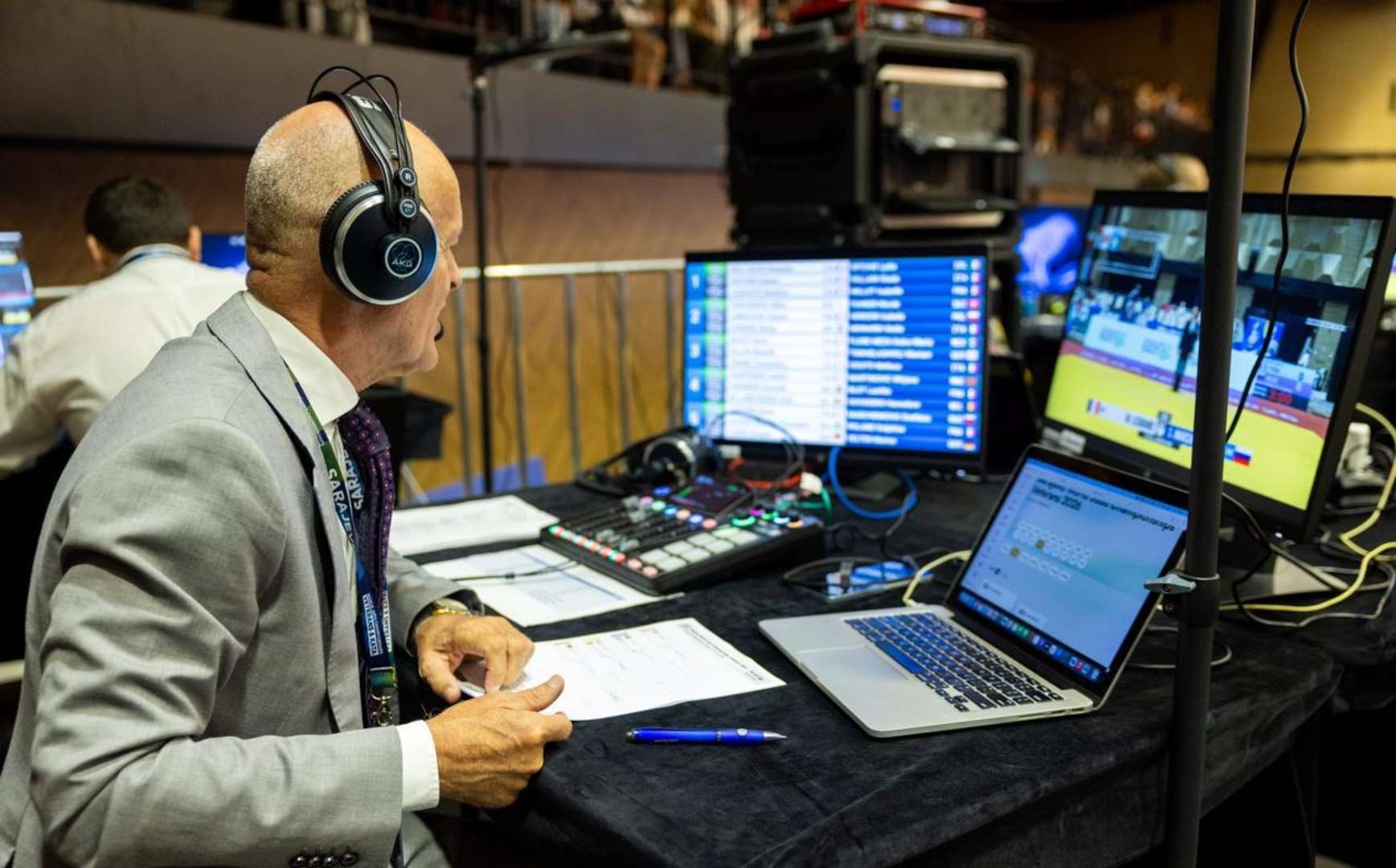
Then came the moment that changed everything. At a European event, Sheldon was walking past the technical table when he saw monitors and asked what was happening. The competition was being broadcast with only the natural sound from the venue. There was no commentary. “I took a headset and a microphone and I started to commentate live. From then on, by accident, it began.”
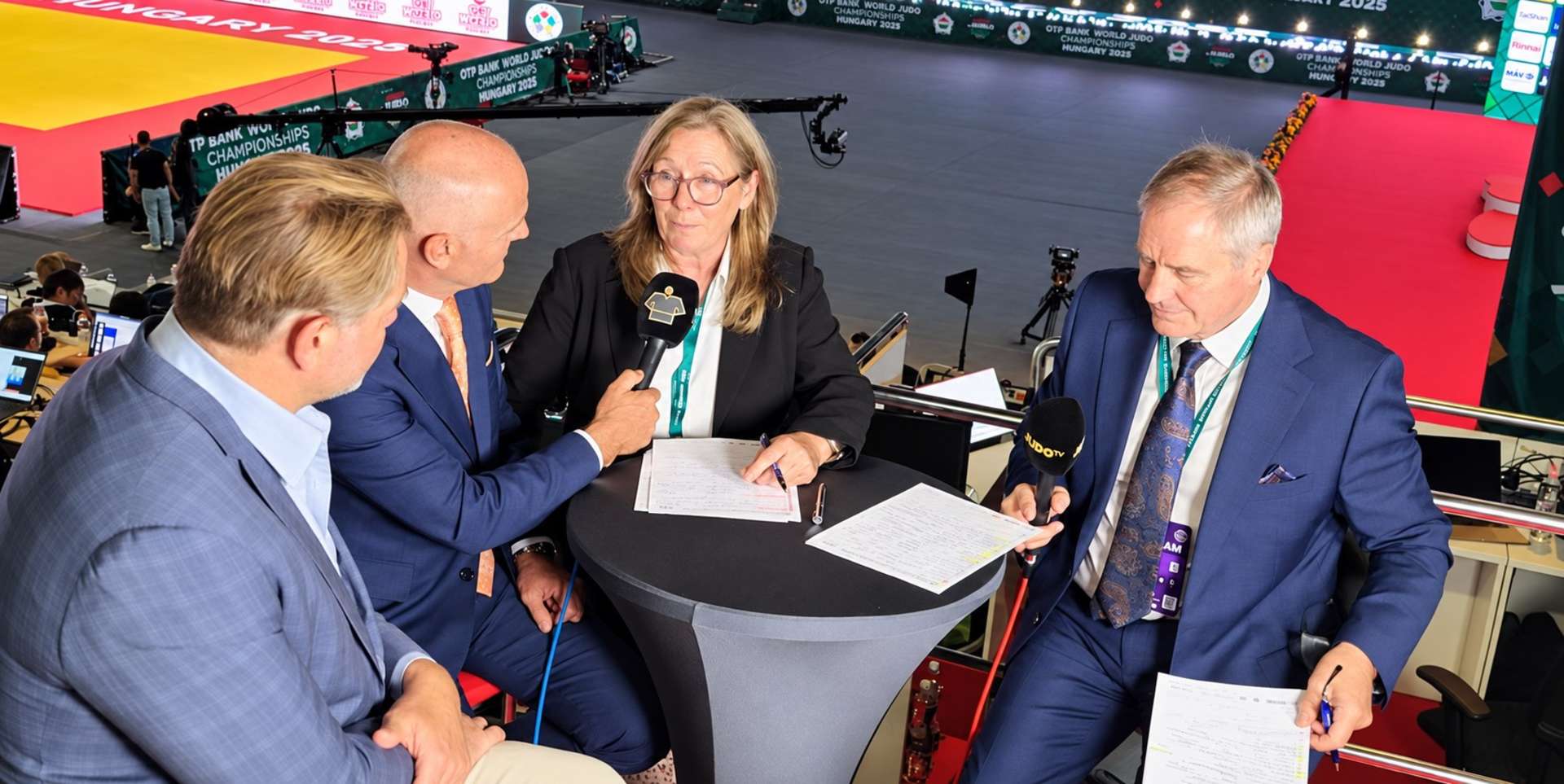
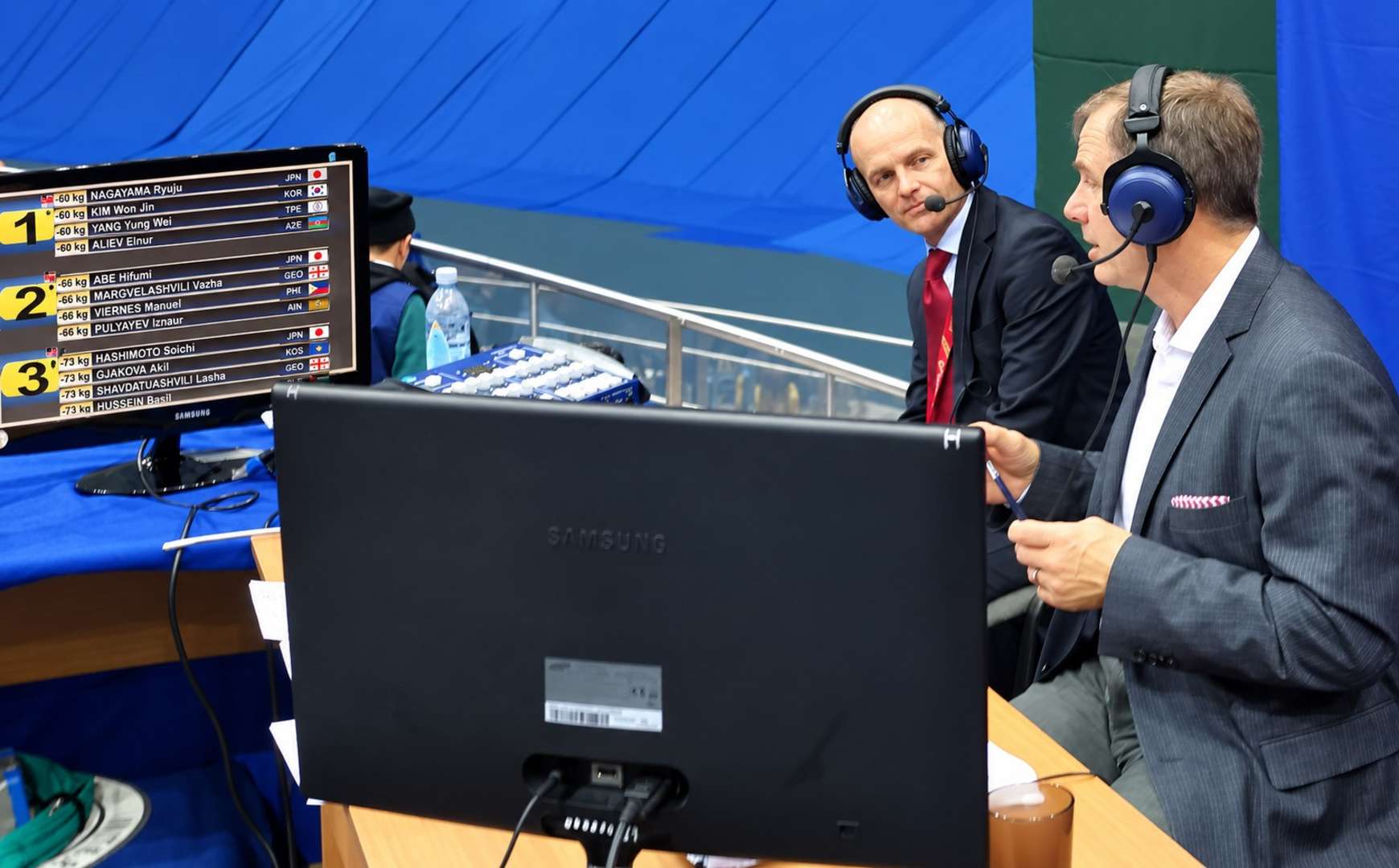
That was around 2003. The project grew steadily. Neil Adams, already a familiar face through highlights programming, joined the live commentary. Other voices contributed along the way, including Annett Böhm, Loretta Doyle and Dennis Van der Geest. Gradually, almost seamlessly, the work moved into the International Judo Federation era and developed into the global JudoTV platform known today.
For Sheldon, however, the central point is never simply the broadcast, it is belonging. “It is impossible for somebody from the United Kingdom to have this kind of influence and access. Today I can say that what matters most is the sense of belonging, of being part of the judo family.” He speaks of that family in the fullest sense: mothers, fathers, brothers and sisters, all connected by a shared objective, the development of judo.
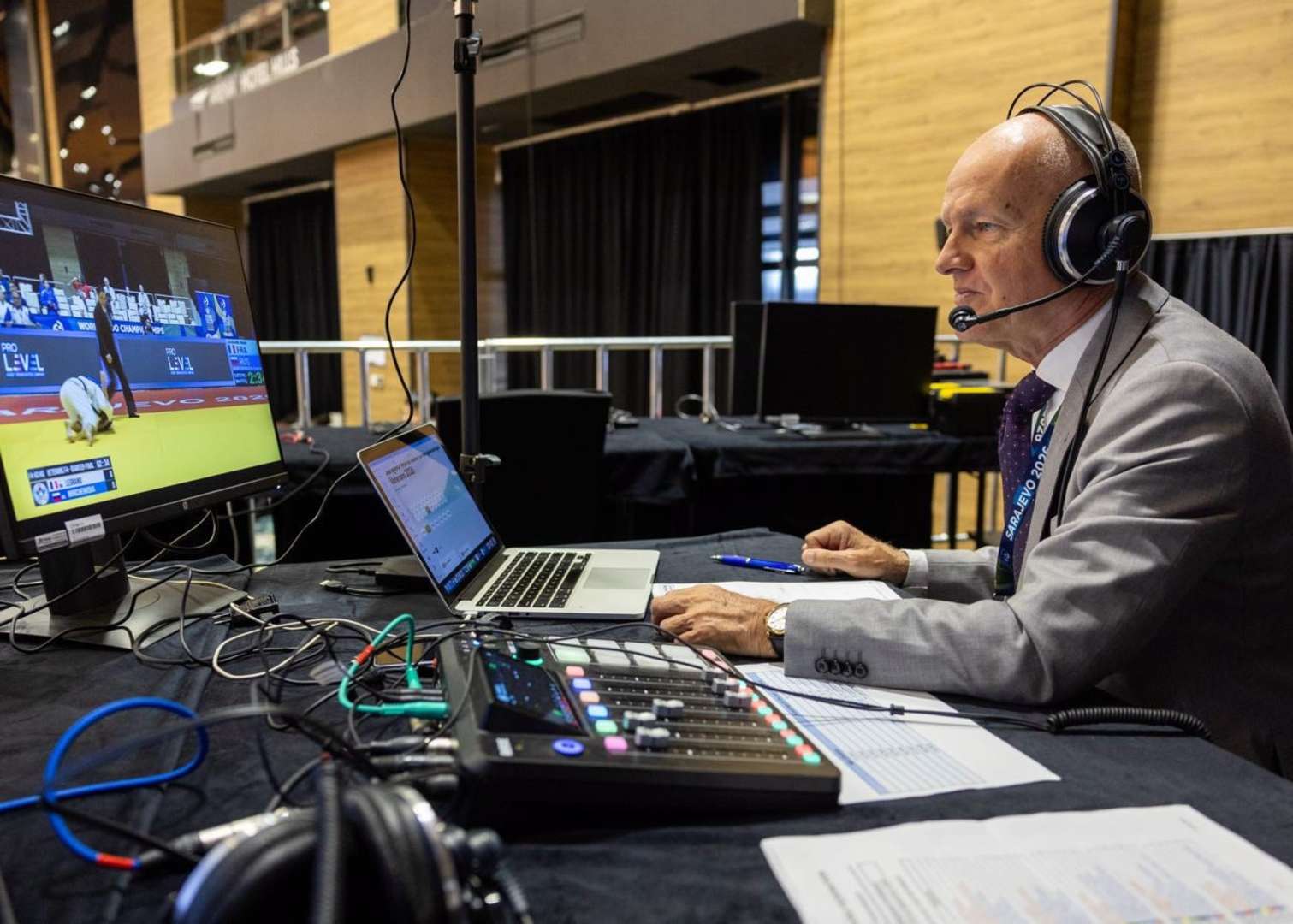
“The more time passes, the more I understand how privileged I am to be part of this. It is not only about high-level judo. It is about what people can gain from our sport at every level. Everyone watching JudoTV can learn something and that is what we are trying to do.” In this, Sheldon Franco-Rooks sees the true role of commentary. “We are the link between the highest level and those who may never reach it, but who need to understand what is happening.”
His story is a powerful illustration of what judo can make possible. It is a family, as Sheldon says. It can be a human and social lift, a place where a child’s curiosity opens unexpected doors. It allows people to dream and sometimes, through commitment, friendship and a willingness to step forward to reach dreams they could never have imagined.