Japan Claim Fifth Consecutive Junior Mixed Team Title in Tashkent
Bronze medal match: Georgia vs Brazil
Georgia made a flying start against Brazil. Gigi Giunashvili needed just ten seconds to score ippon in the -73 kg category with his very first attack. Keti Robakidze followed his example, producing another lightning-fast victory to give Georgia a 2–0 advantage.
Silas Costa brought Brazil back into contention, scoring a yuko against world junior bronze medallist Irakli Kavtarashvili. The Brazilian maintained his lead to reduce the deficit to 2–1.
The +70 kg encounter between Ana Soares and Barbare Gelashvili was therefore crucial. Neither athlete could establish a decisive advantage during normal time and the contest went into golden score. Soares eventually found her opportunity and secured an ippon to level the overall score.
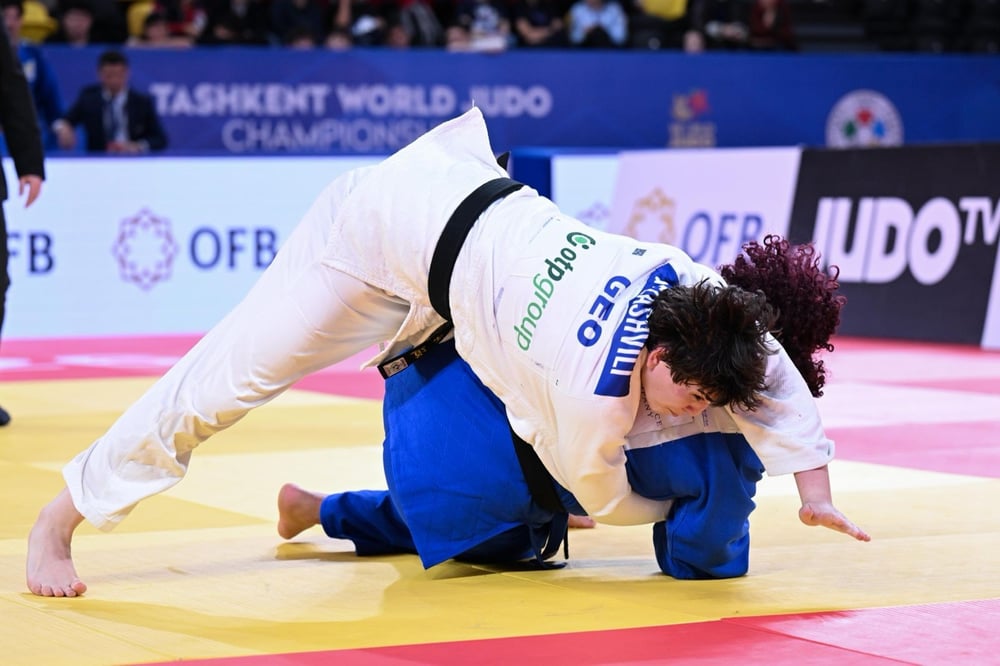
Nikoloz Zaalishvili restored Georgia's advantage with a spectacular ippon, leaving world junior bronze medallist Rafaela Rodrigues with the responsibility of keeping Brazil's hopes alive. She delivered under pressure, scoring a yuko and holding on to her advantage to make it 3–3.
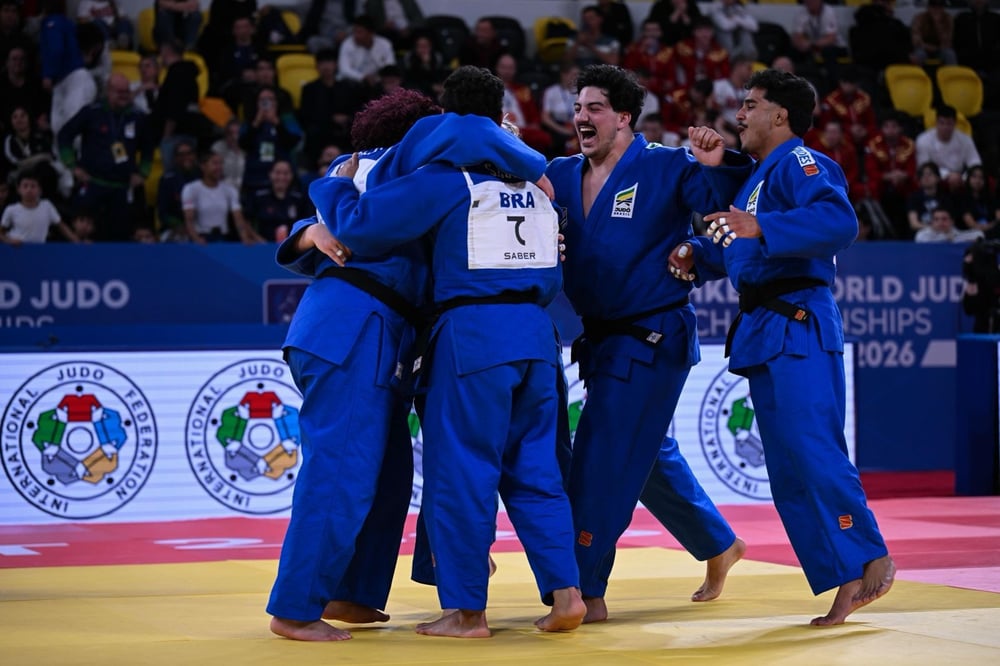
Everything came down to a seventh contest and once again the +70 kg category proved decisive. History repeated itself as Ana Soares defeated Barbare Gelashvili with another ippon, completing Brazil's remarkable comeback and securing the bronze medal.
Bronze medal match: Republic of Korea vs France
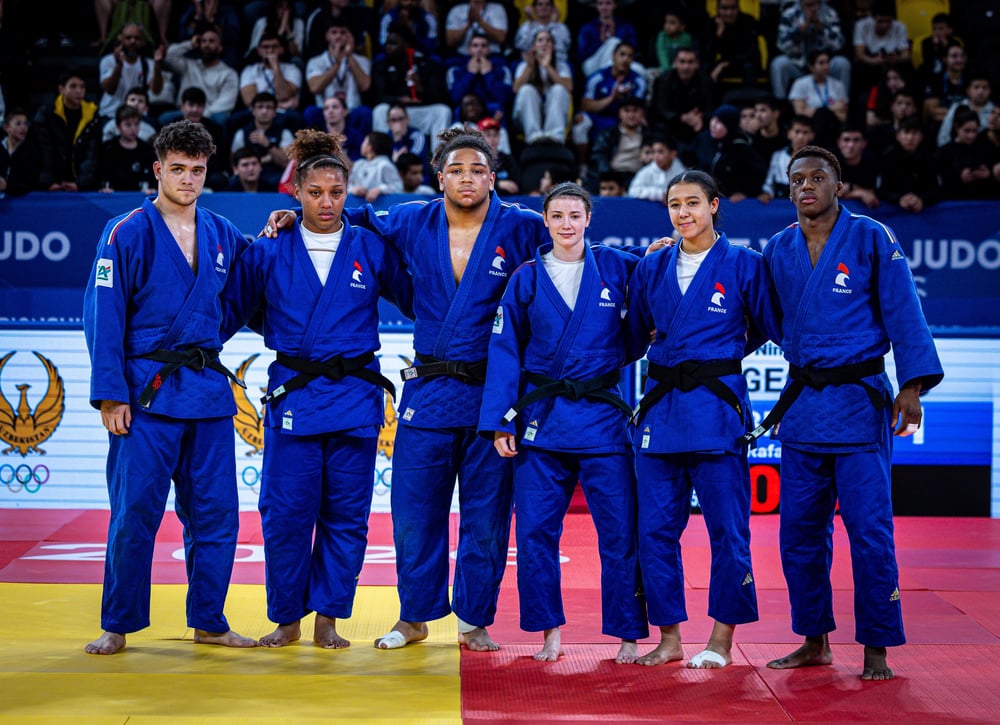
France took the initiative against the Republic of Korea in the second bronze medal contest. Yongmin Kim opened with a yuko but Desir Zoba Casi responded with a waza-ari one minute before the end to put France ahead.
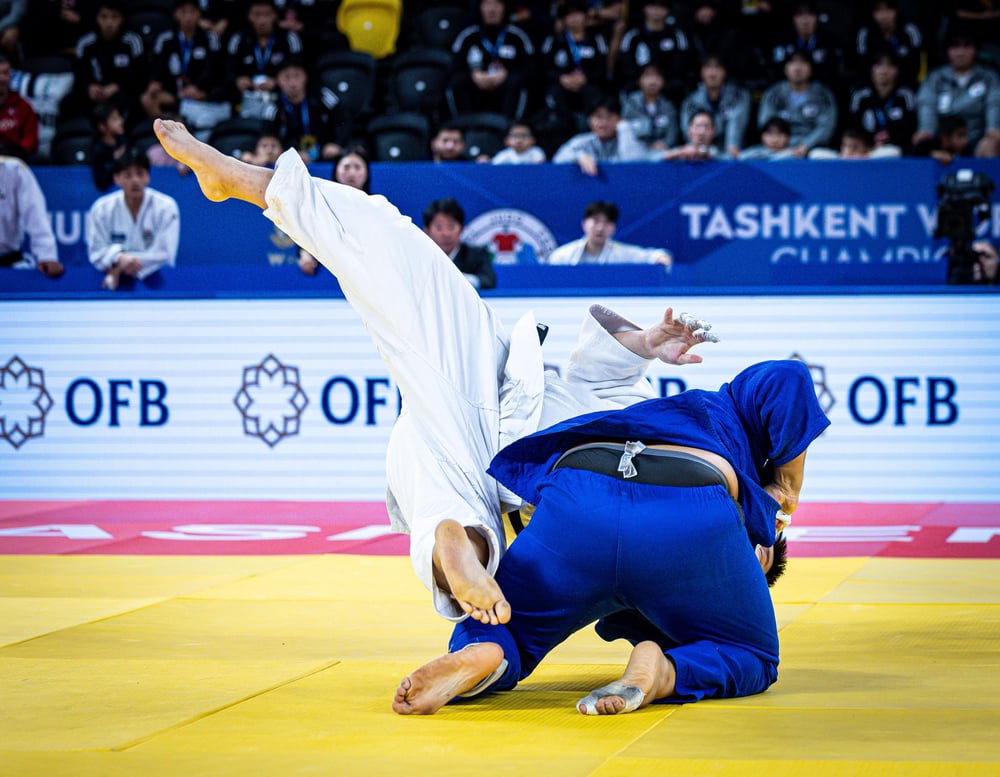
Laura Duchaussoy extended the French advantage with an impressive performance. After scoring a yuko with an ashi-waza she completed the contest with an ippon to make it 2–0.
The third encounter, between David Iurcovschi and his Korean opponent, remained undecided throughout normal time. However, Iurcovschi found the winning solution in golden score with a yuko, bringing France within one victory of the podium.
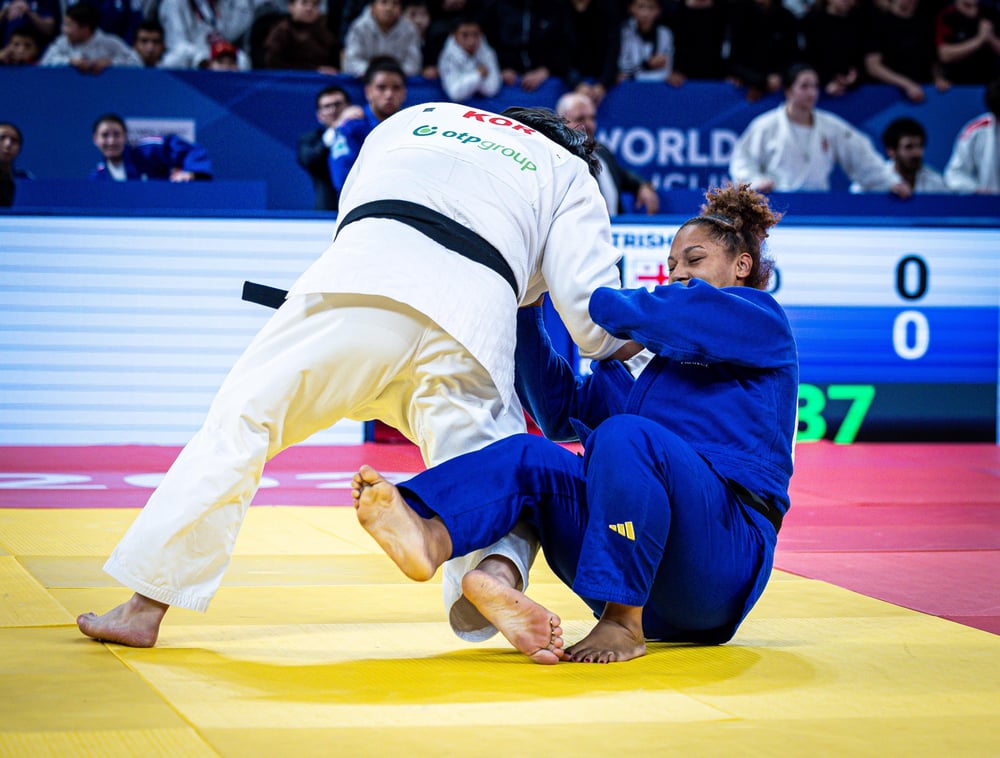
Hyeonji Lee answered the call for Korea, claiming a valuable victory to keep her team's hopes alive. Yet Kevin Nzuzi Diasivi once again proved indispensable for France. Having already played a crucial role in the quarter-final against Georgia, he delivered another important victory to secure the bronze medal for the French team.
Final: Japan vs Russian Federation
The eagerly anticipated final brought together the two teams that had dominated the competition. Japan, the defending champions, were seeking their fifth consecutive mixed team world title while the Russian Federation aimed to interrupt their remarkable winning streak.
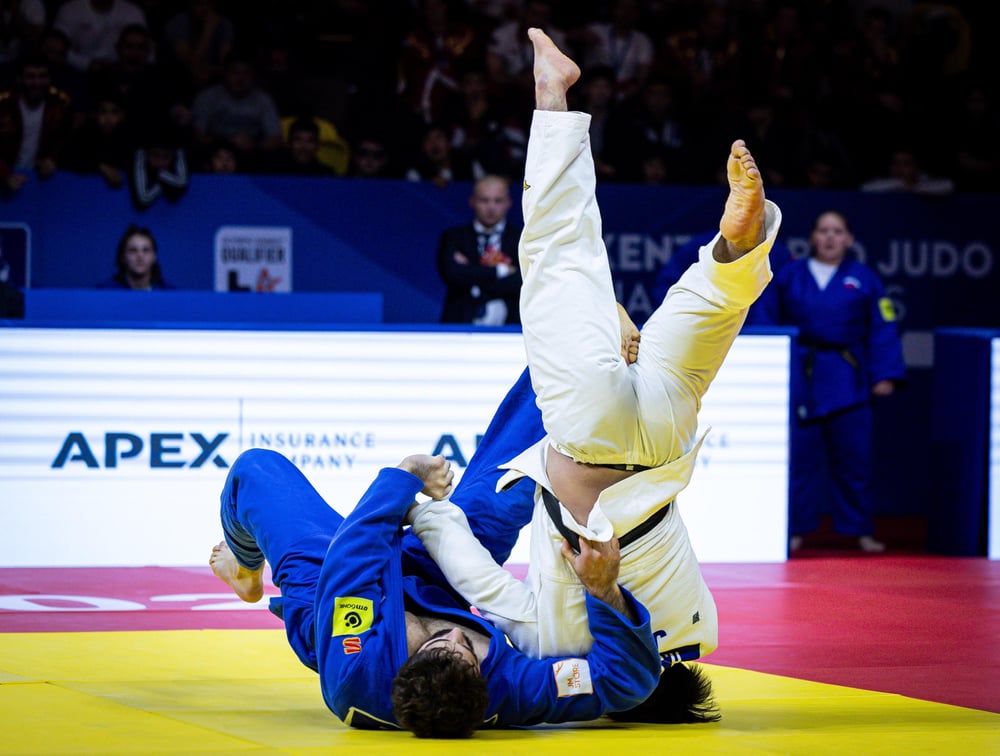
The opening contest at -73 kg featured Ryusei Arakawa and Pavel Koloverdov. The two had already met in the individual competition, where the Russian emerged victorious. This time, however, Arakawa had a different answer. In a high-energy encounter, the Japanese judoka executed a beautiful ko-uchi-gari to score a waza-ari and hand Koloverdov his first defeat in Tashkent.
Japan doubled their advantage in the following contest as Honoka Kimura faced Eva Ognivova. Despite the physical advantage of her taller and heavier opponent, Kimura demonstrated excellent technique, securing a victory with a sankaku transition into a choke. Japan were now 2–0 ahead.
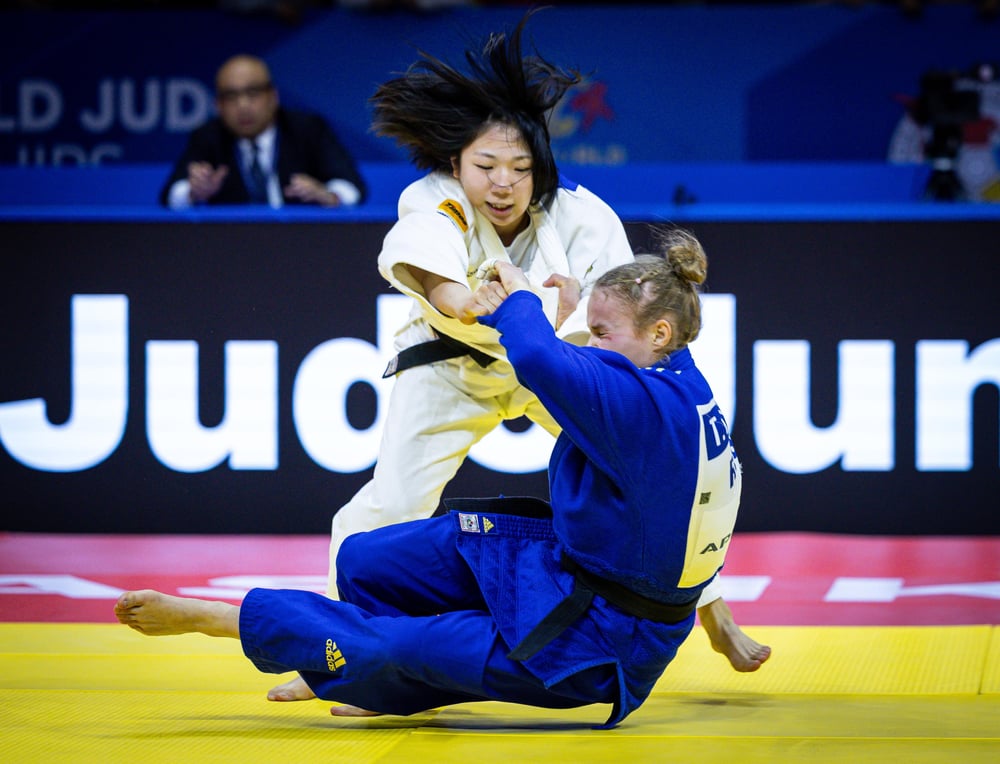
The Russian Federation responded in the -90 kg category. World number one Ademirkan Tambiev faced Haru Shibata in a closely fought encounter. Neither athlete initially managed to impose their style, but Tambiev eventually produced a sumi-gaeshi for a waza-ari to claim Russia's first victory in the final.
Tomoka Inoue restored Japan's two-point advantage in the +70 kg category. Facing Kseniia Zanozina, the Japanese judoka secured the victory with an osaekomi, bringing the score to 3–1.
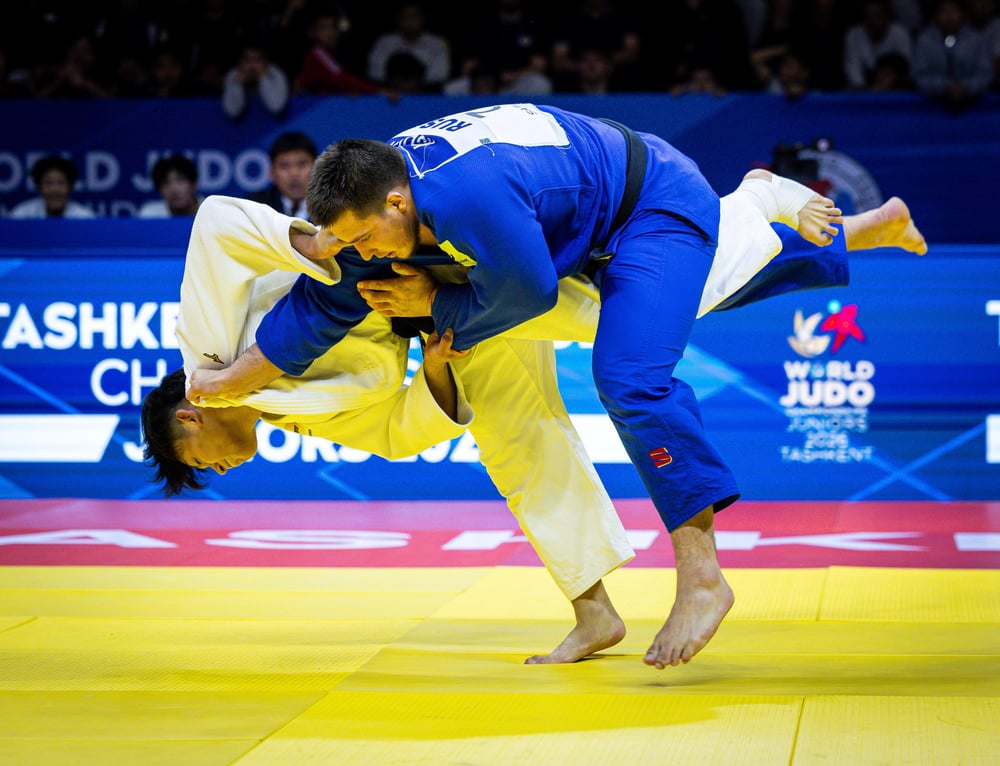
The next contest featured world junior silver medallist Shokei Hirano against Denis Kuligin. Hirano initially took the initiative, but Kuligin produced a beautifully timed counter to score and reduce the deficit to 3–2. The Russian Federation were still in contention.
The responsibility of securing the title fell to junior world champion at -52 kg Iroha Oi, who faced the heavier Tatiana Tsvetova from the -57 kg category. Oi demonstrated her technical superiority from the outset, scoring a waza-ari before continuing her attack on the ground. She eventually immobilised her opponent to seal the victory and the world title.
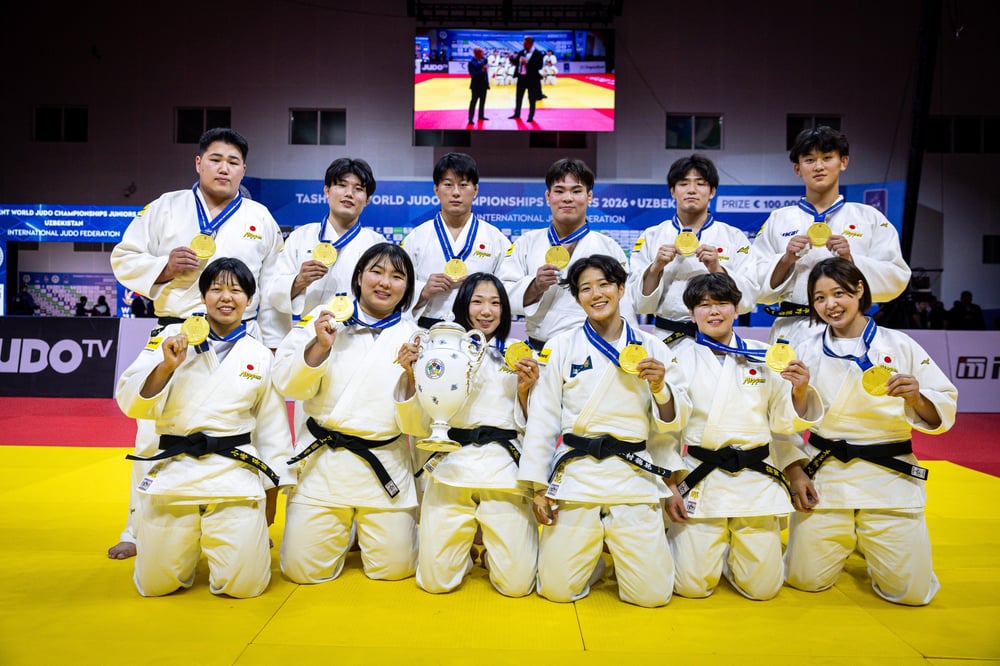
The junior world championships only gold medallist in both individual and mixed teams, Iroha Oi explained her tactics, “I am very happy that I managed to win both the individual and team titles. I approached the competition by focusing on one match at a time, making sure I gave my best and won each contest. Deciding the team final with an ippon was a special moment, especially knowing my teammates were cheering me on. I am incredibly proud to have become a double junior world champion!”
“After some disappointing results in the individual competition, we were all determined to bounce back in the team event. Every country had a very strong team and everyone gave their absolute best, so this victory means a lot to us. What made the difference was our team spirit. We supported each other, lifted each other’s spirits and stayed motivated throughout the day. Even those who were not competing played an important role. We all felt responsible for one another and I believe that unity is what ultimately brought us this gold medal,” said the national junior team head coach Omori Junji.
Japan were once again crowned world junior mixed team champions, extending their extraordinary run to five consecutive titles. The eighth junior mixed team trophy in the history of the championships returned to the birthplace of judo.
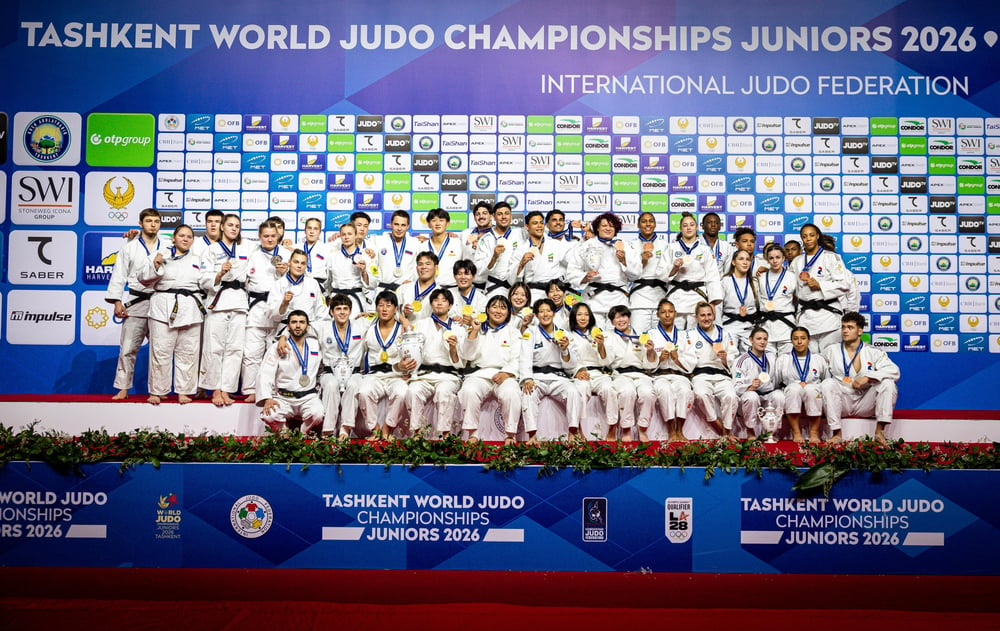
The Tashkent World Judo Championships Juniors 2026 concluded with Japan firmly at the top of the mixed team podium and another memorable celebration of international judo.
Important updates
Top stories

Déjà Vu as Japan and Russia Meet Again in the Final
Nov 22, 2026
Tashkent Showcases the Worldwide Strength of Junior Judo
Nov 22, 2026
IJF and Saber Join Forces in a Multi-Year Partnership
Nov 21, 2026