Sakura Judo Morocco: Learning to Trust, Learning to Lead
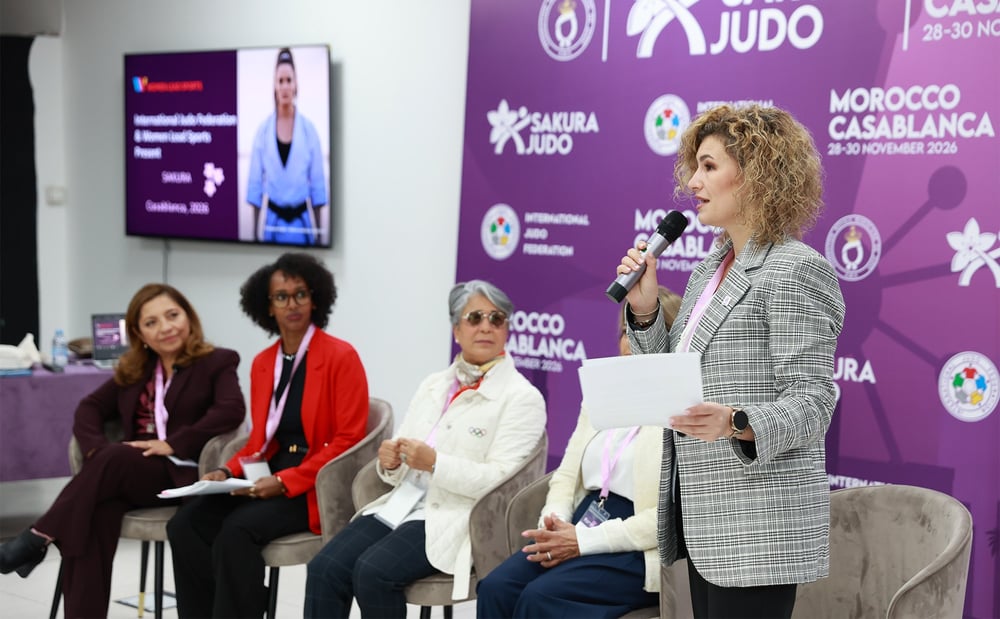
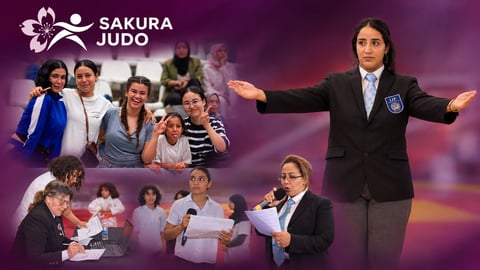
"One of the first lessons of Sakura is simple. We don’t have to do everything on our own," she told the participants. "Learning to trust others, share responsibility and recognise what another person can bring is part of learning to lead."
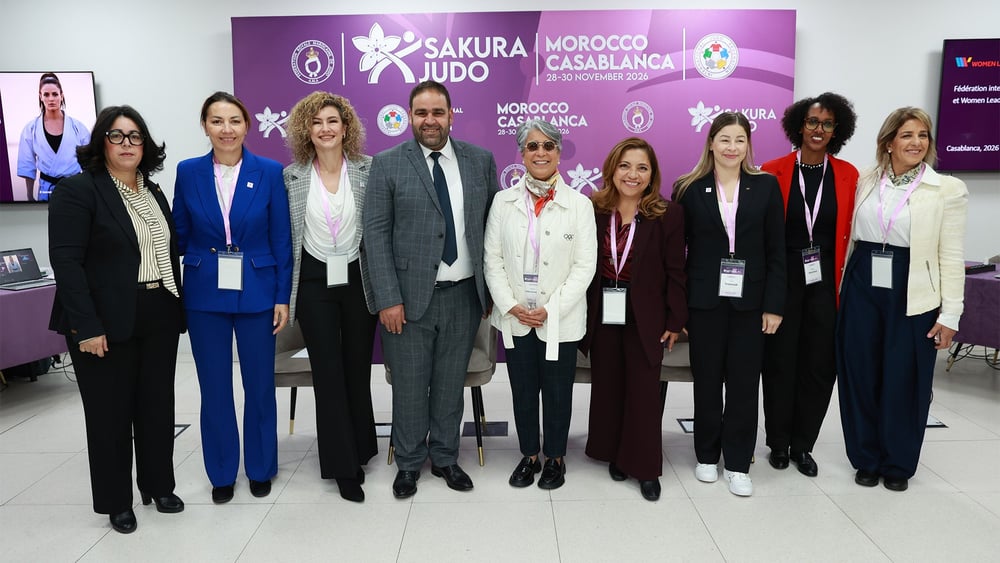
Denisa Deliu had been there when the team was testing its first ideas, before Sakura Judo had a name or an international programme. Putting the Casablanca edition in her hands reflected what Larisa Kiss hopes will happen over time. Women who come to learn can go on to teach, organise, mentor others and help shape future editions themselves.
In her address, Larisa Kiss recalled joining the IJF as a secretary and taking on responsibilities that eventually led to her current role as Director of Olympic Games and the Olympic Movement for Judo. From a distance, the progression might look straightforward. From one job to the next, it meant learning to speak up, defend an idea and accept responsibilities before she felt entirely ready for them.
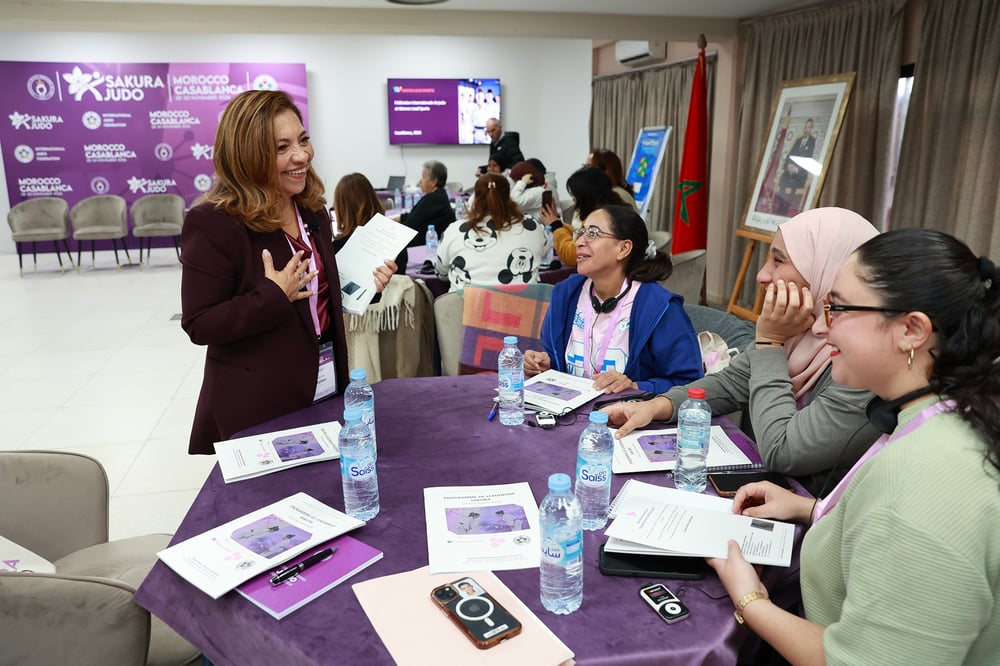
That experience informs the way she talks about a career in judo. When an athlete stops competing, the judgement, discipline and experience she has gained can serve her as a coach, referee, educator or mentor. "Sometimes, the tatami simply changes,” Larisa Kiss added.
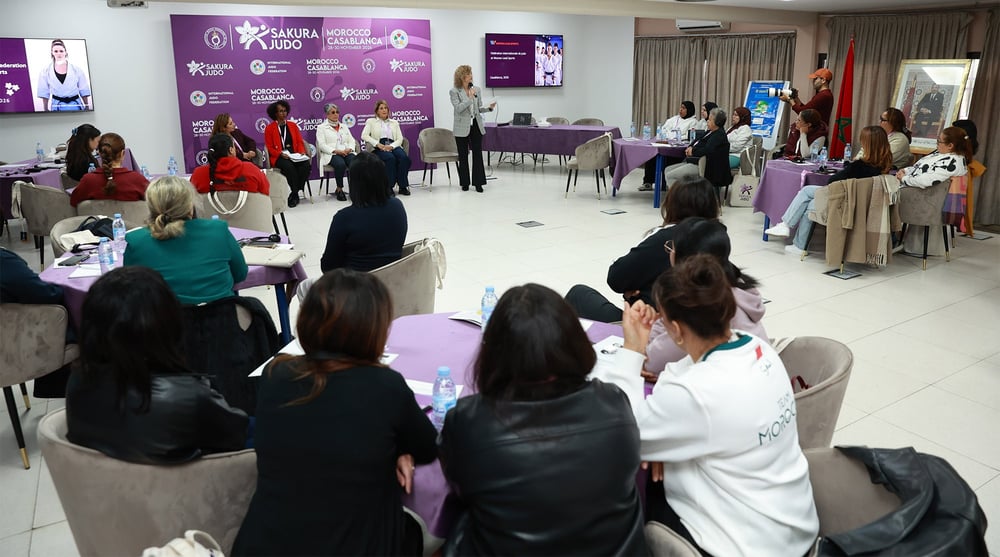
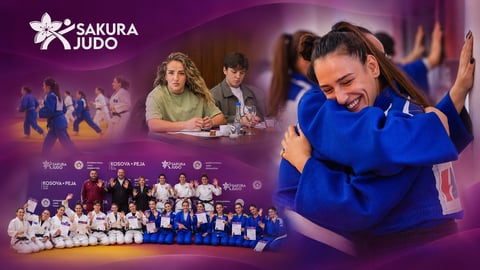
For Denisa Deliu, the process begins with finding out what the women in front of her need. At the previous edition in Kosovo, she was struck by how keen the participants were to learn and how readily they spoke about sharing what they had learnt with other women and girls. She brought that memory to Casablanca, along with the conviction that each group needs time to find its own pace.
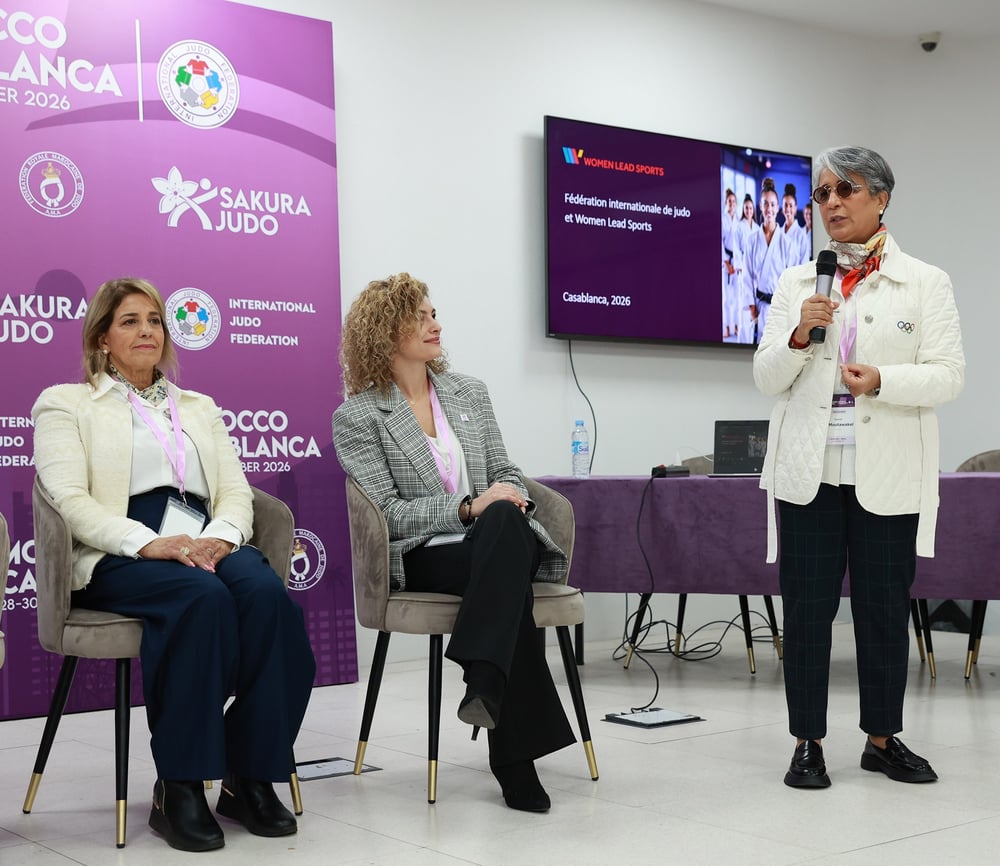
In her self-defence sessions, Denisa Deliu draws on her experience in judo and kickboxing, her studies in sport science and her training through the IJF Academy. She remembers demonstrating a technique and seeing some beginners hesitate. The movement looked difficult as a whole. She broke it down and gave them time to practise each part before putting it together. "You could literally see their confidence growing with every successful attempt," she recalled.
For Denisa Deliu, that way of teaching began with her father, Dan Deliu, who introduced her to judo. From him, she learned to explain a movement clearly and logically and to change the explanation when someone needed a different way into it. "It is about understanding how to transfer that knowledge to others, adapting explanations to different people and making even the most complex movements accessible."
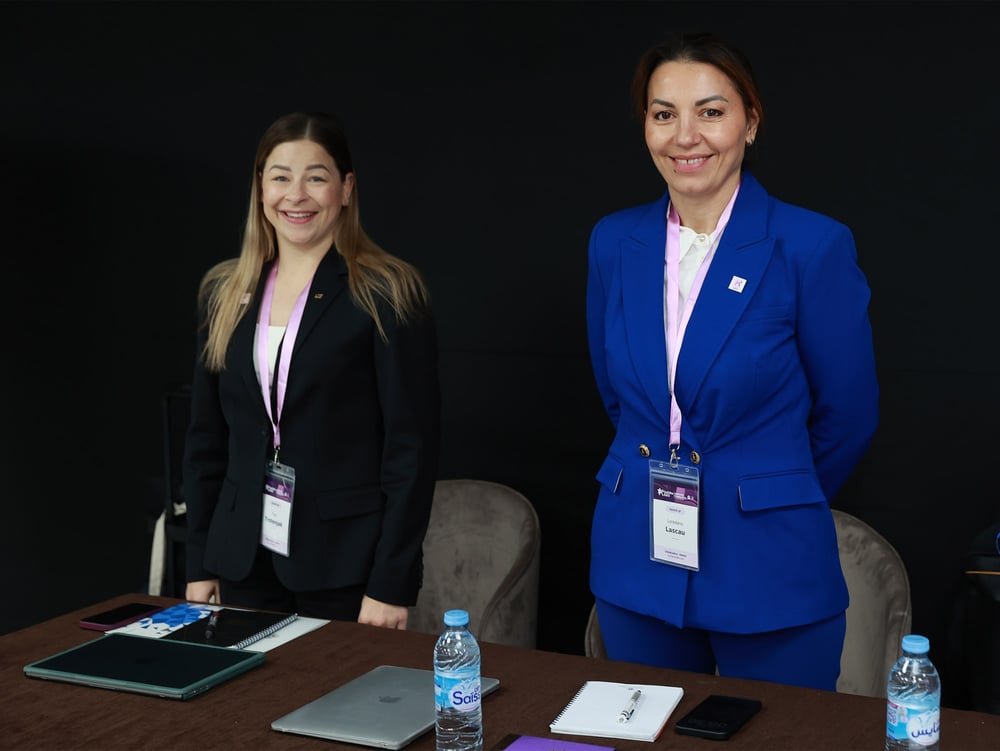
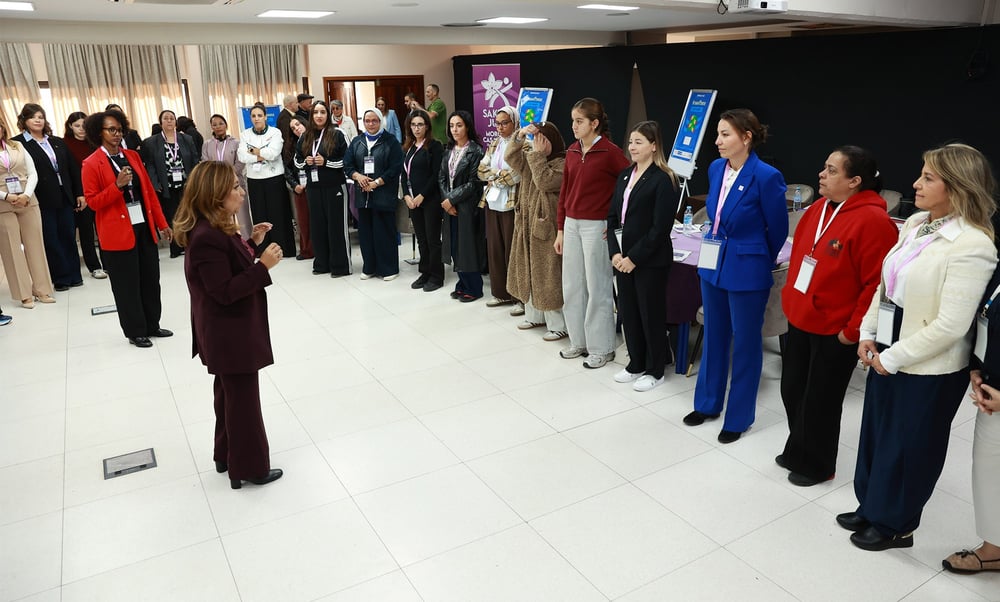
Over three days in Casablanca, the participants will have opportunities to work on their communication and leadership as well as their judo. Larisa Kiss invited them to ask a question they would normally keep to themselves, talk to someone they did not know or voice an idea they might otherwise leave unspoken. Each is a small act and each is easier in a room where people give one another time and attention.
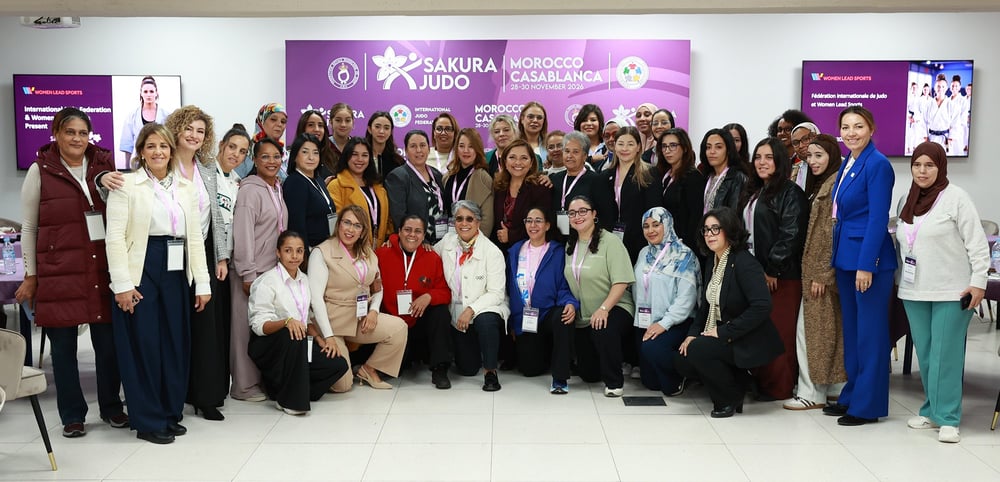
Denisa Deliu hopes that the women will take that same patience back to their clubs, share what they have learned and point others towards opportunities to continue their education through the IJF Academy. Larisa Kiss described that exchange as Jita Kyōei, mutual welfare and benefit. In Casablanca, it began with one woman trusting another to open the seminar. After the three days are over, it may continue in a local dojo, when a participant sees a girl hesitate and knows how to help her try.