

Several schools, with pupils, teachers and support staff, took their seats on the mezzanine level overlooking the tatami, excited for the day ahead of them.
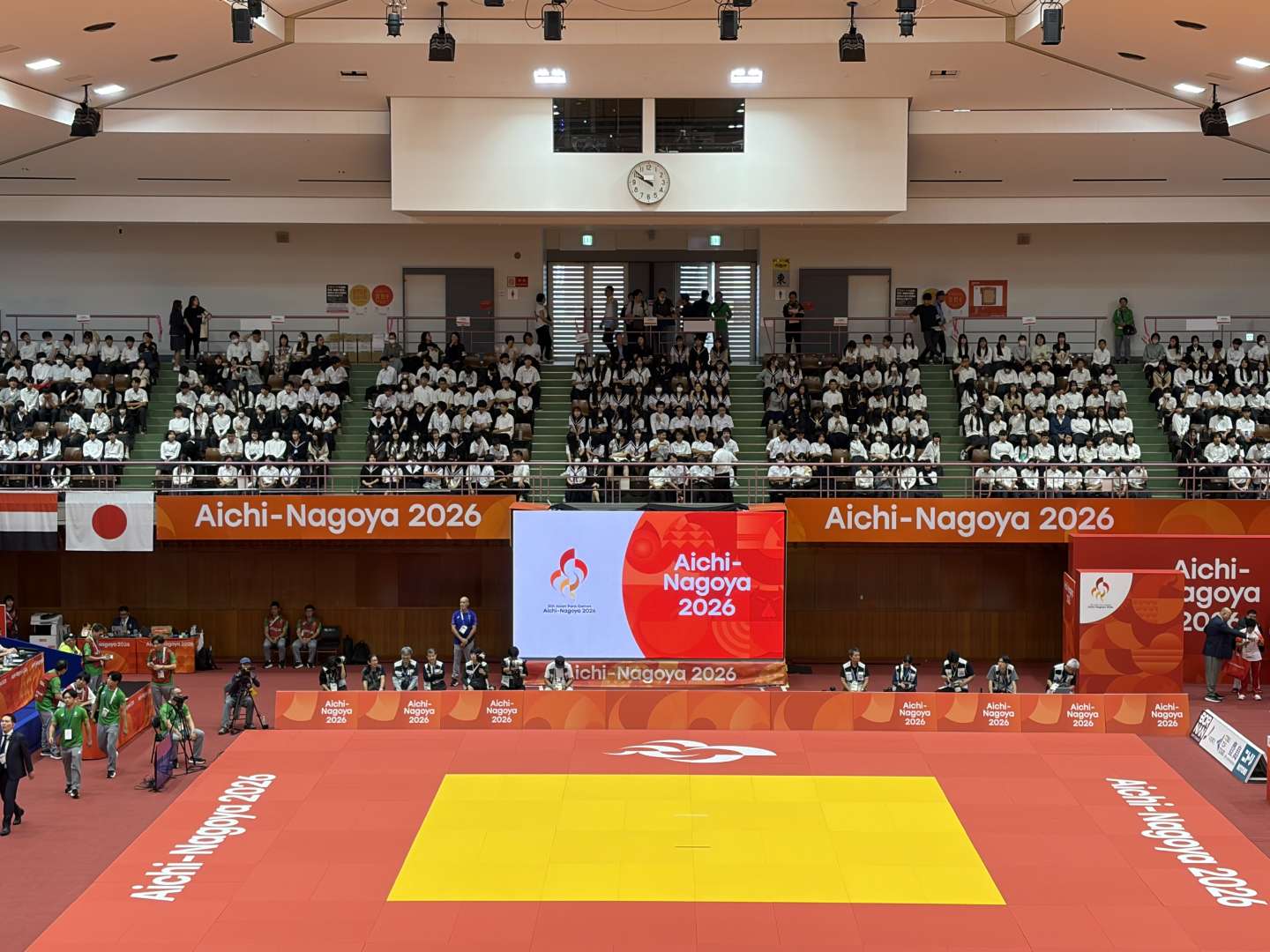
Among those gathered was a cohort from Kohoku junior high school, very local, just a twenty minute walk from the judo venue. A member of the school’s staff, an English teacher, was clear about the value of spectating at the judo event, “It’s an important opportunity for them to watch high level sport. For me too, it’s my first time coming to see the Para Games. I am as excited as the children are.
From this experience, our students can learn how elite sport works and how the rules are adapted here to ensure inclusion for visually impaired judoka. Everyone here has the chance to give their best. The children were very excited to come!”
The foundation of this learning experience is the illustration of how understanding and an inclusive mindset for all gives rise to extraordinary achievement and the chance for everyone to benefit and feel good. These judo-related ideas visible on the tatami are really a microcosm, a magnified version of how humanity should be beyond the dojo.
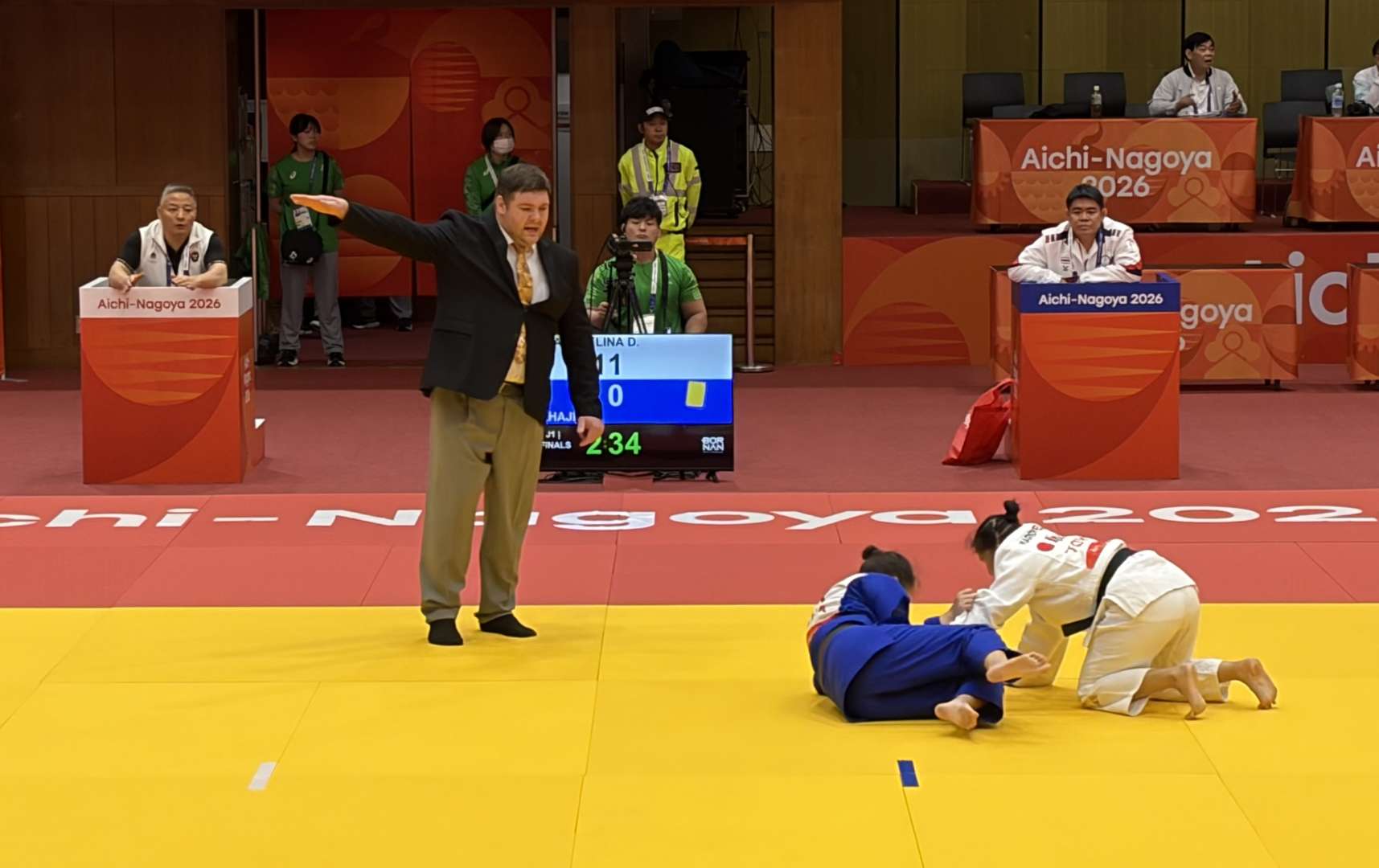
At the Aichi-Nagoya Asian Para Games, children are being given a real-world example of how Jita Kyoei, mutual welfare and benefit, works in practice not just in theory; an important lesson.
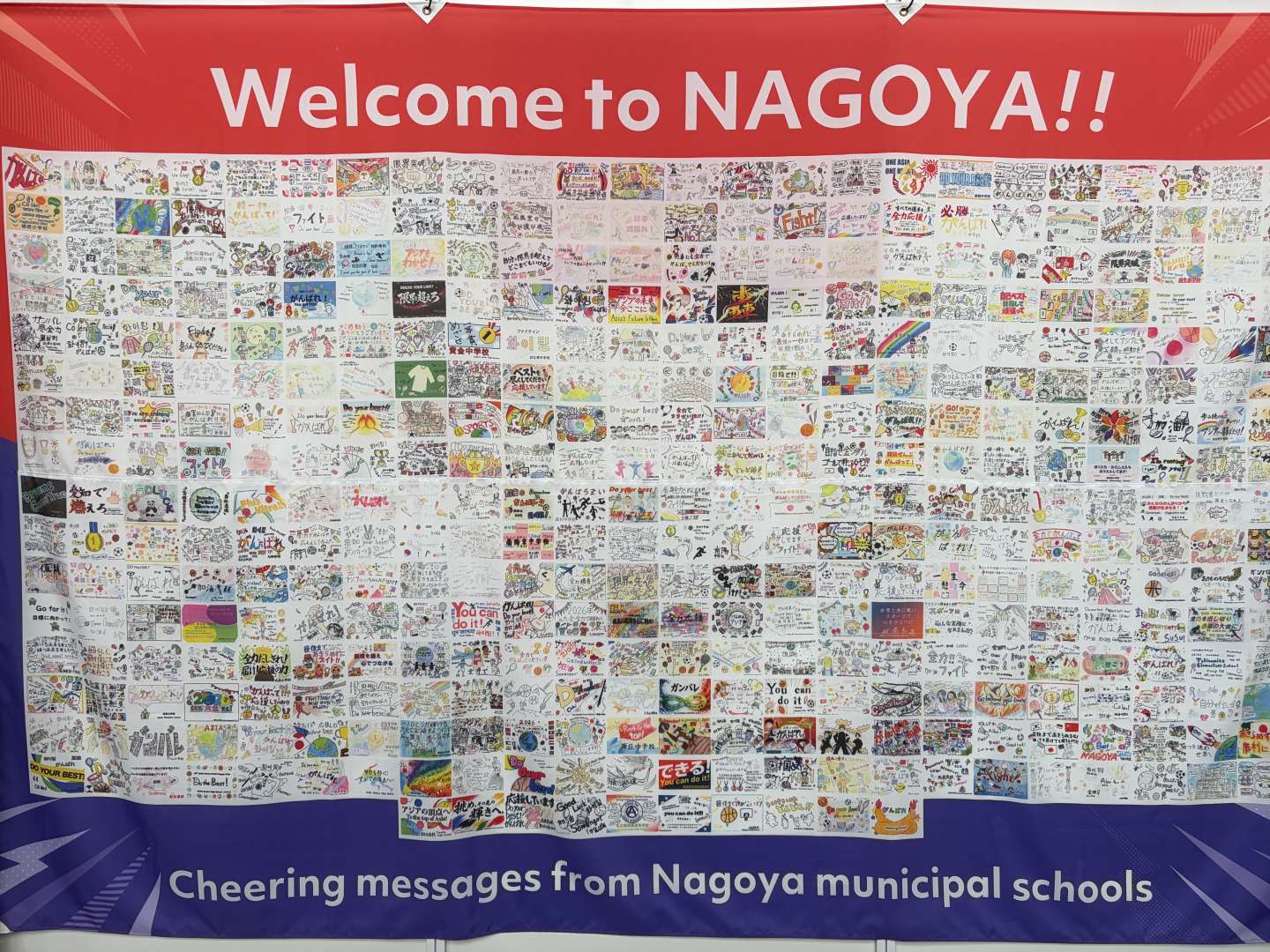
Evidence of school engagement with the Asian Para Games can be found in various guises around the city of Nagoya. Aside from the presence of the children themselves in sports venues, their focus has been guided in the lead up to the occasion too, while in the classroom. In the foyer of the Aichi Prefectural Martial Arts Hall hangs a large fabric banner with printed designs and messages from local schoolchildren to the athletes, wishing them luck, cheering for them in written and drawn form.
This cohesion will last long in the memory of these young people and perhaps help them to be the root of the next stage of evolution and growth in terms of inclusion. This would be a win for everyone!