
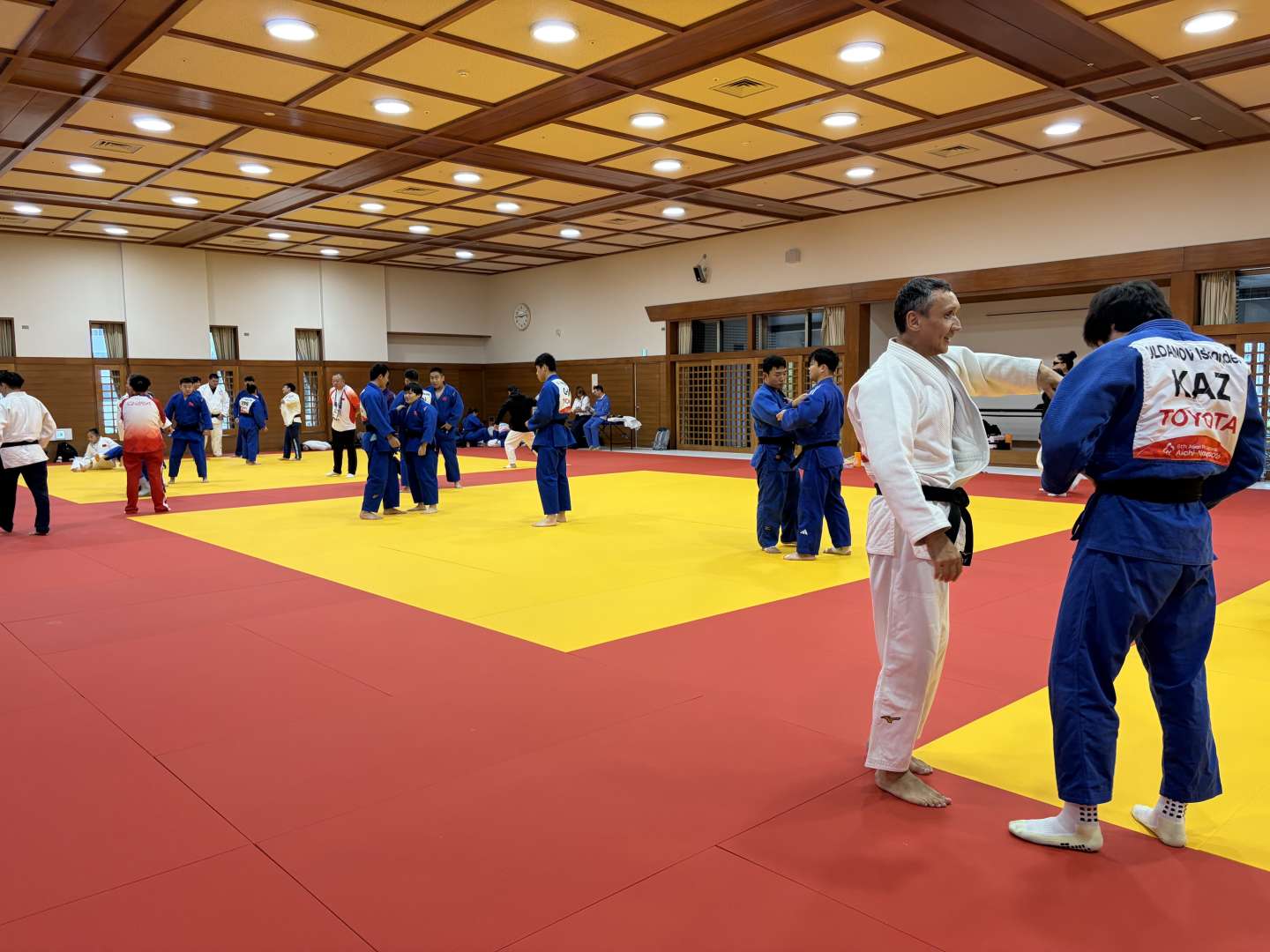
In the warm-up spaces, athletes prepared ahead of the 10am start, feeling the tatami under their feet, taking last minute guidance from coaches and making time to quieten their minds before the first ‘hajime’ of the day.
There was time for conversation too. Although delegations generally warm up separately, there is a great deal of networking at play. Coaches from across Asia discuss training methods, competition planning, development strategies and much more. The sharing of ideas around these important topics is a big part of the development of Para sport in the region and beyond.
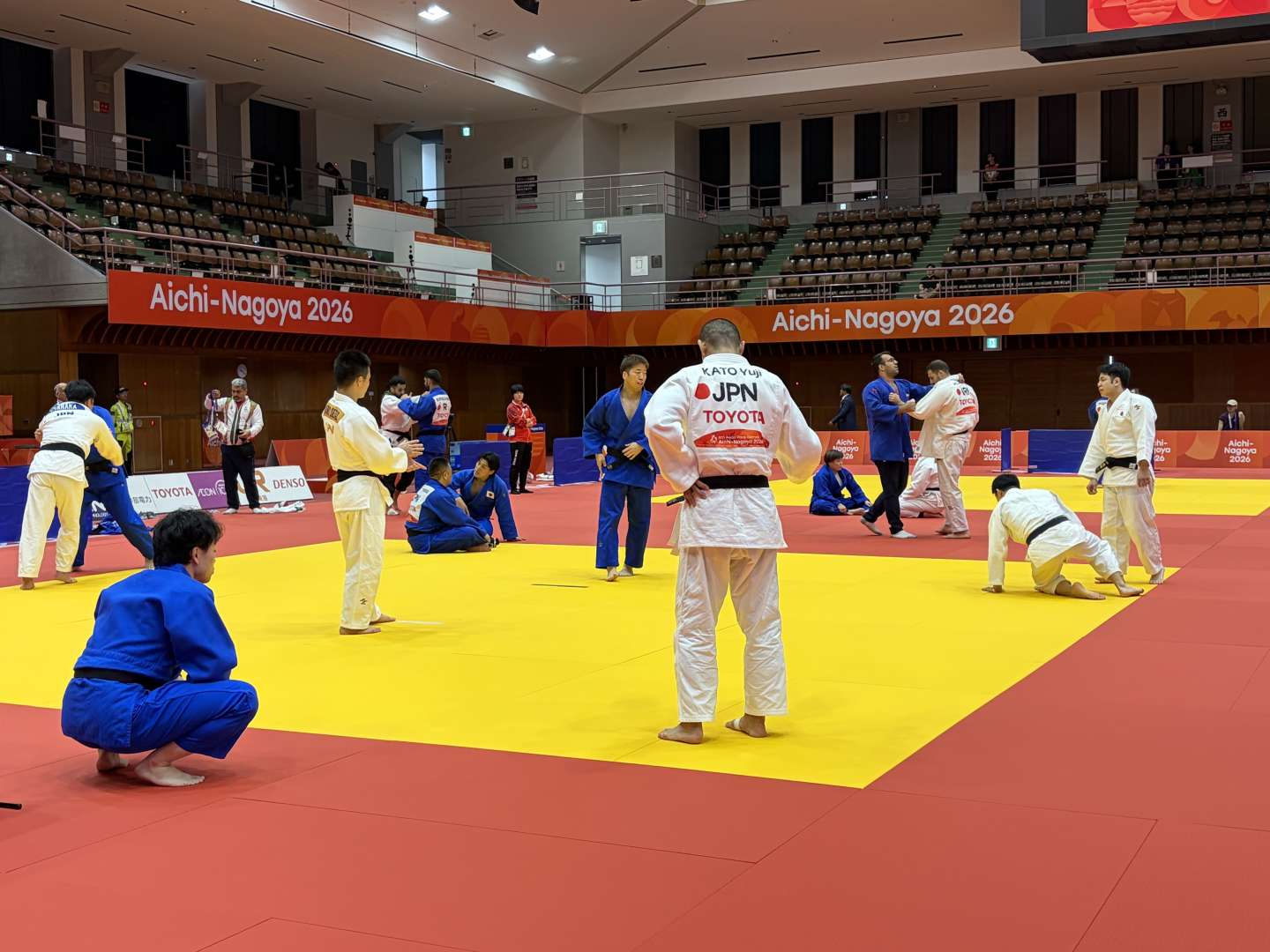
‘Mondo’ (dialogue) has been a key component of judo since the sport’s beginnings at the end of the nineteenth century. Traditionally, mondo refers to a teaching method where a teacher and a student share a structured discussion about the philosophical, theoretical, or spiritual aspects of judo. It stretches far beyond the technical aspects of judo, helping judoka to gain a deeper understanding of the sport and its value for society. In the warm-up room in Nagoya, mondo was as important as ever, illustrating the importance of education alongside performance.
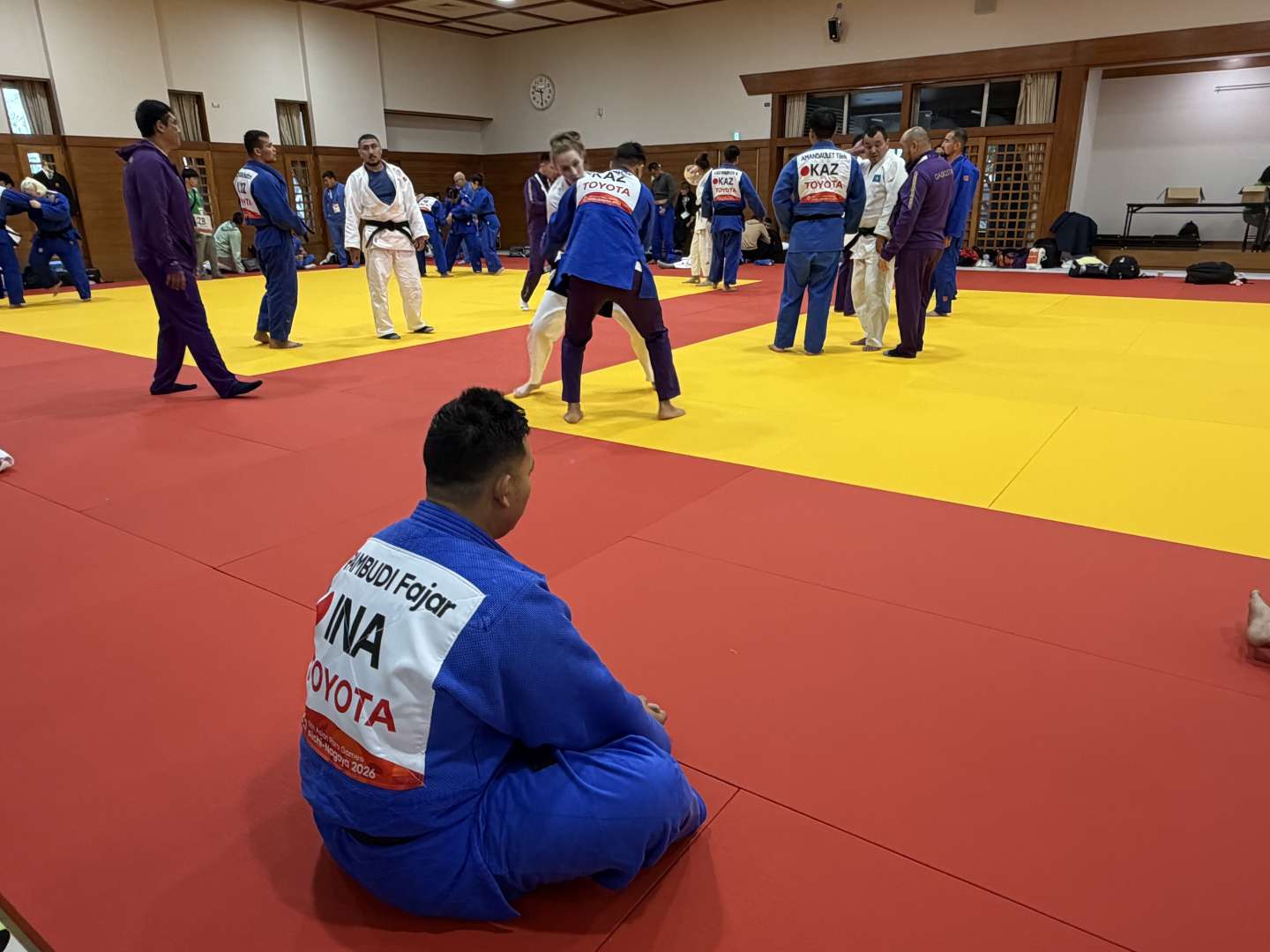
Para judo shines a light on the linked components of judo, the foundation on which Jigoro Kano developed judo’s education system. Combining mondo, kogi, shiai and randori, judoka can gain a rounded understanding of judo. In the warm-up room at the 2026 Asian Para games, Kano’s education system is on display creating undeniable expectations; increased awareness, universal inclusion and societal cohesion are on their way.