


The concept is inspired by guidelines from the International Olympic Committee (IOC) which has begun integrating similar ‘Mind Zones’ at major events, such as the 2024 Summer Olympics in Paris and the 2026 Winter Olympics in Milan–Cortina. With the Mind Dojo, the IJF has become one of the first international combat sports federations to introduce such a service at competitions.
According to Jakl, the idea is simple: to create a calm space where athletes, coaches, referees and other participants can disconnect from the pressure of the event momentarily. “They can step away from the competition, prepare mentally for their fights or recover afterwards,” she explained.
The Mind Dojo offers several ways to relax and refocus. Comfortable seating areas allow visitors to sit quietly, reflect or meditate, while another section provides floor space where athletes can lie down and rest. Physical relaxation tools such as foam rollers, massage balls and weighted blankets help release tension or support a short nap.
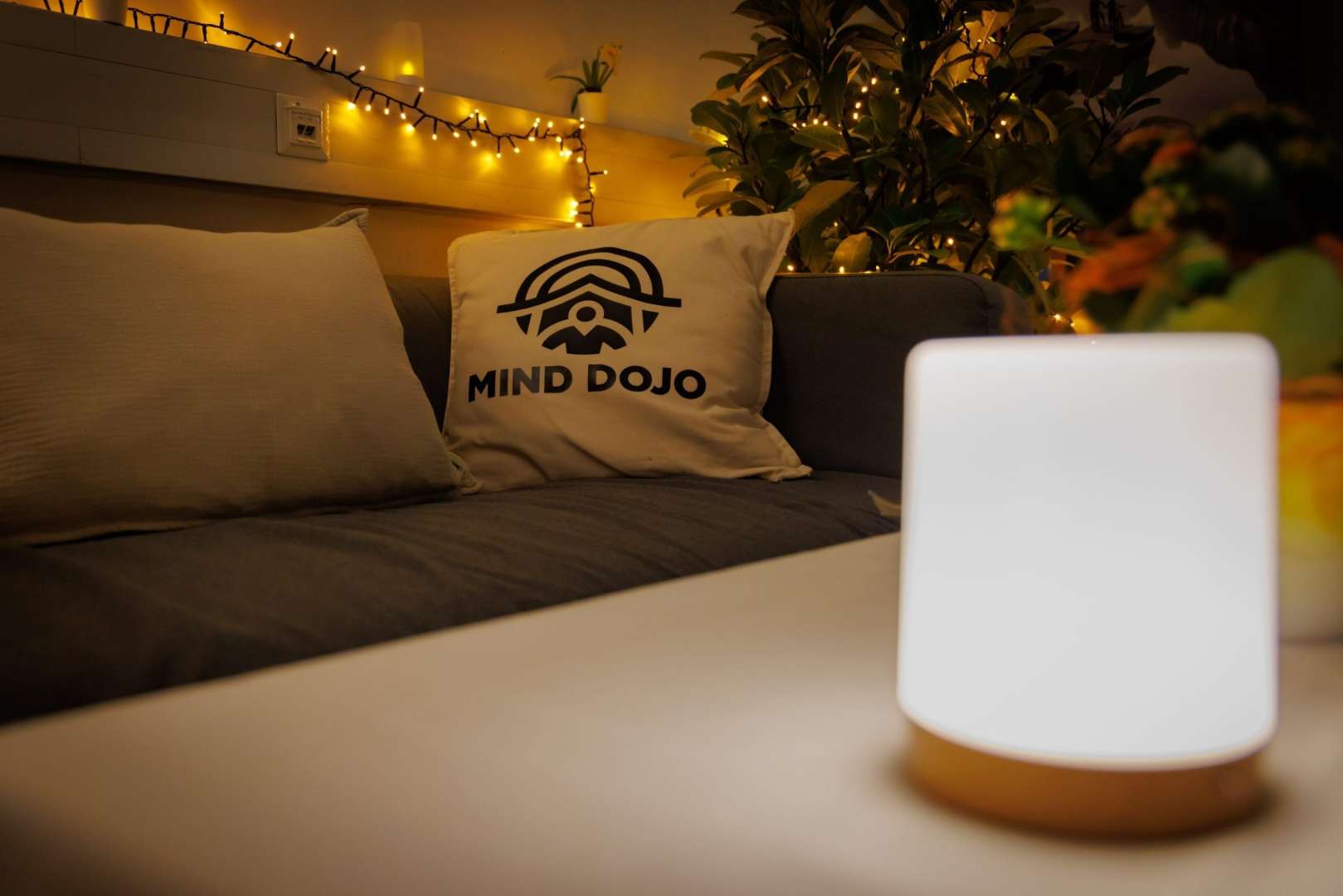
Creative and tactile activities are also available. Drawing materials, colouring pages, LEGO bricks and small fidget toys encourage focus on simple tasks; an approach that can help calm the mind when stress or racing thoughts appear. In addition, guided breathing exercises provide a straightforward method to regulate stress and maintain composure before or after competition.
Guided breathing techniques are also a core component of the space. They provide a method for athletes to regulate their nervous system and reduce stress, offering support before or after competition, especially for those who may not want to engage in other activities.

Increasingly in recent years, the IJF has positioned itself as a leader among international sports federations in addressing mental health issues. Within martial arts in particular, initiatives like the Mind Dojo are still relatively rare. While other sports have begun introducing similar services, the IJF is among the first major combat sport organisations to integrate structured mental wellbeing support directly into its competition environment.
Jakl describes mental wellbeing as a spectrum. At one end, athletes may feel overwhelmed or anxious; at the other, they are fully focused and performing at their best. “We can support athletes across that whole scale,” she said. “Sometimes it’s about helping someone calm down and sometimes it’s about helping them move from ninety to one hundred percent.”
Just as athletes train their bodies through structured programmes, Jakl believes mental preparation should be treated with the same importance. By offering practical tools and a supportive environment, the Mind Dojo aims to normalise mental recovery and preparation as part of elite performance. Many athletes and federations already incorporate sport psychology initiatives in their programmes but just as many don’t have the capacity for this within their specific sporting and economic circumstances. The Mind Dojo seeks to support everyone, regardless of background.

With its introduction in Linz, the Mind Dojo marks a significant step for the IJF, one that recognises that success on the tatami depends not only on physical strength but also on mental balance.