


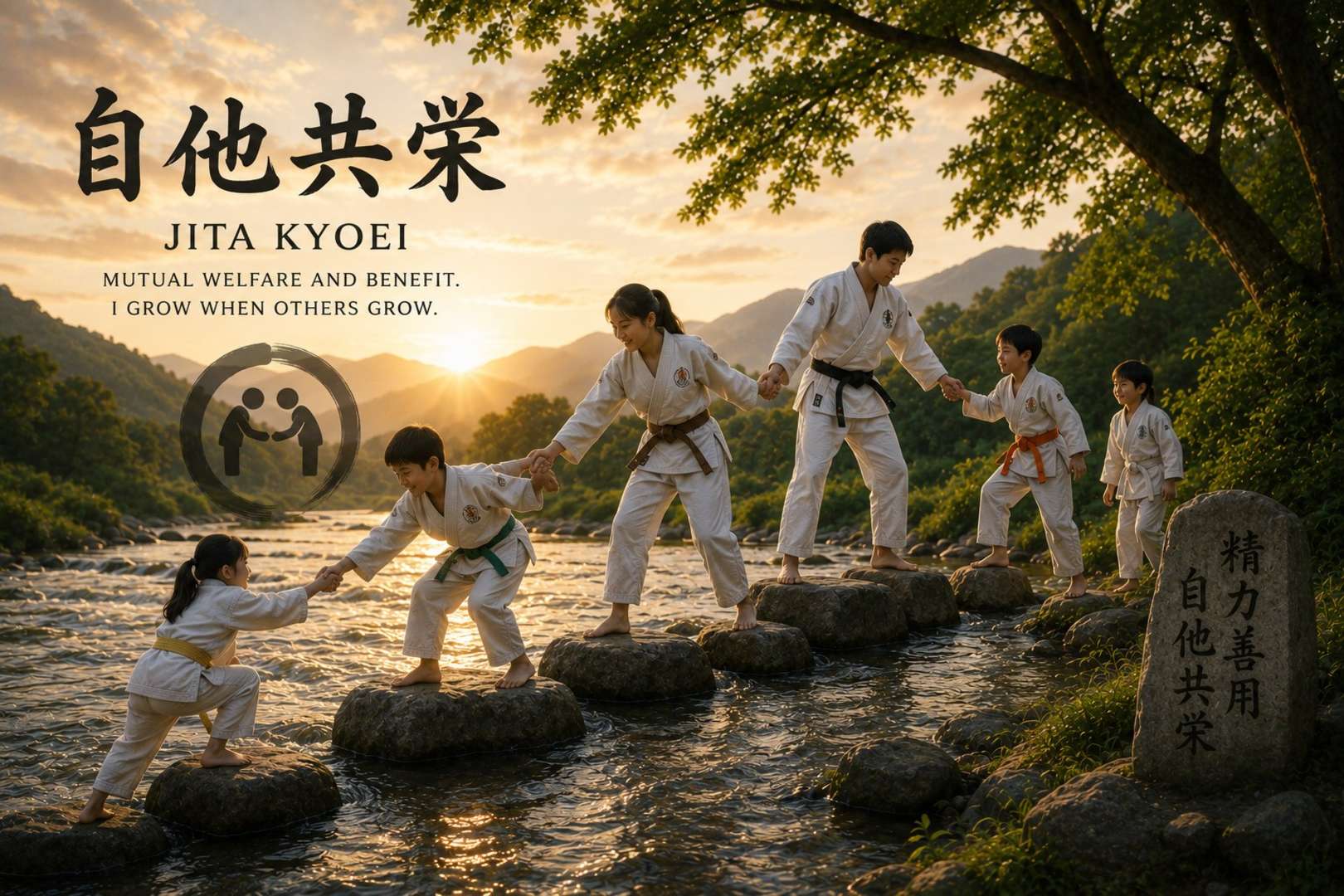
Kano established the philosophical foundations of judo through two fundamental principles: Seiryoku Zenyo (maximum efficiency) and Jita Kyoei** (mutual welfare and benefit). These concepts remain at the heart of judo and continue to guide its practice today. The eight-value Moral Code, however, was developed much later. It was formalised in France in 1985 under the leadership of Bernard Midan, then the head of the Cultural Commission of the French Judo Federation, with the contribution of several leading figures of French judo, including Master Shōzō Awazu.
The code drew inspiration from several sources: the teachings of Jigoro Kano, the principles of Bushidō, the traditional moral code of the samurai and an earlier ‘Code of Honour and Morality’ promoted by the French National College of Black Belts, notably through the work of Jean-Lucien Jazarin. The objective was not to create new values but to express the educational philosophy of judo in a clear and accessible way, particularly for children and young practitioners.
The order in which the eight values are presented has become the reference in France and in many French-speaking countries. There is no official explanation from Kano justifying this sequence since he didn't write it, and it should not be interpreted as a hierarchy. Friendship, for example, is not considered more important than courtesy simply because it appears last. Nevertheless, we can see in this order a meaningful educational progression.
The journey begins with politeness, the first step in any relationship and the gateway to living together harmoniously. It continues with courage, the willingness to act, engage and face challenges. Sincerity follows, encouraging honesty in both words and actions, while honour teaches commitment, responsibility and fidelity to one’s word. Modesty reminds us to understand our true place and avoid arrogance, while respect invites us to recognise the value and dignity of others. Self-control develops the ability to manage emotions and reactions, particularly in difficult situations.
Finally comes friendship, described in the French version of the code as “the purest of human feelings.” Seen from this perspective, friendship is not the least important value but rather the natural outcome of all the others. It represents the quality of relationship that becomes possible when politeness, courage, sincerity, honour, modesty, respect and self-control are fully embraced.

Viewed in this way, the Judo Moral Code can be understood as a pathway of personal and social development: we meet others with politeness, approach them with courage, interact with sincerity, honour our commitments, remain modest, show respect, master ourselves and, ultimately, create the conditions in which genuine friendship can emerge. More than a list of values, the Moral Code offers a framework for growth, helping judoka to become not only better athletes, but better human beings.