

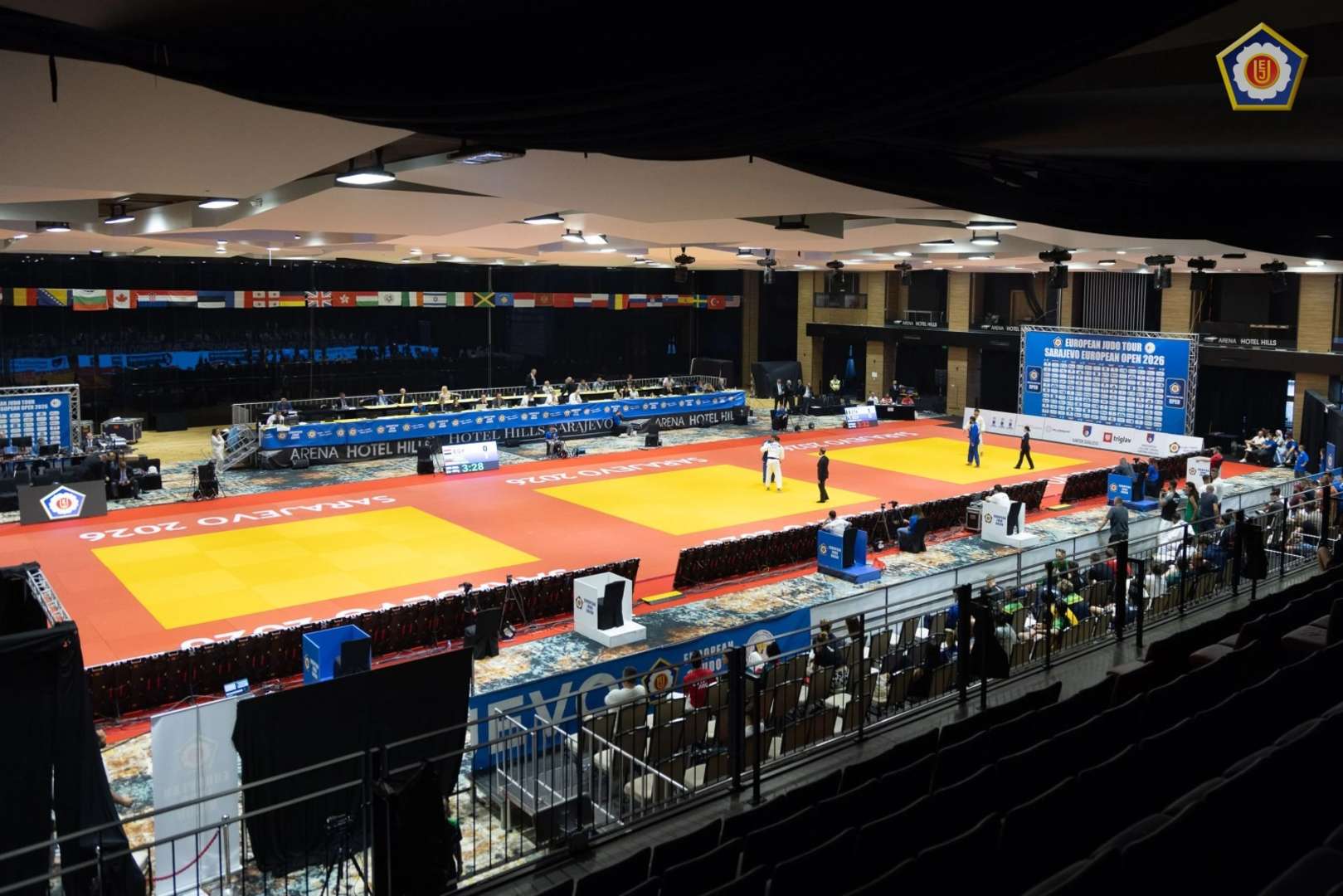
Standards of event presentation have been climbing, unreservedly, for decades, but what used to be confined to only the World Judo Tour has now filtered down to the continental unions and, in some cases, even national federations. The advent of live streaming has increased viewership exponentially and with that there is a new set of expectations. Spectators want more, athletes deserve continued development in this area, and it is happening.
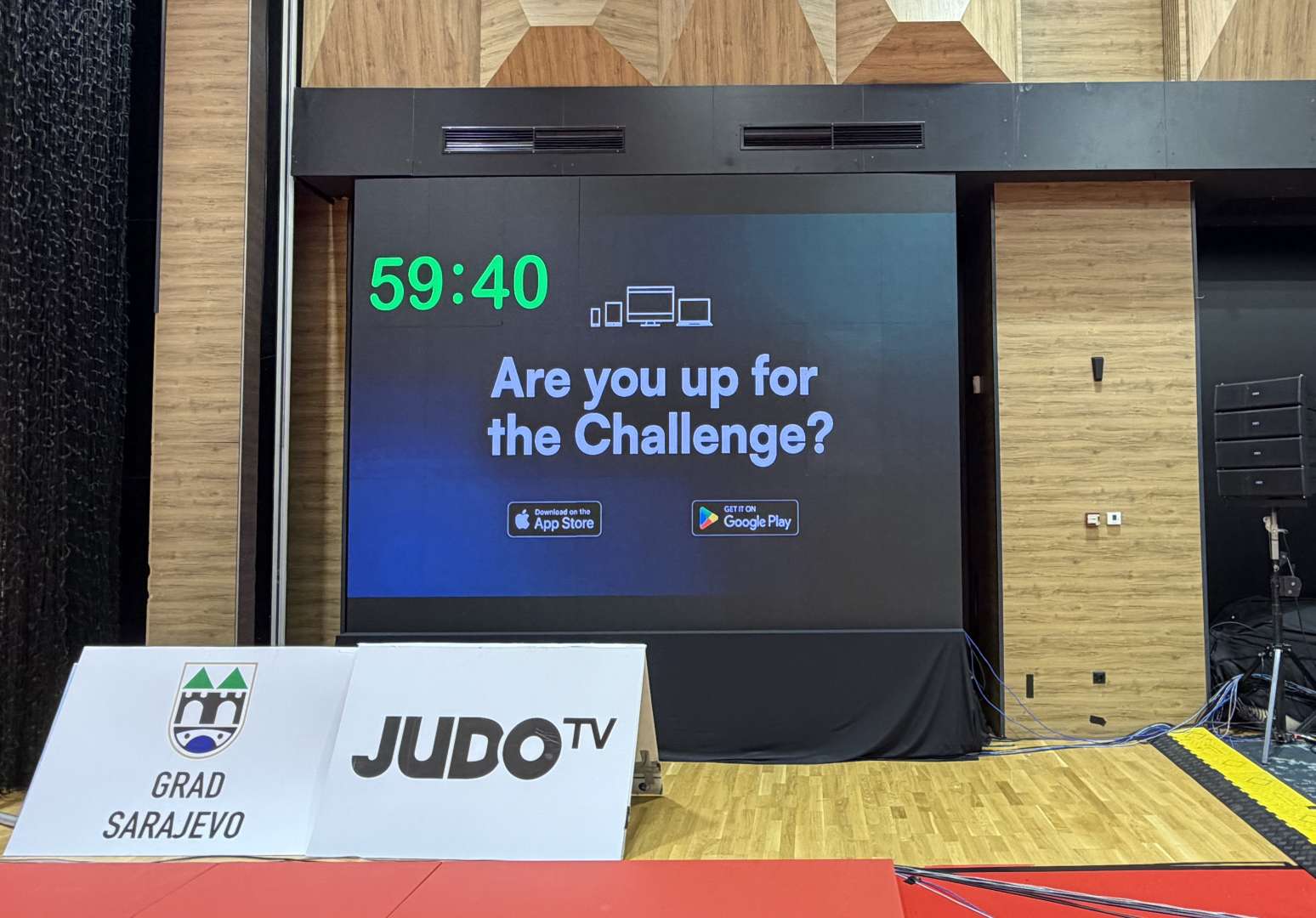
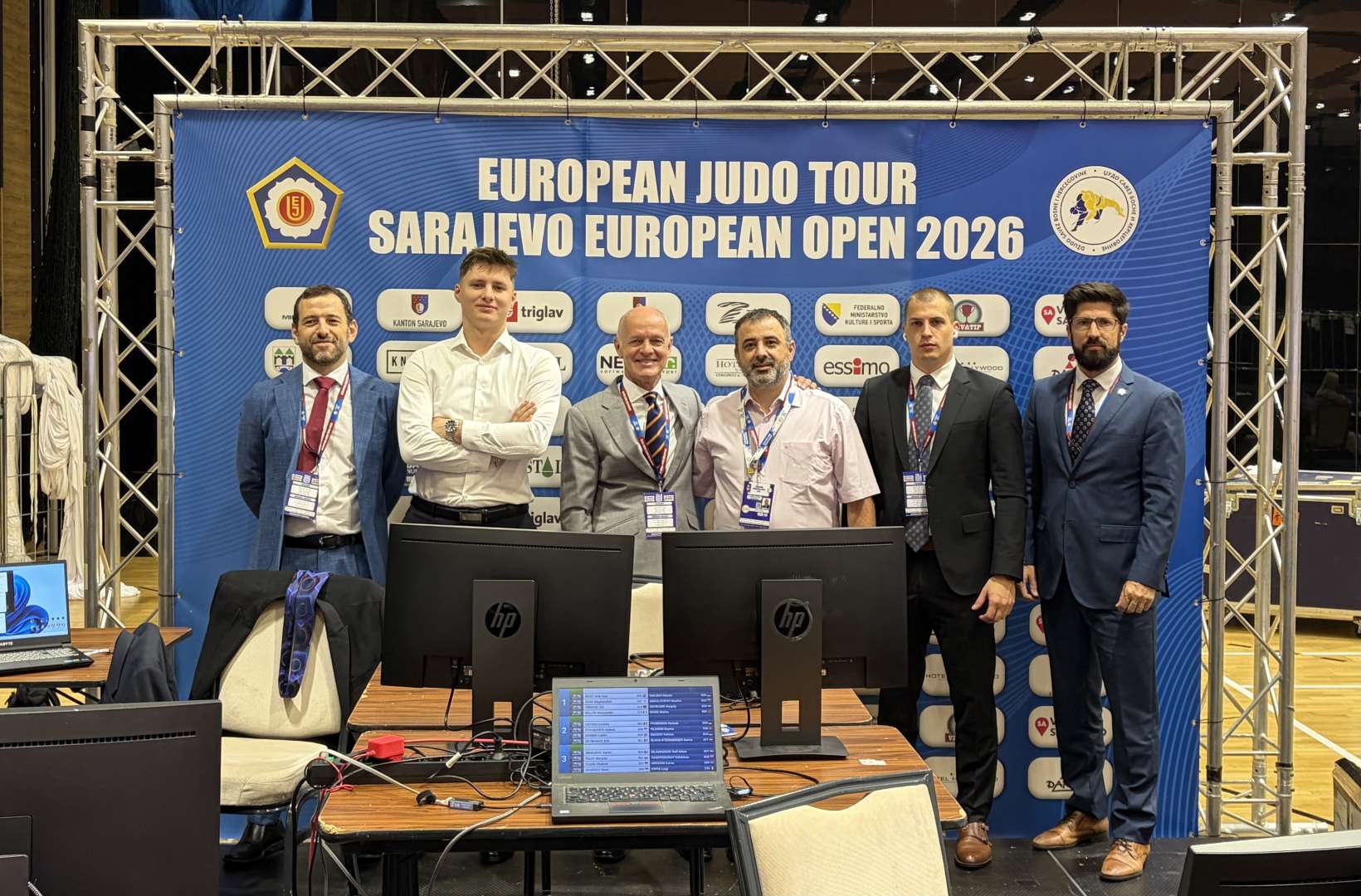
In Bosnia, demonstrating the effort and co-ordination, the skill and planning required, the Sarajevo European Open is displaying every aspect of digital presence that the judo community has come to expect and appreciate. The team behind it, rarely seen on camera, works far beyond the hours of live competition, fixing wires, making the hardware as invisible as possible, preparing the statistics that will inform broadcast, co-ordinating the scoreboards, the contest order, the call room, ensuring replays are available for both referee supervisors and spectators. The digital remit is massive and with it has come outstanding efficiency.
Hotel Hills in Bosnia’s capital is now a well known venue for high-level judo. Several cups and opens are run in the conference centre each year and in 2022 this was the host venue for the World Championships Cadets. Later this year the IJF veteran and kata flagship events will be here and everyone involved anticipates cohesion and seamless organisation. No doubt many of the team from the 2026 Sarajevo European Open will be in play again.
One more familiar face in this year’s team is that of Franco Sheldon-Rooks, the IJF’s longest-serving commentator. Sheldon presents the Hajime Show before each day of competition and Golden Score at the end of each day, while also looking after the live reporting throughout the competition. What does he say about the work of the behind-the-scenes team?
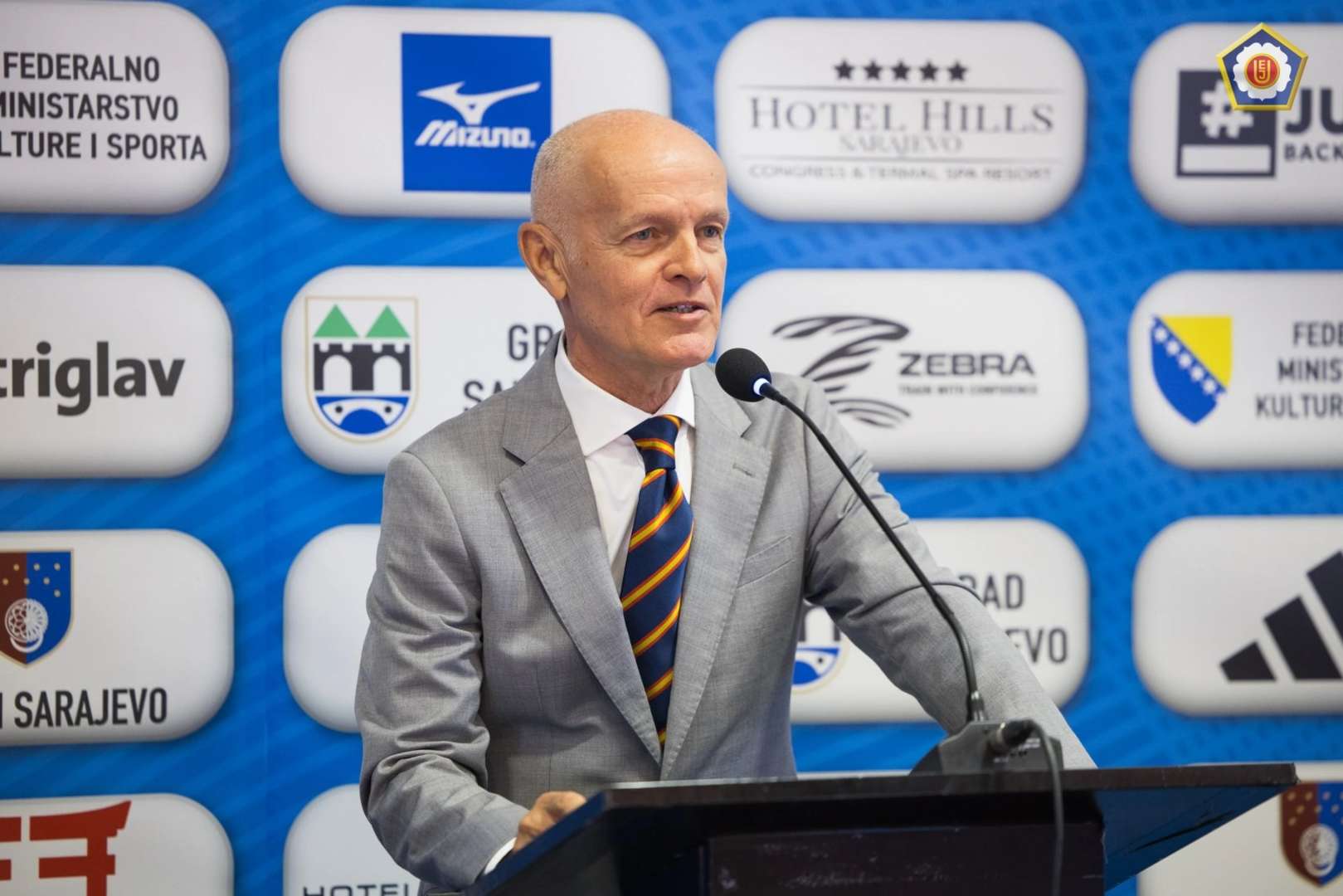
“Without them it would all be impossible! Nobody can do all jobs and so it has to be a team, and this is a real team. That’s what makes it come across in the professional way it does. Everyone does their job well, whether it’s a world championship or a grand slam, the same level of presentation and commitment to the job is always there. At this European Open, it is no different.
Carlos works on the replays, Federico works on the Hajime Show and Golden Score. They all look after the screens in the venue and the live stream too; it all comes from here, from them.”
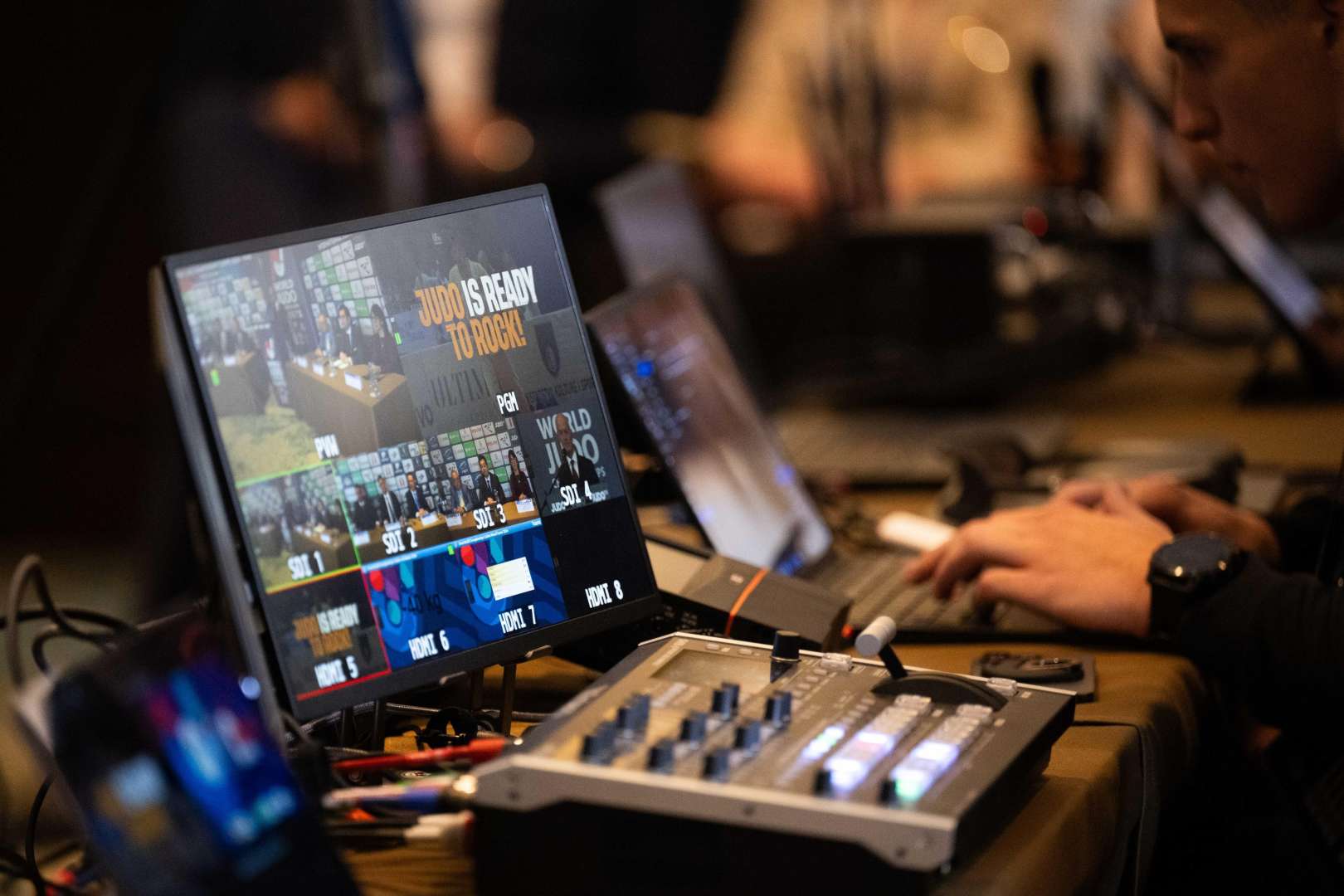
And so it continues, in Sarajevo and everywhere else; digital analysis, refinement and improvement, all at the service of judo. It is a clear example of Jigoro Kano’s theories of education and society. Learning and practice have been at the core of the work of all event technical teams around the world and with that, they contribute to the judoka community consistently and professionally.
Hajime!