
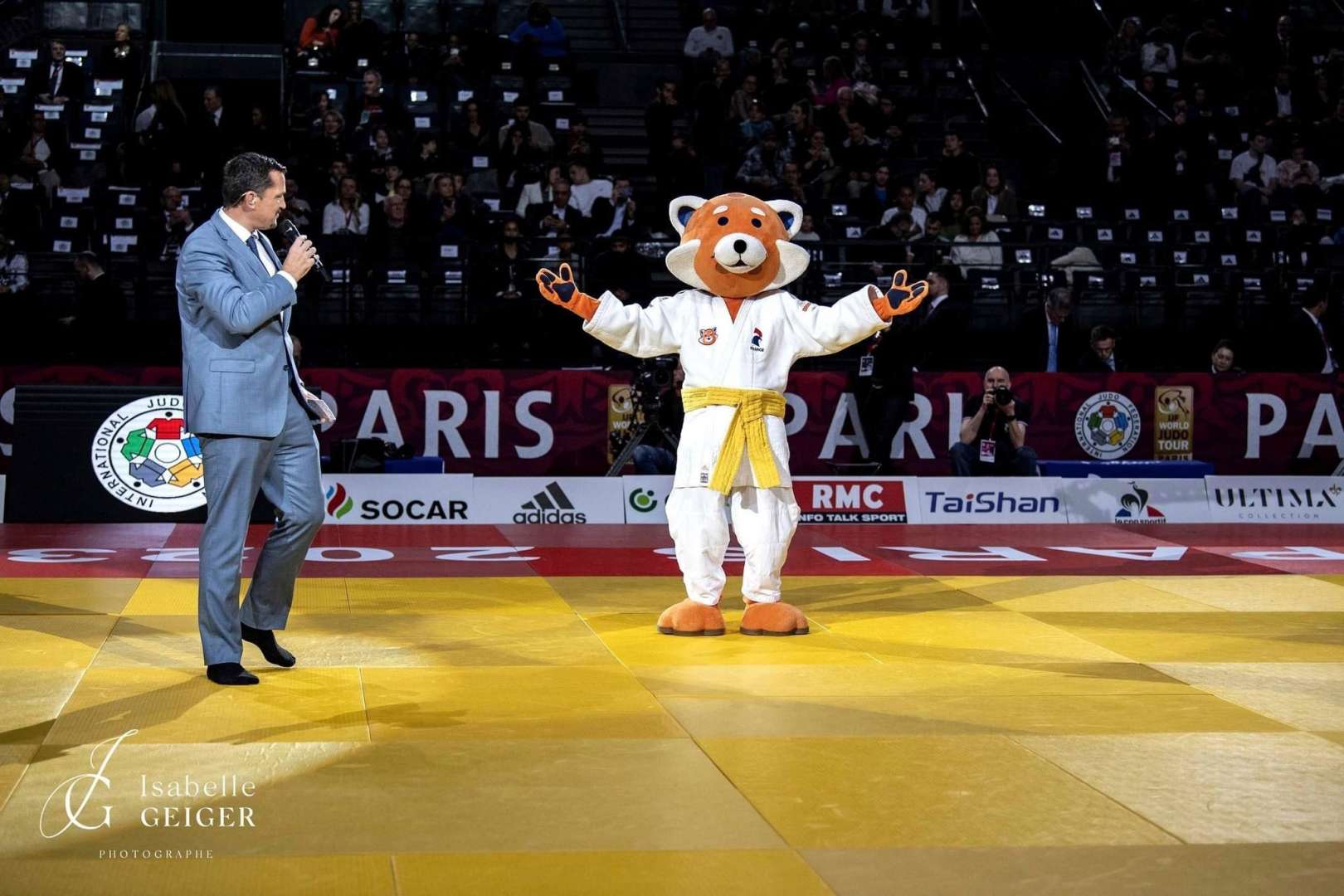
Wearing his judogi and standing on the tatami in front of 15,000 spectators, he spoke not as an official, nor as a former competitor, but as a judoka whose entire path had been shaped by the sport’s values. Bercy has followed him for decades. In 1997 he was there as a volunteer, carrying the bags of David Douillet during the world championships. In 2005 he returned as an athlete and earned a bronze medal. Later came twelve years as a technical official, designing and leading the entertainment that helped make the Paris tournament unique on the global calendar.
He addressed the audience with humility and honesty. He had not become a great champion, he said, and therefore had never been honoured as one. That was normal; he had not earned it. Yet organising celebrations for others had given him immense happiness. Medals, he reflected, lose their practical function once a career ends. They do not tell the time and they do not point the way. What remains forever is the method used to obtain them.
After a first life spent trying to become the best, uncertainty may follow, but judoka always know how to continue. The way, the Do, is to move forward. Judo teaches you to fall, to discover humility in contact with the ground, and then to stand up again. For Lecanu, judo is perhaps the greatest social network in existence: "the uniform that brings people together, the grade that links them, the bow that expresses respect and mutual acceptance. Sometimes you act, sometimes you support; always you grow together. Adaptation, best use of energy, mutual welfare and benefit," these ideas became his compass.
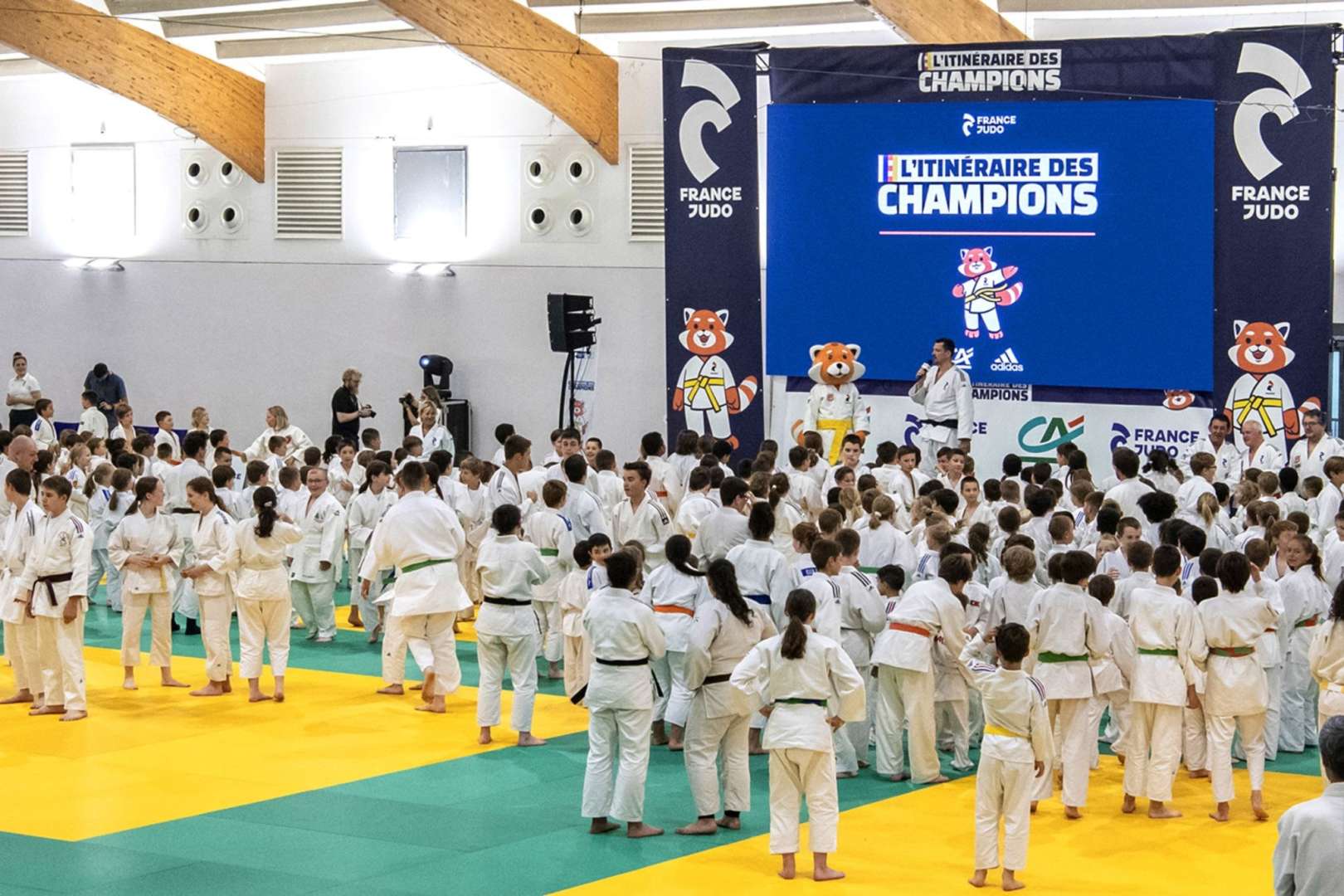
If judo had carried him around the world, he decided it was his turn to carry judo outward. Through tours, demonstrations and outreach programmes, he travelled thousands of kilometres, visiting dojos, schools, hospitals and care homes. He witnessed children amazed by champions, families filled with pride, but also illness, loneliness and despair. Over twelve years he met hundreds of thousands of people, sharing laughter, tears and above all the reassuring presence of judo in everyday life.
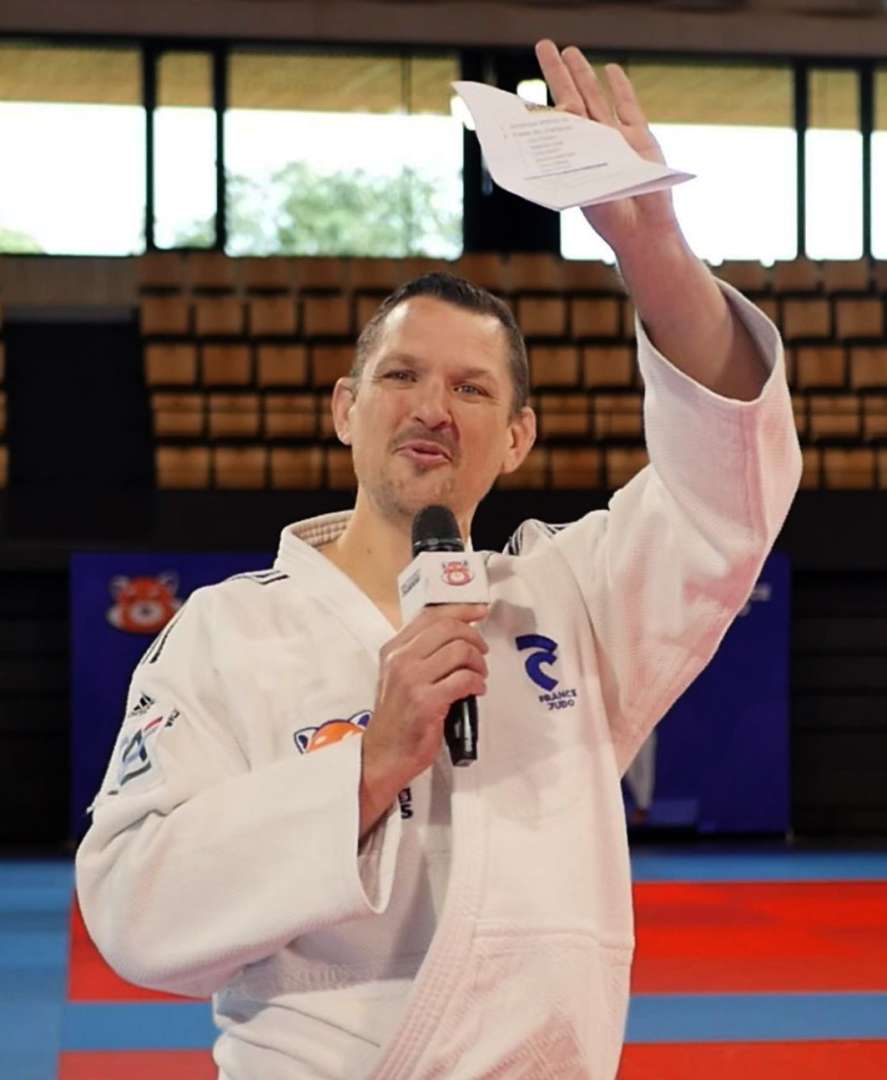
Why step away now? “Because life demands renewal,” he explained. “Because risks must be taken.” And because, sometimes, he felt he had watched the children of judo grow up more than his own. Still, the bond will never be broken. Should judo ever need him again, he will be there.
Competition, he said, helps us know ourselves, but true champions are few. Life will always present adversaries: addiction, disease, isolation. Judo alone cannot change the face of the world, yet for him it saved a life, his own, by giving it meaning. He described competition as a birth, his work within the federation as a rebirth and his sixth dan as recognition. That recognition he dedicated to his wife and to all those who had accompanied him along the way.
Looking at the crowd, he concluded with a simple and powerful thought: if he had to choose a godfather, it would be them, French judo, every club, every judoka, near or far.
Frédéric Lecanu now turns towards a new professional direction but he will remain close, as a consultant, a commentator and a tireless ambassador of judo’s educational power. Some journeys never truly end, they simply continue along another path.