
The opening day confirmed one of the great truths of judo: no ranking or status guarantees success. Several top seeds discovered this reality in the most difficult way. In the -48 kg category, European champion and number one seed Shirine Boukli (FRA) was unable to find her usual rhythm and so her campaign ended in the second round against Belgium’s Lois Petit, opening the door for a final between Wenna Zhuang (CHN) and Japan’s Wakana Koga, who ultimately controlled the final to claim gold.
A similar scenario unfolded in the -57 kg category. Recent European medallist Timna Nelson Levy (ISR) arrived as the top seed but was surprised by Turkmenistan’s Maysa Pardayeva, who would eventually complete her remarkable run by securing a bronze medal. In the end, it was Akari Omori (JPN) who stood at the top of the podium, taking her revenge against Sarah Léonie Cysique (FRA) after their Paris Grand Slam final earlier this season.
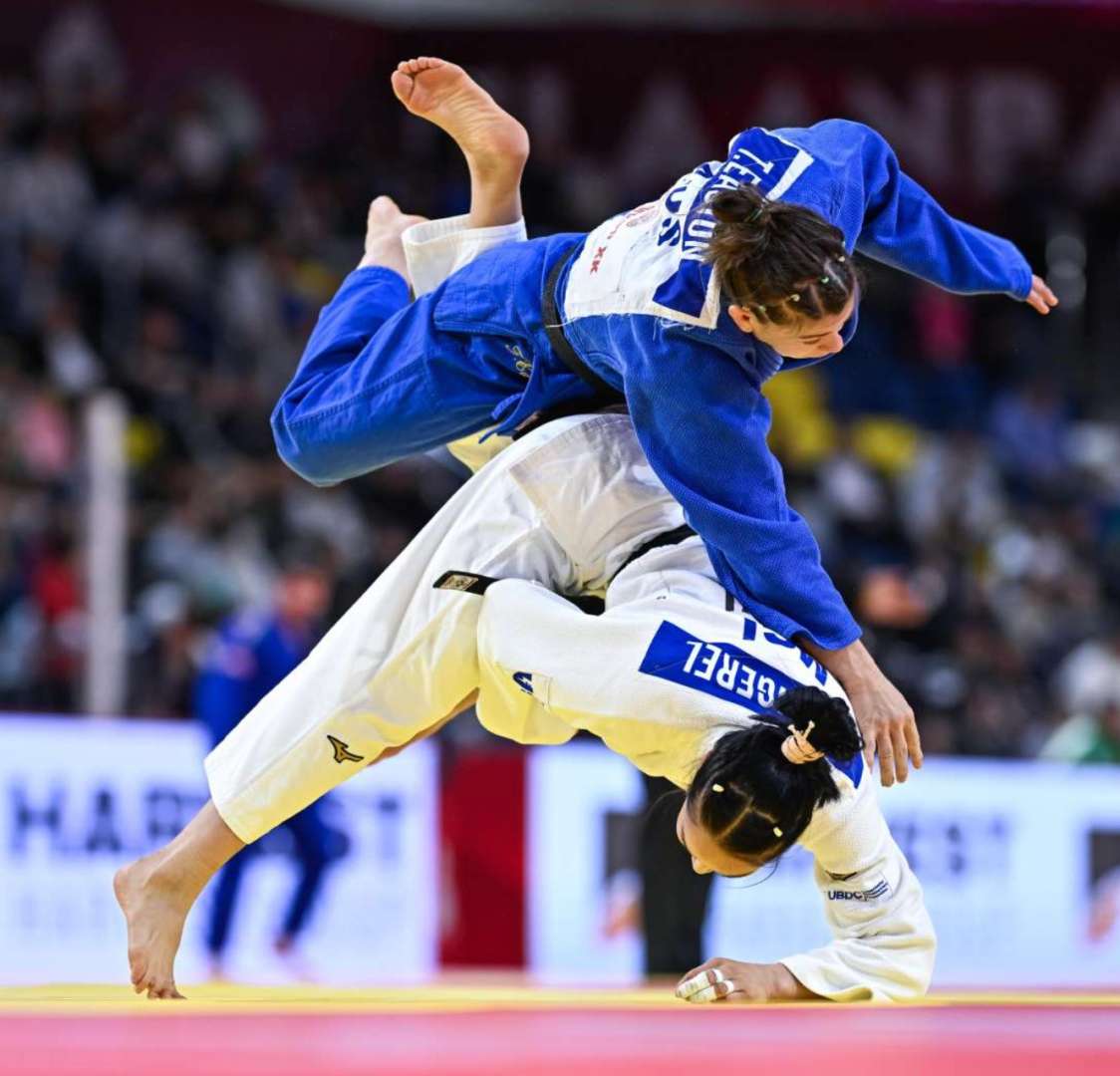
Yet, if one name dominated the day, it was Uta Abe (JPN). Five-time world champion and Olympic champion in Tokyo, the Japanese star returned to international competition after six months away and looked untouchable. With her unique combination of power, precision and technical mastery, she once again appeared to be competing in a league of her own.
The men’s -60 kg division offered another example of the unpredictability of the first day of qualification. Double Olympic medallist Luka Mkheidze (FRA) exited in his opening contest, while Ryuju Nagayama (JPN), displaying his characteristic relaxed yet dangerous style, advanced all the way to the final. There, however, Balabay Aghayev (AZE) produced a tactically mature performance to stop the Japanese star and capture the gold medal.
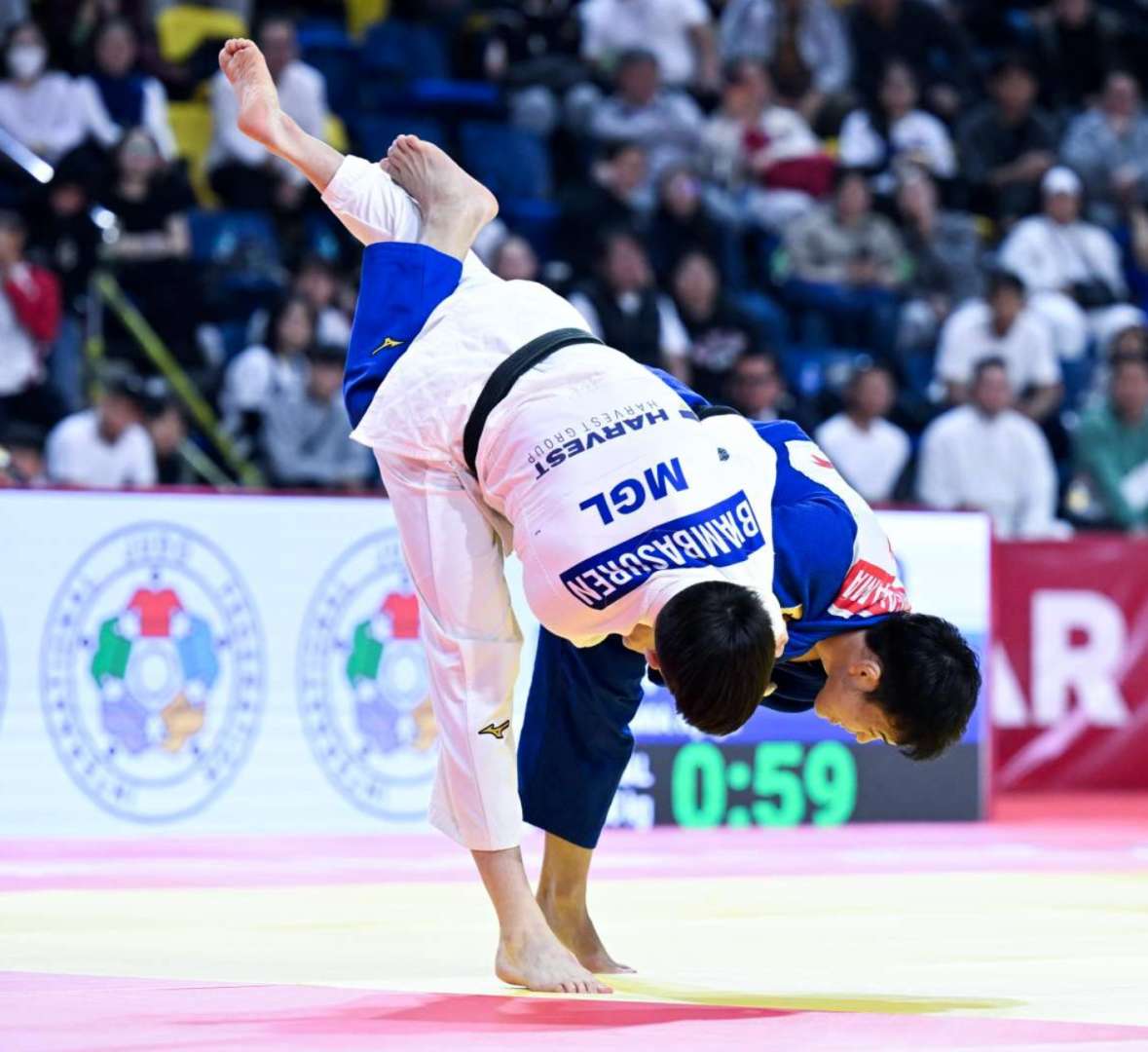
In the -66 kg category, Ramazan Abdulaev (RUS) impressed with a demonstration of the importance of ne-waza, repeatedly finding solutions on the ground and overcoming difficult situations on his route to the final. His run was eventually stopped by reigning world champion Takeshi Takeoka (JPN), whose precision and tactical control earned him another gold medal for Japan.
Japan was therefore the dominant force of the day. With four gold medals, won by Wakana Koga, Uta Abe, Akari Omori and Takeshi Takeoka, the Japanese team sent a powerful message to the rest of the world. The road to Los Angeles may have just begun but the traditional judo powerhouse has already made its ambitions clear.

What happened on the opening day in Ulaanbaatar will not determine who will stand on the Olympic podium in Los Angeles in 2028; it is far too early for that. However, the first chapter has now been written. Among the judoka who stepped onto the tatami in Mongolia today were future Olympic qualifiers, future Olympic medallists and perhaps even future Olympic champions.