
It is obvious that, in competition, judoka do not step onto the tatami together. A judo contest is between two athletes and the winner advances to the next round. For seven days in Baku, we watched the new world champions emerge one by one. Judo is not football and certainly not basketball. And yet…
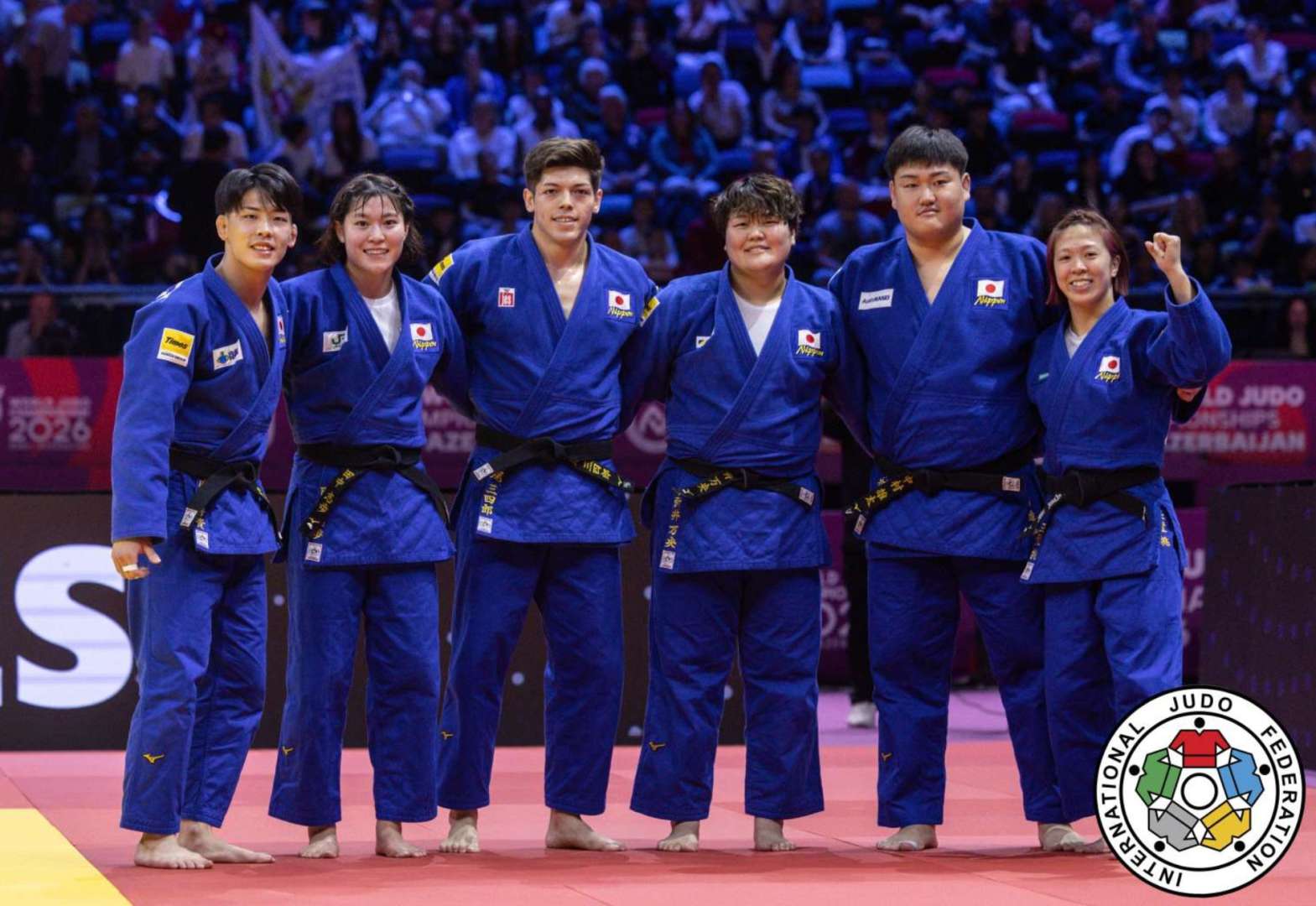
When the mixed team day arrives, a different atmosphere takes hold of the arena. There is more noise, more exchange, sometimes more fervour. The athletes are no longer fighting only for themselves; they are fighting for one another, for the team. Suddenly, the result of one contest can have a direct impact on everyone. That changes everything.
The team’s journey brings the group together around a shared goal. On the tatami, there is no world or Olympic champion, no winner of a World Judo Tour event. There are athletes contributing their part to a collective effort. When the chemistry comes together, it can carry a team beyond what the line-up on paper might suggest.
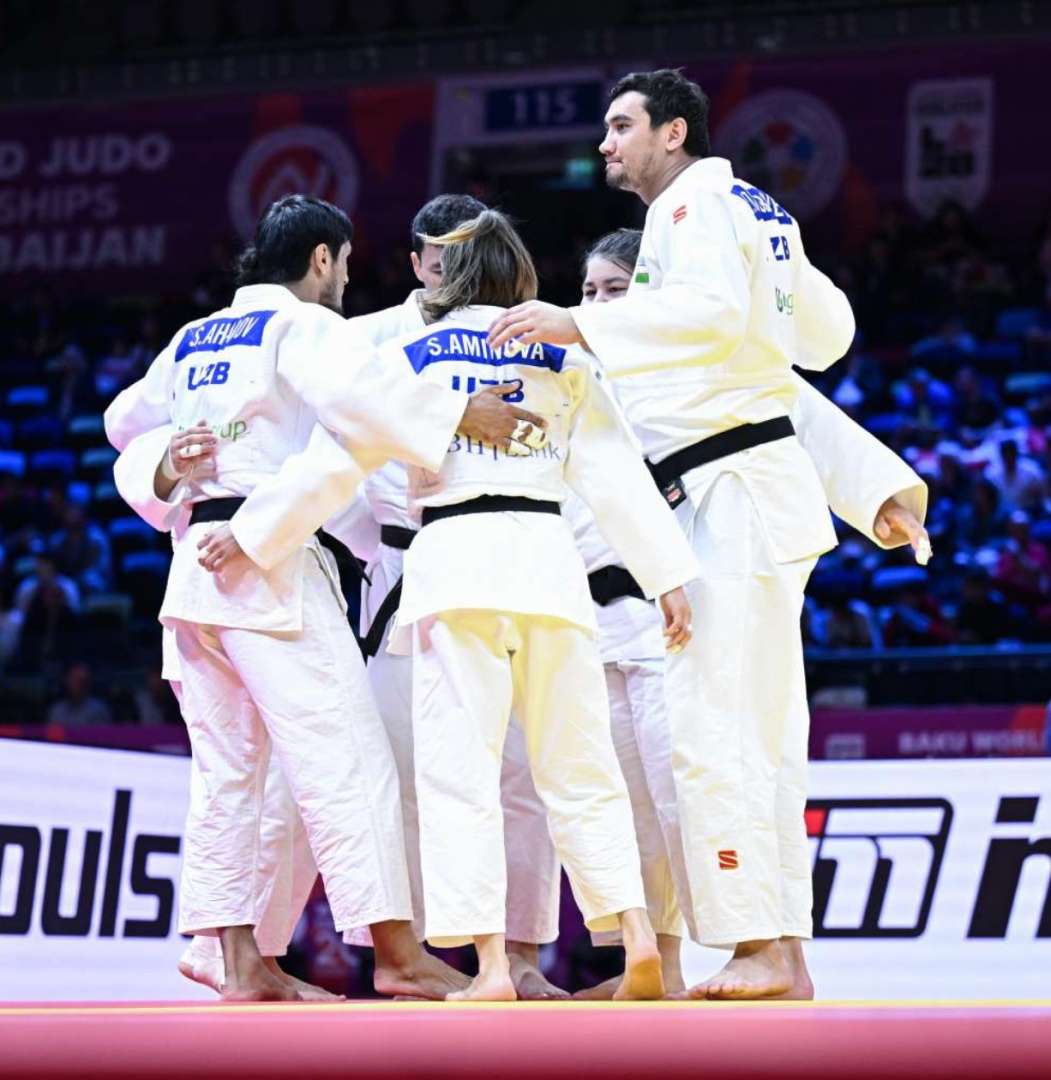
We see it at every team competition. A team considered weaker can find its rhythm and overturn the predictions. We remember France’s victories over Japan at the Tokyo and Paris Olympic Games. More recently, Georgia’s remarkable triumph at the 2025 World Championships showed the same power. And what is true at international level is just as true in competitions closer to home.
One of the remarkable things about these events is the way they put everyone on an equal footing. A world champion is first and foremost a member of the team, with a job to do. Inal Tasoev (RUS) was under the spotlight in Baku. Having won the +100 kg title, less than 24 hours later he put his immense talent at the service of his team. In other circumstances, he might have said, quite reasonably, that he was tired but that is not how it works in judo. Instead of resting and savouring his third world crown, he was up early, warming up alongside his teammates and preparing for another full day of competition.
This is far more than an extra spectacle. The mixed team event brings together athletes who may train alongside one another but usually compete in different weight categories, with very different demands. A contest in a lighter category is not the same as one in the heavyweight division. For one day, though, they move in the same direction.
The format reflects a strong commitment to fairness, parity and fair play: three women and three men, with the starting category decided by a draw so that the day does not begin with the heavyweights alone carrying the weight of expectation. Each contest brings a point to the team and a tied contest can go to golden score. If the six contests finish at 3–3, a category is drawn again and its athletes fight a deciding golden-score contest. The format is simple, tense and compelling and the passion around it never seems to fade.
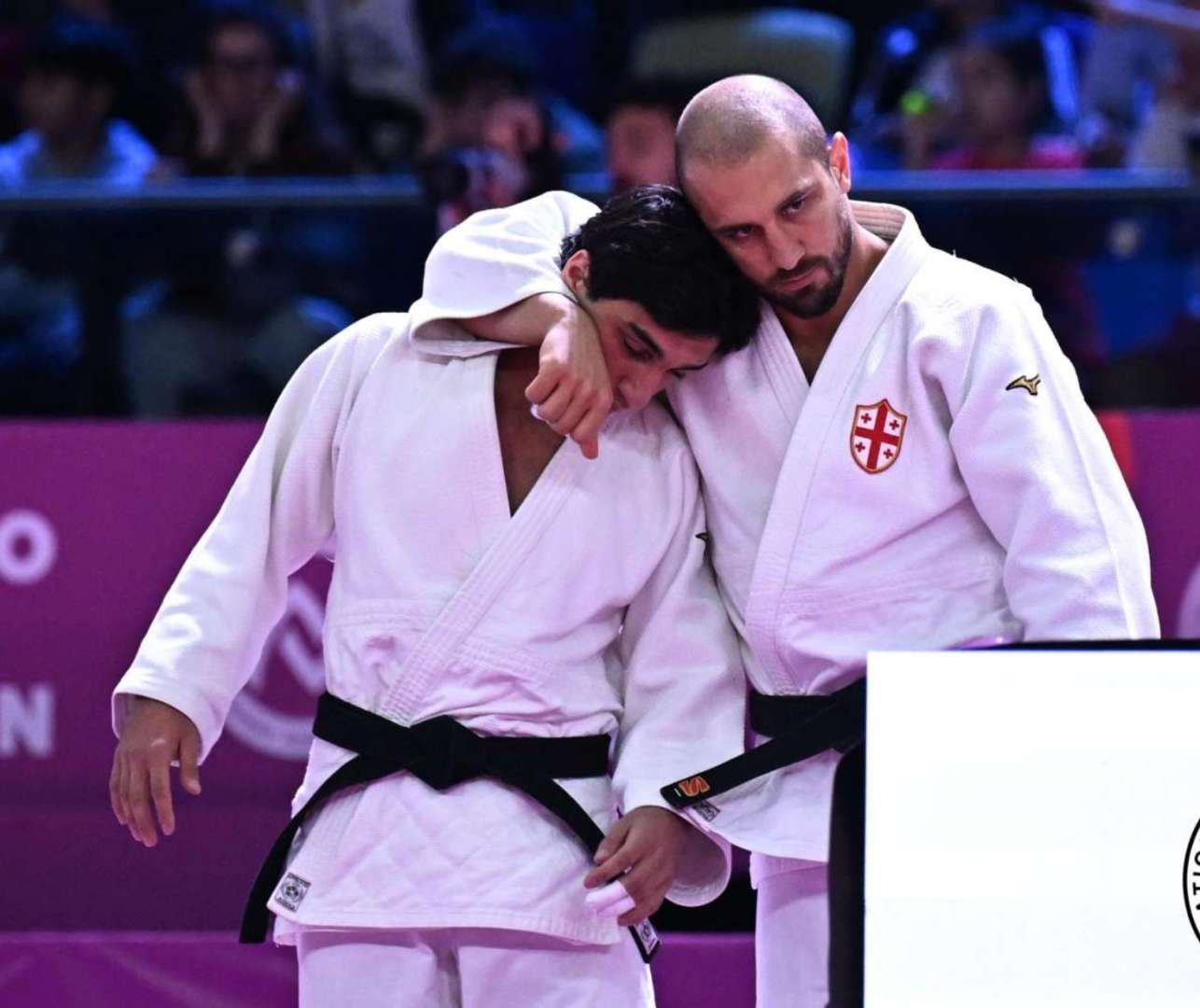
So, do you still think judo is an individual sport?
One final thought. We have been talking about competition but have you ever seen a judo training session, even in the smallest dojo, with only one or two people? It does not happen. Even the greatest individual champions have spent countless hours training with their teammates and when they stand on the podium, a part of that medal belongs to them too.
Thus, that is the magic of the team event; for one day, every athlete’s ambition is bound to the fortunes of others. Individual titles and past victories give way to a shared responsibility and each point becomes part of a collective effort. In the roar of the arena, judo reveals a truth that is just as present in the smallest dojo: each judoka steps onto the tatami alone but none of them get there alone.