
Among the distinguished participants were Damien Antoine, President of the Deaf International Judo Federation (DIJF), and Talgat Abdymamynov, the organisation’s CEO and Secretary General. Their presence reflected both progress and promise. Although DIJF was only founded in August 2024, it has already established firm foundations, strengthened by a Memorandum of Understanding with the International Judo Federation later that year.
Their presentation in Houlgate outlined the first steps of an ambitious long-term vision: the development of a global ranking system, a structured competition calendar, new training methodologies and a programme of workshops and seminars designed to educate, raise awareness and enhance understanding. The discussions also explored the refereeing system for deaf athletes, an essential element in ensuring fairness and accessibility. It was, in every respect, the right moment for DIJF to share its journey so far.
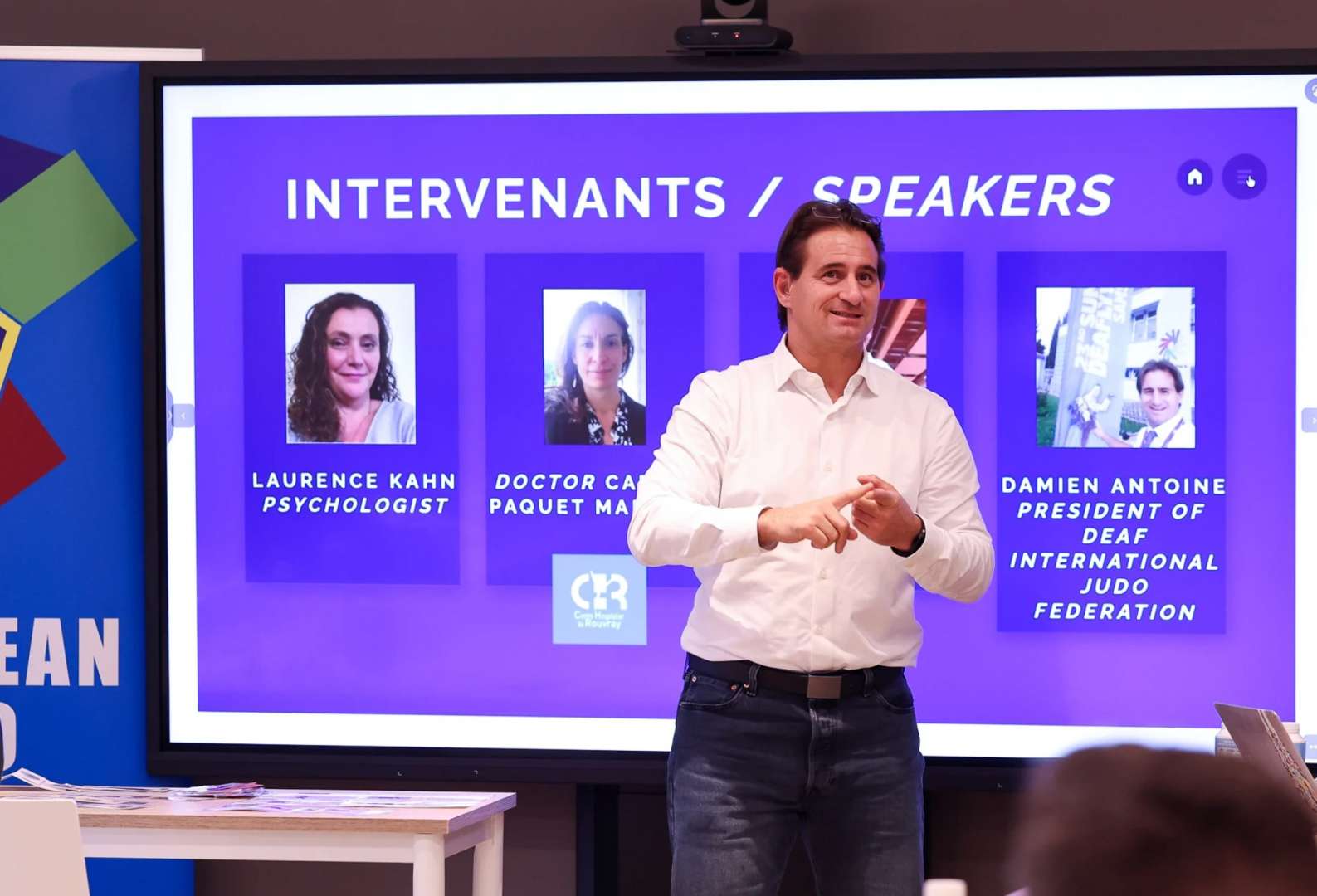
Reflecting on the workshop, Mr Abdymamynov expressed sincere appreciation for the opportunity to introduce DIJF to the European Judo Union and to many others for the first time. He highlighted not only the quality of the venue but also the importance of learning about the different adapted judo pathways, from autism to visual impairment, motor disabilities and beyond, while contributing DIJF’s own expertise in deaf inclusion. That sense of unity resonated throughout the day.
Mr Antoine, who also serves on the IJF’s newly established Inclusion Commission, chaired by Janos Tardos, emphasised how vital such gatherings are for building understanding across all branches of adapted judo. “We are all one huge judo family,” he noted, underlining a shared responsibility to develop the sport collectively rather than dividing communities by disability type. For both leaders, the European Judo Union’s significant progress in Adapted Judo over the past three years, now involving nearly 30 nations, represents a profound shift in how the sport embraces its diverse practitioners. Their gratitude for contributing to this movement was unmistakable, particularly for Mr Antoine, whose personal experience as a deaf judoka shapes his mission.
He spoke with heartfelt sincerity about the need for visibility, explaining that deafness is often an ‘invisible’ disability, frequently misunderstood. Integration, he stressed, is not only organisational but deeply human. Seeing adapted judoka from many backgrounds, he feels a natural sense of kinship, a reminder that all belong to the same judo family.
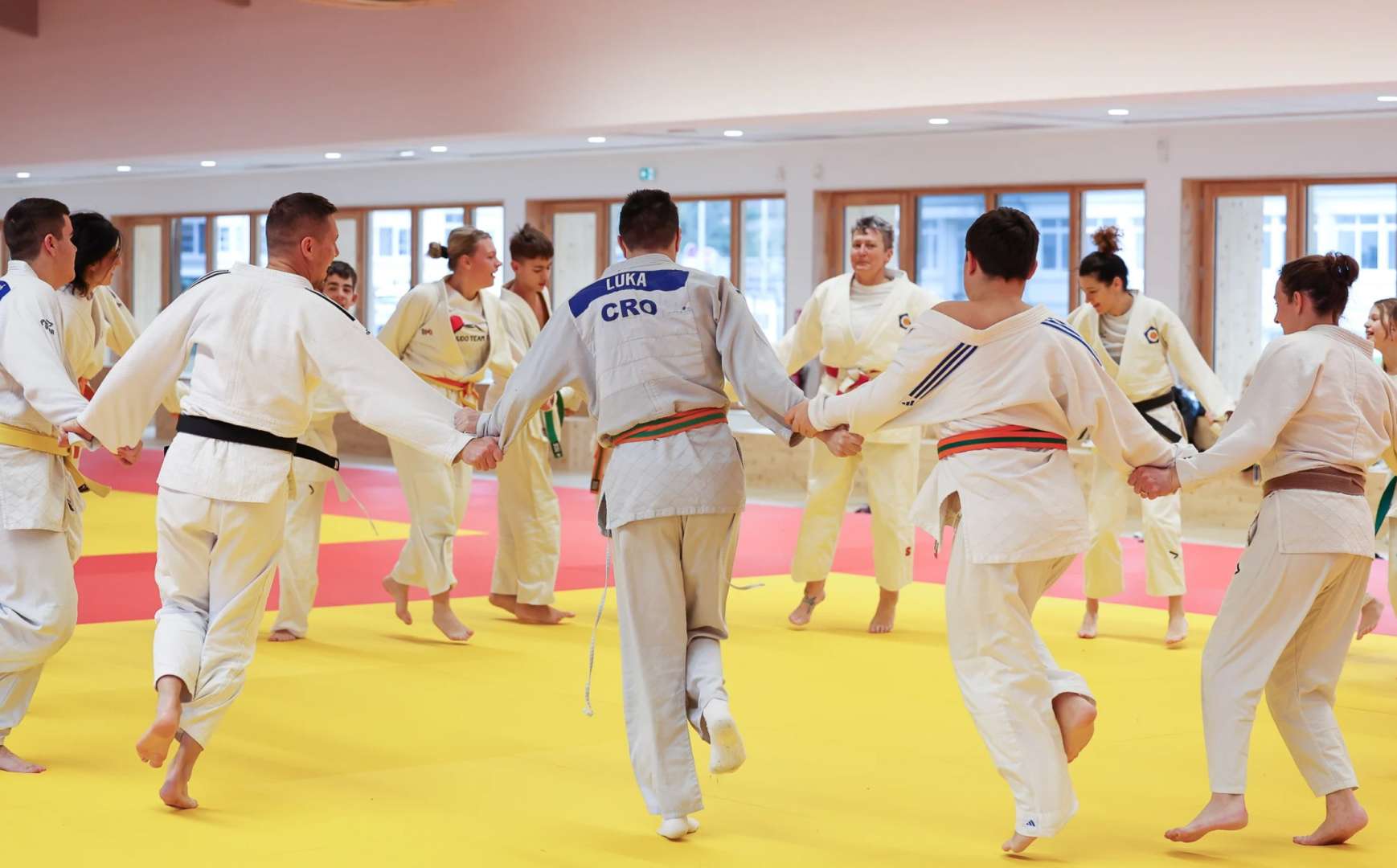
The DIJF’s plans are both ambitious and inclusive, aligning seamlessly with the ethos of the IJF Inclusion Commission, which they credit to President Marius Vizer’s commitment to a more unified global judo community. That unity is also reflected in the excitement surrounding the recently announced fully inclusive grand slam in Lausanne, an unprecedented moment in world sport. Preparations are already underway with Sergei Aschwanden and the event team, alongside hopes of organising an international training camp.
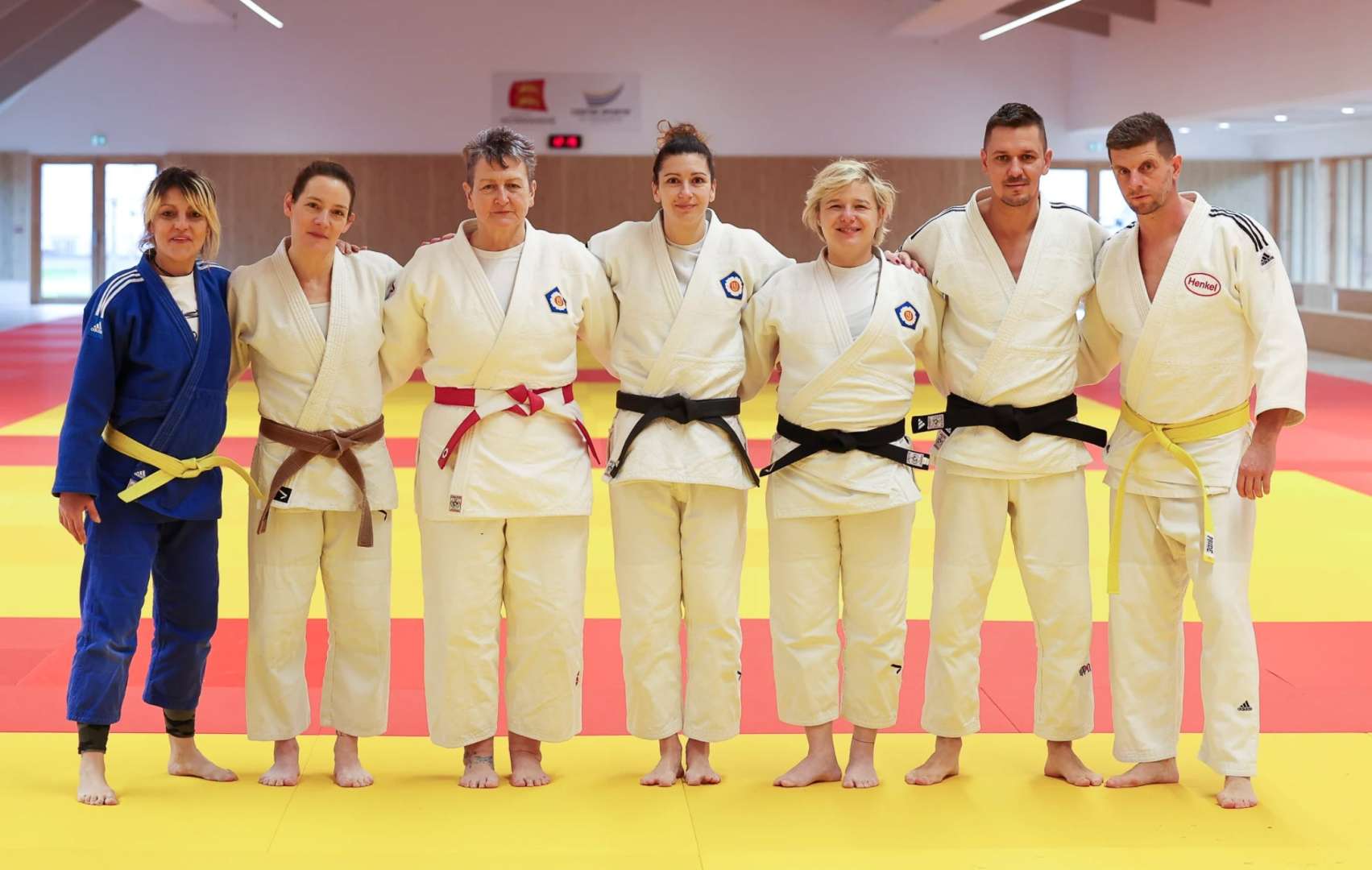
Meanwhile in Houlgate, momentum continued with the final Get Together Adapted Judo event, welcoming nearly 200 competitors, including, for the first time, athletes from Georgia and Luxembourg. What emerged from this workshop was a celebration of progress and a clear promise for judo to become the best version of itself: a sport where everyone belongs and where inclusion is not a separate project but the very heart of the journey forward.
Images © EJU - Carlos Ferreira